Engine plate v4
Modular engine controller that I developed in 7 months.
v1.1 - Added starter RPS property
Added PID multiplier property
To connect it, connect all the inputs-outputs and composite. Also, don't forget to configure the controller.
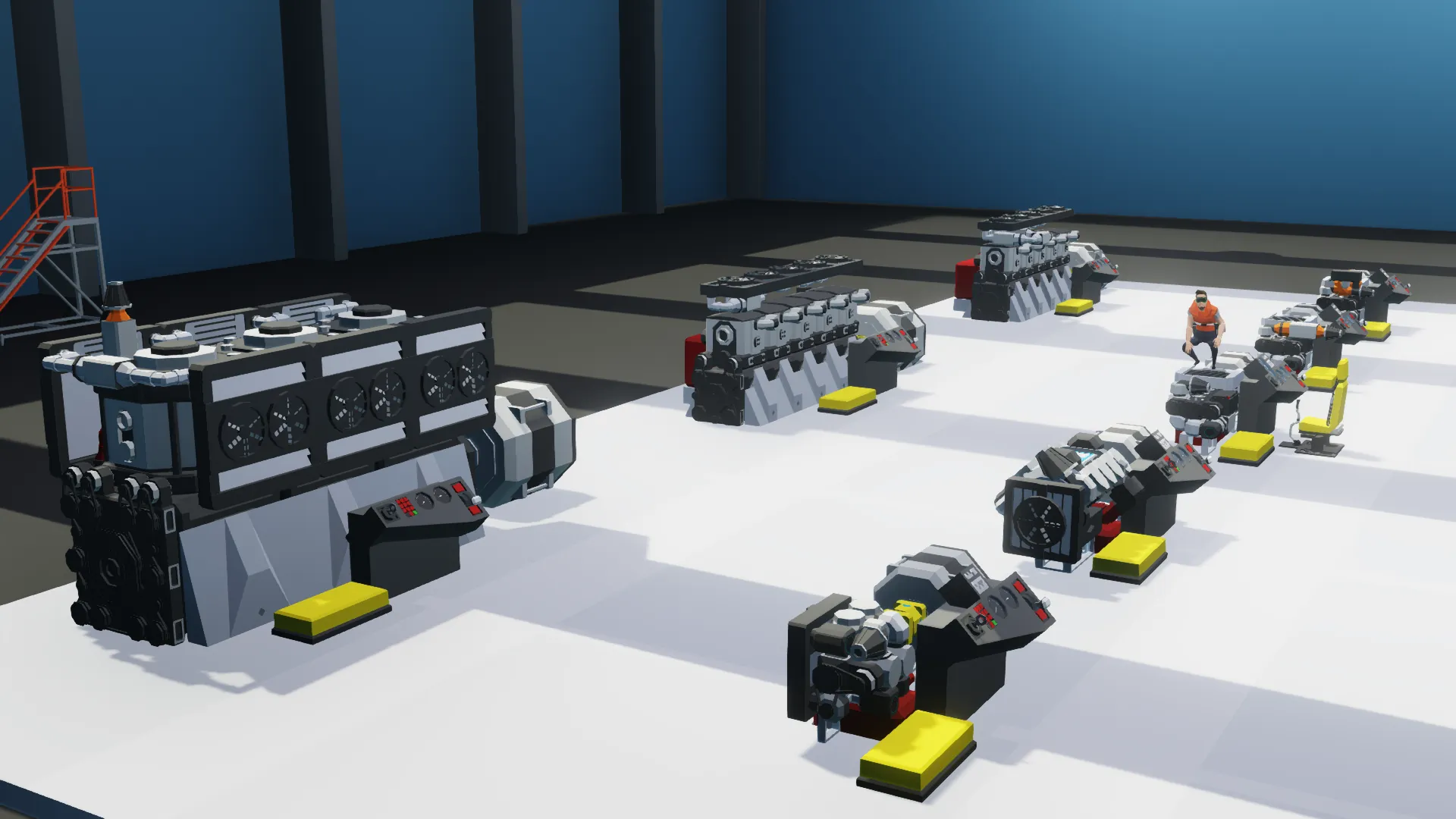
Here is different engines with this controller https://steamcommunity.com/sharedfiles/filedetails/?id=3650528824AAA
This controller works in 4 stages:
1) Logic of all sorts of starters, cooling etc.
2) Regression block. They provide a basic understanding of how much throttle to give to reach the desired RPS.
3) PID. A heavily modified controller that controls the throttle supply.
4) Stoichiometry calculation and stoichiometry controller. The controller works very simply. It accumulates a correction number "FuelC" which then multiplies the amount of fuel entering the engine. Especially if you use superchargers, you need to wait a bit when you first start the engine so that "FuelC" sets the desired stoichiometry.
I tried to make the controller that better than the ZE modular engine controller, and I managed it!
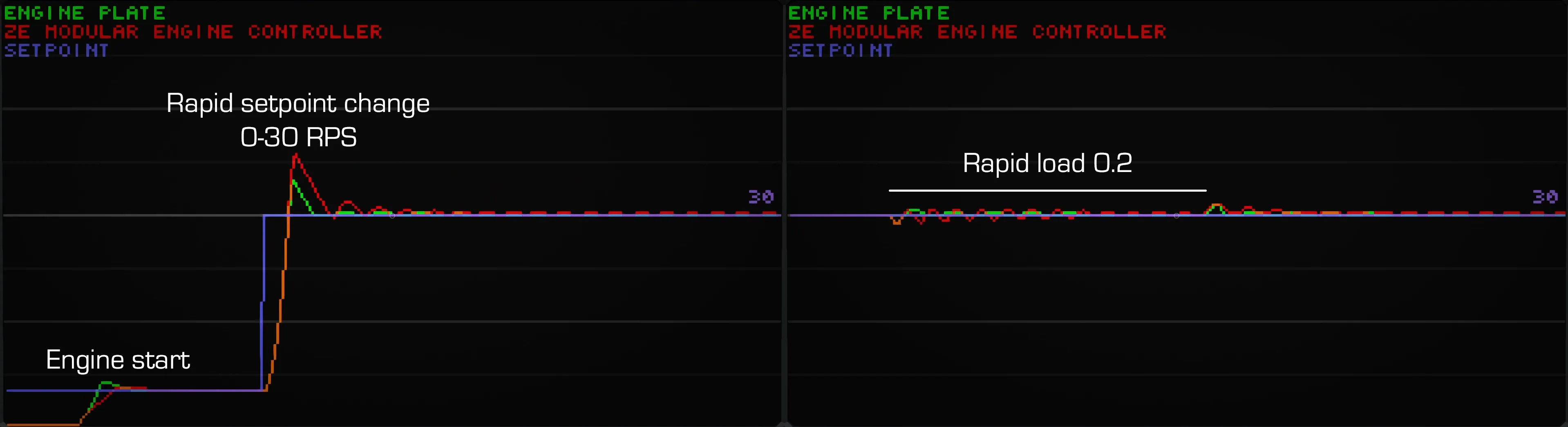
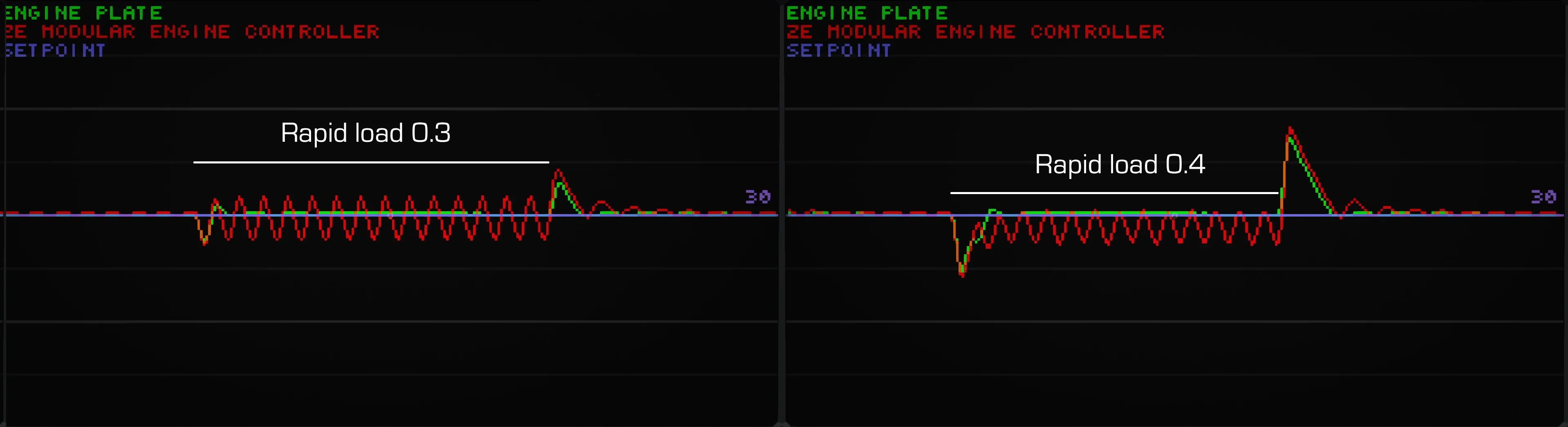
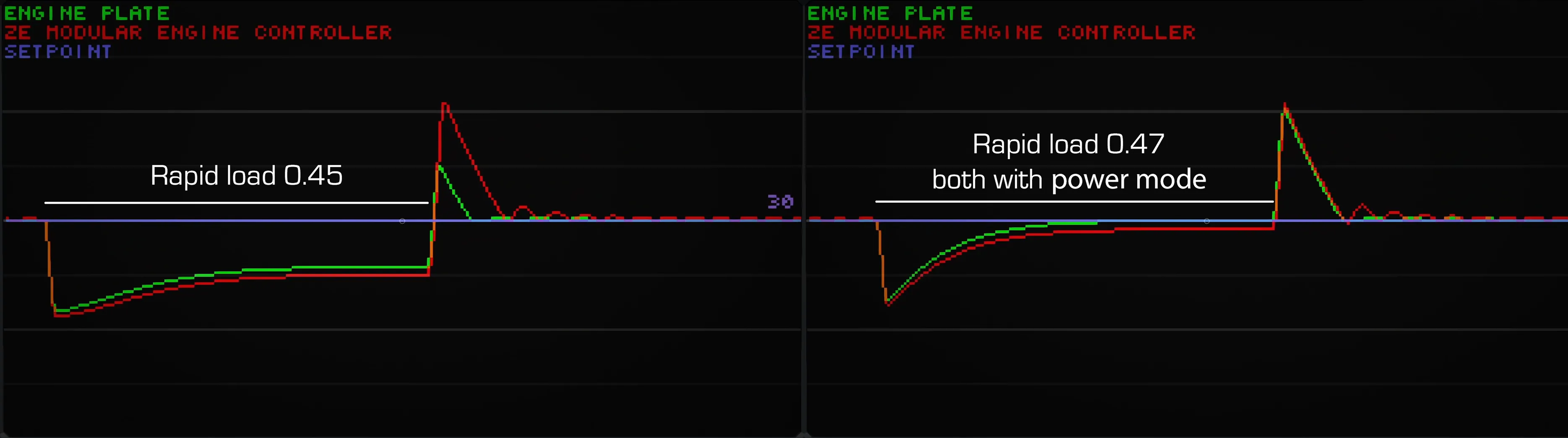
Here is a comparison on the graph of the two the same engines

 Here the vertical is the number of RPS and the horizontal is the shift every 2 ticks.
You can check it yourself on this stand https://steamcommunity.com/sharedfiles/filedetails/?id=3650384233
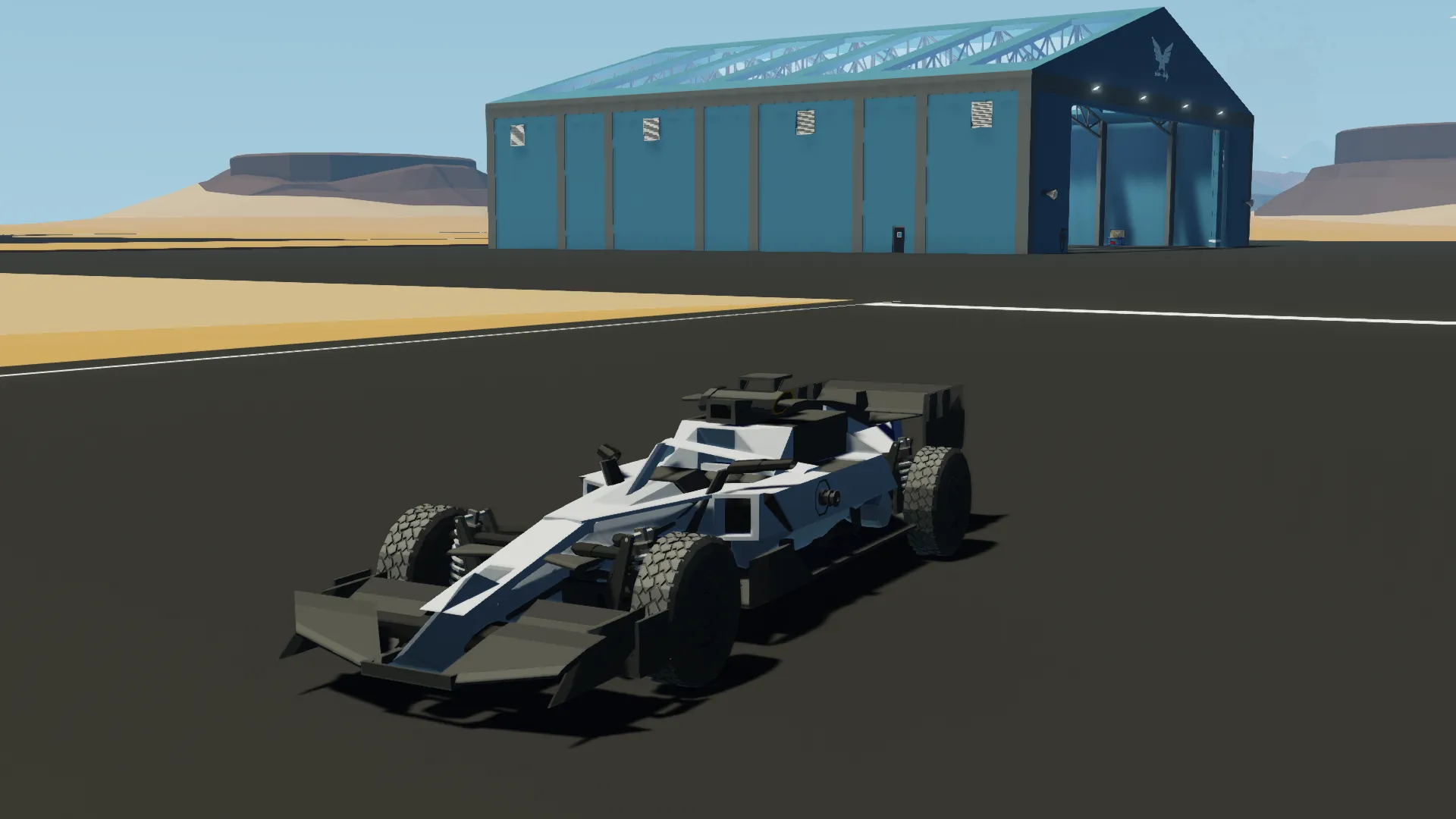
Here is what it gives  There is the same friend's cars. The red one with ZE controller and purple with Engine plate v4.
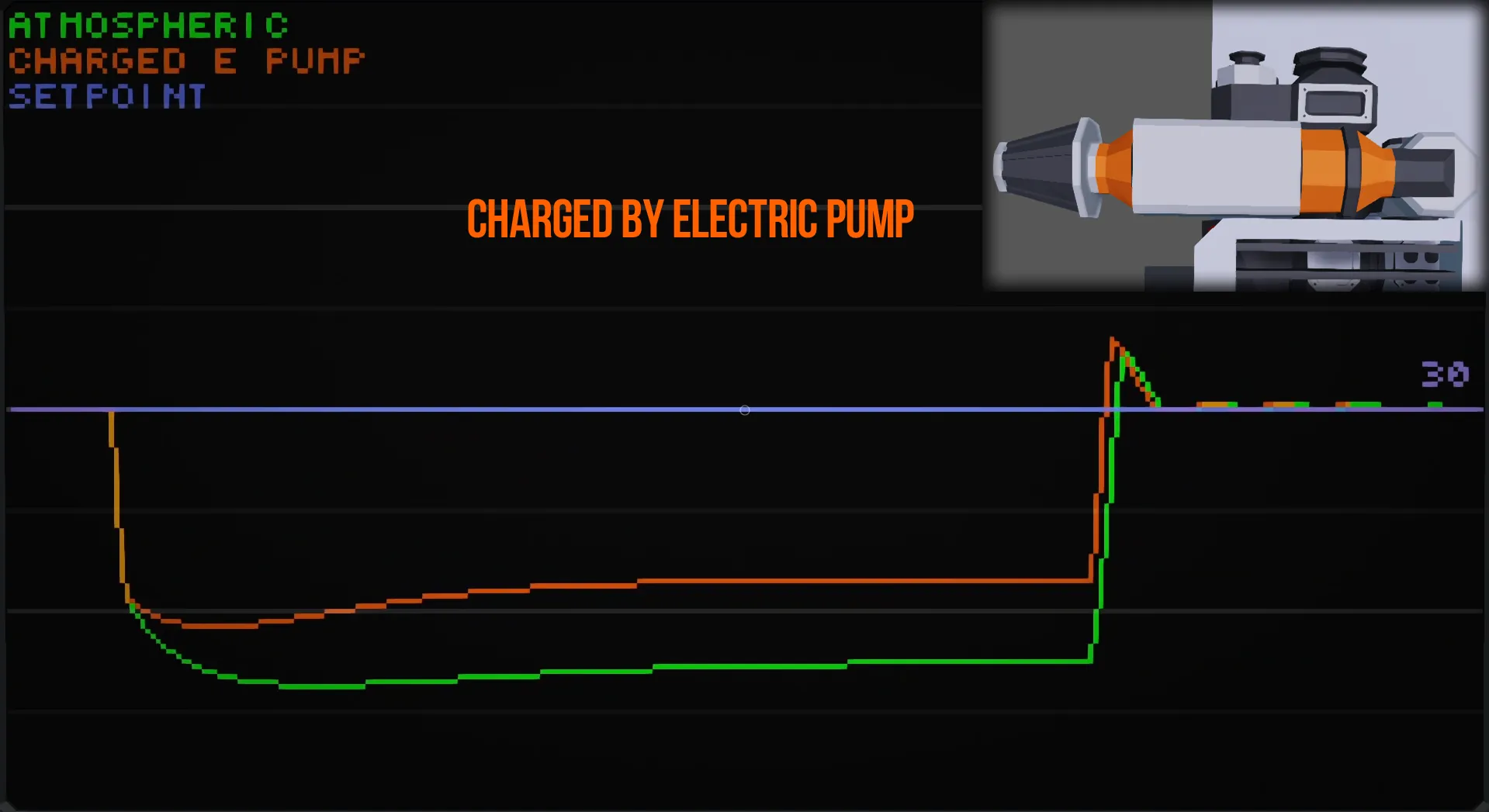
Also here is a comparison of the same engines with and without supercharging As you can see, the power gain is significant. But such engines also need better cooling.
Settings
- Control mode:
SetRPS - you set the number of desired RPS to the ECU by a number. Modular engines operate in the range of 0-60RPS.
Throttle by W - you enter a number in the range of 0-1 and the motor rotates within the set Min/MaxRPS limits.
You can enter a number greater than 1 but then you will set more revolutions than MaxRPS.
Throttle by WS - Same as Throttle by W, but works in the range -1...0...1. Where 0 is MinRPS. - Autostart if engine stopped - If enabled, then if the RPS less than 0.5 the starter will start.
If disabled and the engine stalls, the starter will not start it automatically. You need to turn it off and on again like in a car. - Starter RPS - Set RPS after which the starter shuts down. Basic RPS to start modular engine is 1.9...2 RPS.
- Number of cylinders - for proper PID settings in the controller, you should set the number of cylinders as in your engine. This setting works in the range of 1-50 cylinders, but it's okay if you enter all 94 cylinders of your monster, it will work on the settings for 50 cylinders.
- PID multiplier - you can multiple PID coefficients. Lower than 1 makes PID more slow and smooth, 1-default, more than 1 makes PID more fast and agressive (sometimes more accurate).
- If engine overheat:
Engine shutdown - will simply shut down the engine so that it does not overheat.
Reduce throttle - after the temperature exceeds the Overheat temperature, the rpm will start to drop in proportion to the increasing temperature until the point where the temperature stops rising is reached.
You can adjust the strength of this drop by simply replacing the number in the lua code where I signed it.
Ignore it - it will simply do nothing when overheating. - Charger kind - this controller works with supercharging air into the engine and supercharging adds a lot of power. It has been tested with an electric pump and a large pump. Also, supercharging works for all cylinder sizes. By setting the type of supercharging, you adjust the PID sensitivity and the initial settings of the stoichiometry controller. I have not tried using an impeller pump but you can try.
- Stoichiometry - this is the "amount of combustion" of fuel in the engine. The ideal balance of economy and power is 0.2 stoichiometry, and 0.5 gives the most power. You can adjust this number for more economy or power.
- Automatic power mode - if enabled and the engine gives more than 0.9 throttle, the stoichiometry will change to 0.5 for the most power. This will add about 2-3 extra RPS under load.
If something is not clear, write to me in the comments!
Also feel free to use it wherever you want and modify it however you want!