Commodore AT
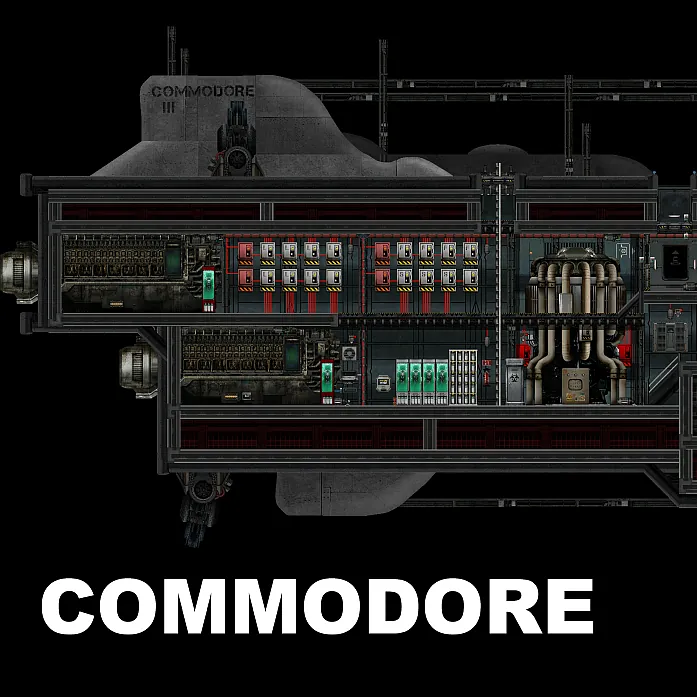
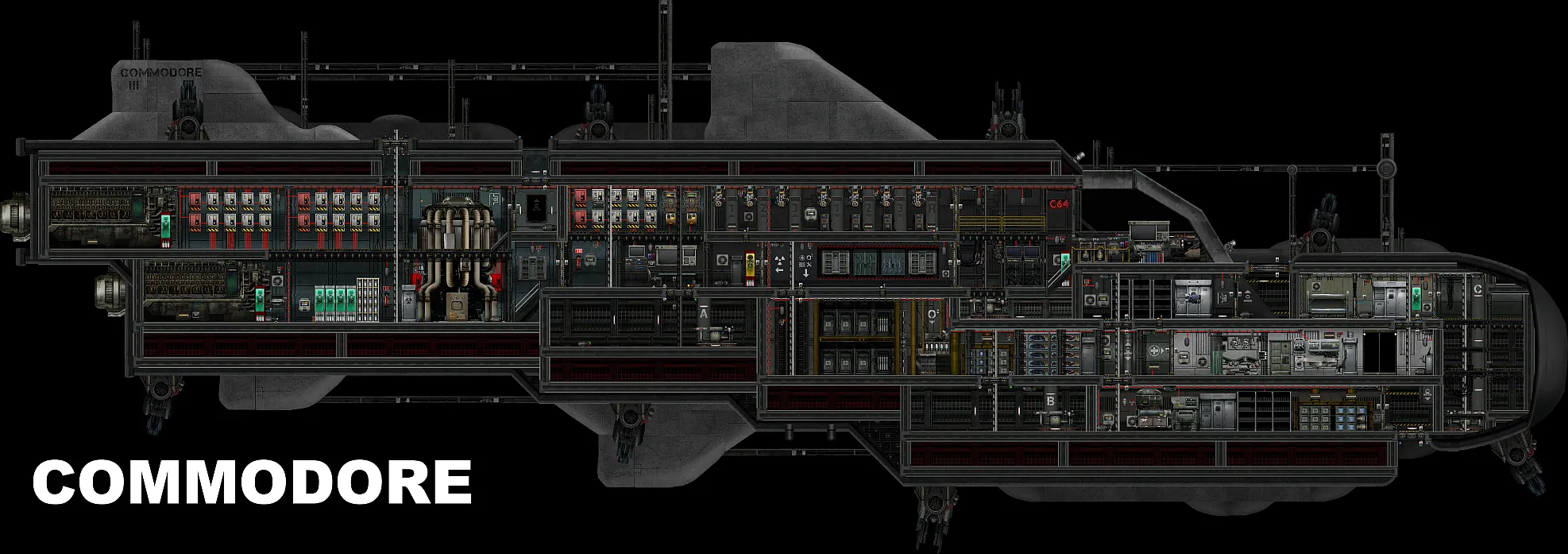
A heavily armed, heavily armored long-range vessel designed for large crews and extended independent operation. Expect a full crew of four to five minimum.
Hull & Armor
- Double-layer hull prevents flooding on initial contact
- Creatures that breach the outer layer may be harder to hit with external guns, leading to boarding actions.
Layout
- Upper deck houses the command area and engineering section
- Lower decks contain medical, fabrication, and storage
- Large open command deck with clear sightlines to the surrounding environment via reinforced viewport
- Large, well-organized aft engineering compartment
- Dedicated engineering command center with critical systems and junctions isolated from the main compartment. Primary systems remain operational and maintainable even if the main engineering section floods.
Airlocks
- Aft airlock in the engineering section
- Large upper deck airlock just forward of the command area
- Lower deck airlock for salvage recovery
Ballast Hatch System
Rather than bilge pumps, the Commodore uses programmed hatches that drain directly into ballast tanks for rapid water removal after repairs.
- Hatches open automatically when water is detected above and the tank below is not full
- If the tank below is full, the hatch stays closed to prevent backflow flooding
- Hatches can be manually locked open using switches located next to each hatch
Emergency Systems
- Red buttons at the engineering and command consoles activate a red alert with flashing lights and sirens. The additional shadow-casting lights may cause frame rate drops on lower-end systems. The alarm system is entirely optional.
- Blue buttons at the engineering and command consoles trigger the emergency flash pump system, which activates emergency pumps in every compartment to rapidly drain the sub. The system takes a long time to recharge after use and performs no repairs.
Pressure Doors
All doors feature indicator lights: red means the room beyond is fully flooded and over-pressurized, yellow means partial flooding is present.