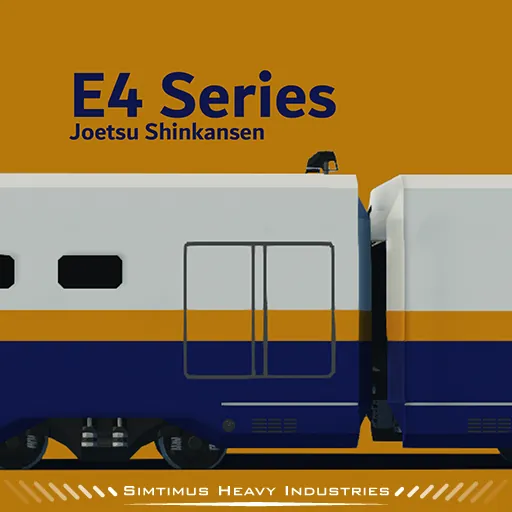
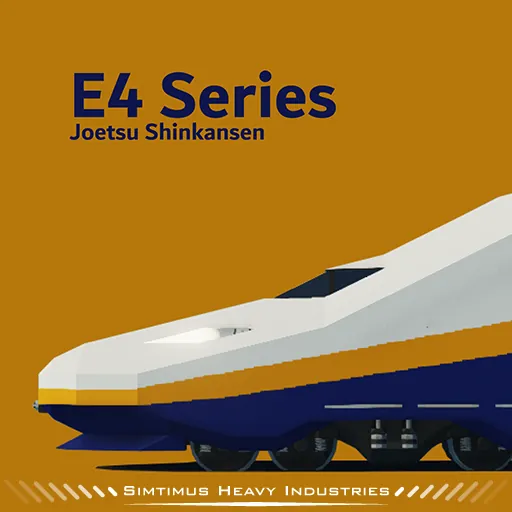
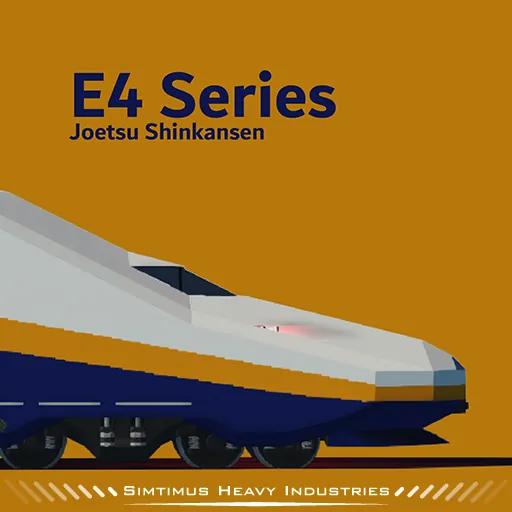
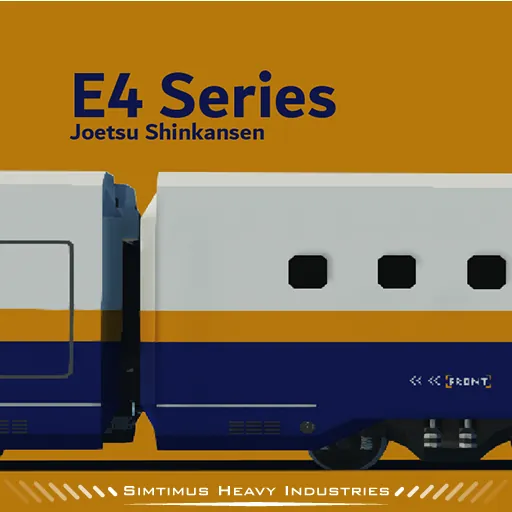
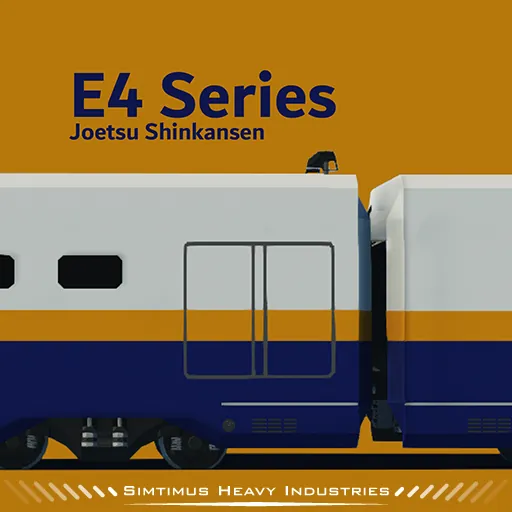
In colaboration with Simtimus Heavy Industries
Shinkansen E4 Series
Pages of history
Originally introduced in 1997, the E4 MAX was designed to handle high-capacity routes with its unique bi-level cars, reaching speeds up to 240 km/h. It served on the Joetsu and Tohoku lines, becoming an icon of efficiency and modern rail travel.
One of the most iconic features of the E4 Series was its ability to operate in 16-car formations by coupling two 8-car sets. This made it the highest-capacity high-speed train in the world, capable of carrying over 1,600 passengers — perfect for handling the massive commuter traffic between Tokyo and Niigata on the Joetsu Shinkansen line.
These double E4 sets became a familiar sight during rush hours and holiday travel, symbolizing the peak of Japan’s high-capacity rail innovation before their retirement began in 2021.
Key Words
Shinkansen E4 MAX, Multi Amenity Express, Bullet Train, High-Speed Train, Max Toki, Jōetsu Shinkansen
What you find game
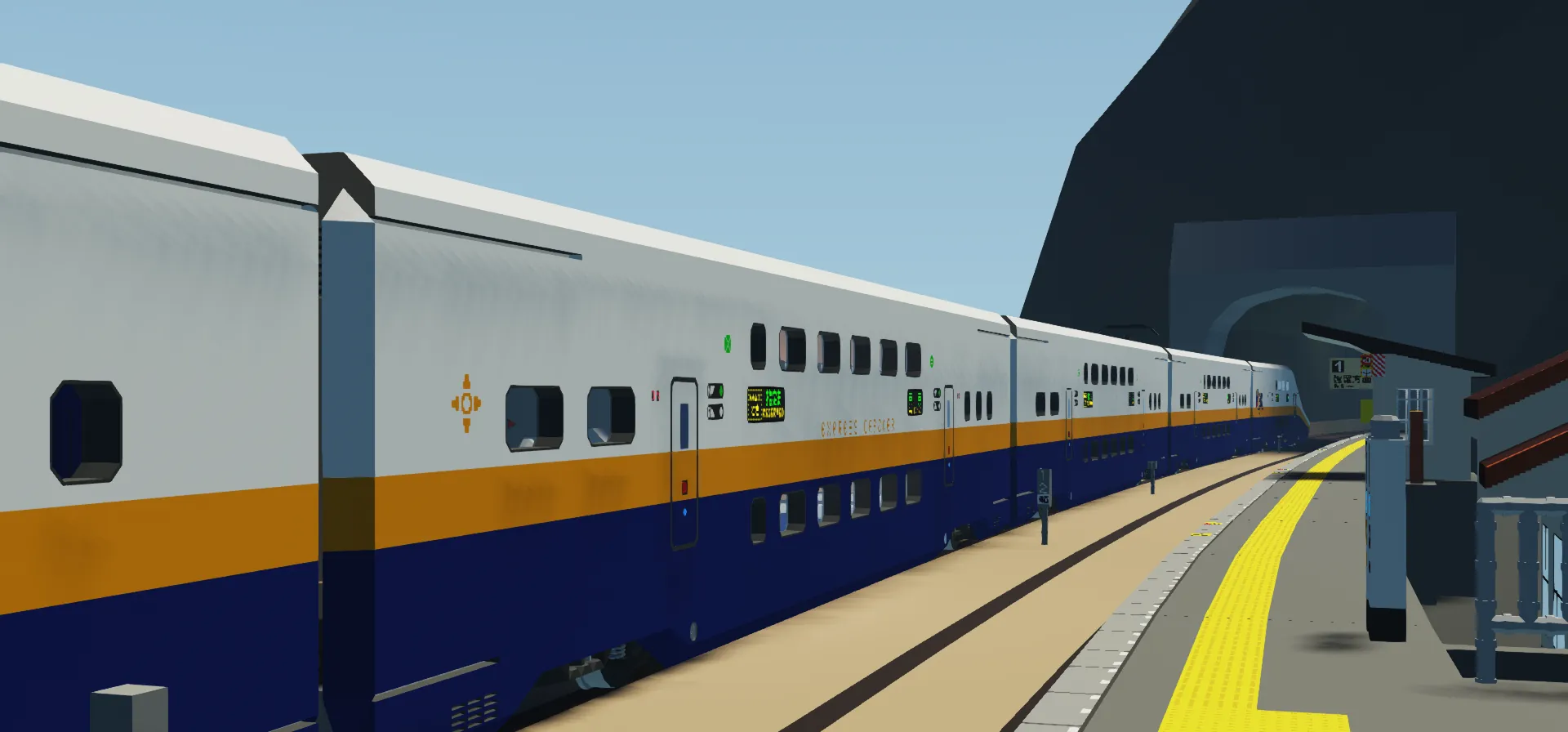
Every in-game car features adaptive-height suspension and an Aero Anti-Derail System for stable, high-speed cornering. A distributed wired Master–Slave control system links all cars, so speed, braking, lighting, door operation, and a coupler camera can be managed from any cab.
Interior doors, lighting, and heaters are automated to minimise lag and UI clutter. A full 16-car consist still seats an impressive 960 passengers in-game.
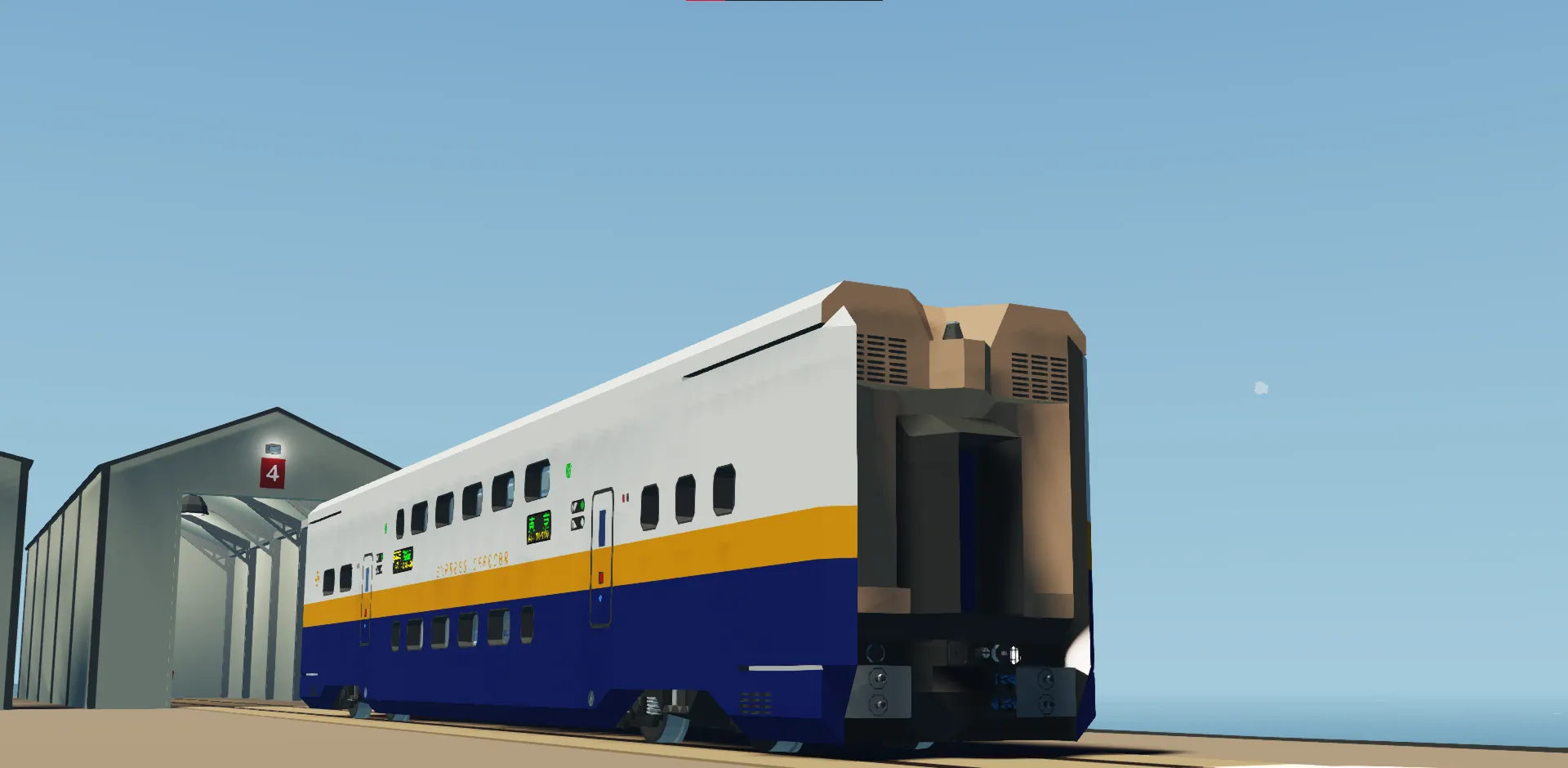
The leading car houses a 12-cylinder diesel-engine generator that feeds power to the bogie-mounted traction motors and supplies auxiliary power to the train. Its 4-axle bogie design provides a theoretical 420 km/h ceiling, although the Aero Anti-Derail System imposes a lower operational limit.
Because of the onboard generator, only the upper deck is seated and classified as an Ordinary Car (Japan’s second class).
Max Speed
380 km/h
Total Seats
24
Deck 1 Seats
0
Deck 2 Seats
24
Weight
17,254 kg
Fuel Capacity
22,000 L
Powered solely by battery arrays, this coach has limited stand-alone range; its theoretical top speed is 320 km/h, though it only achieves such velocity when coupled to a Train Car.
Both decks are seated. The upper deck carries Green Car (first-class) status for its extra space, while the lower deck remains an Ordinary Car (second-class).
Max Speed
300 km/h
Total Seats
72
Deck 1 Seats
36
Deck 2 Seats
36
Weight
15,666 kg
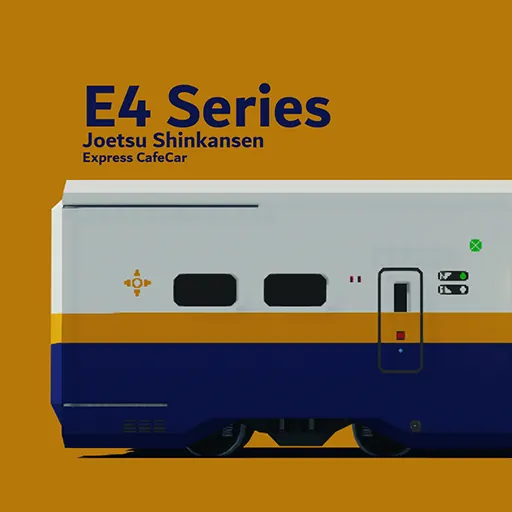
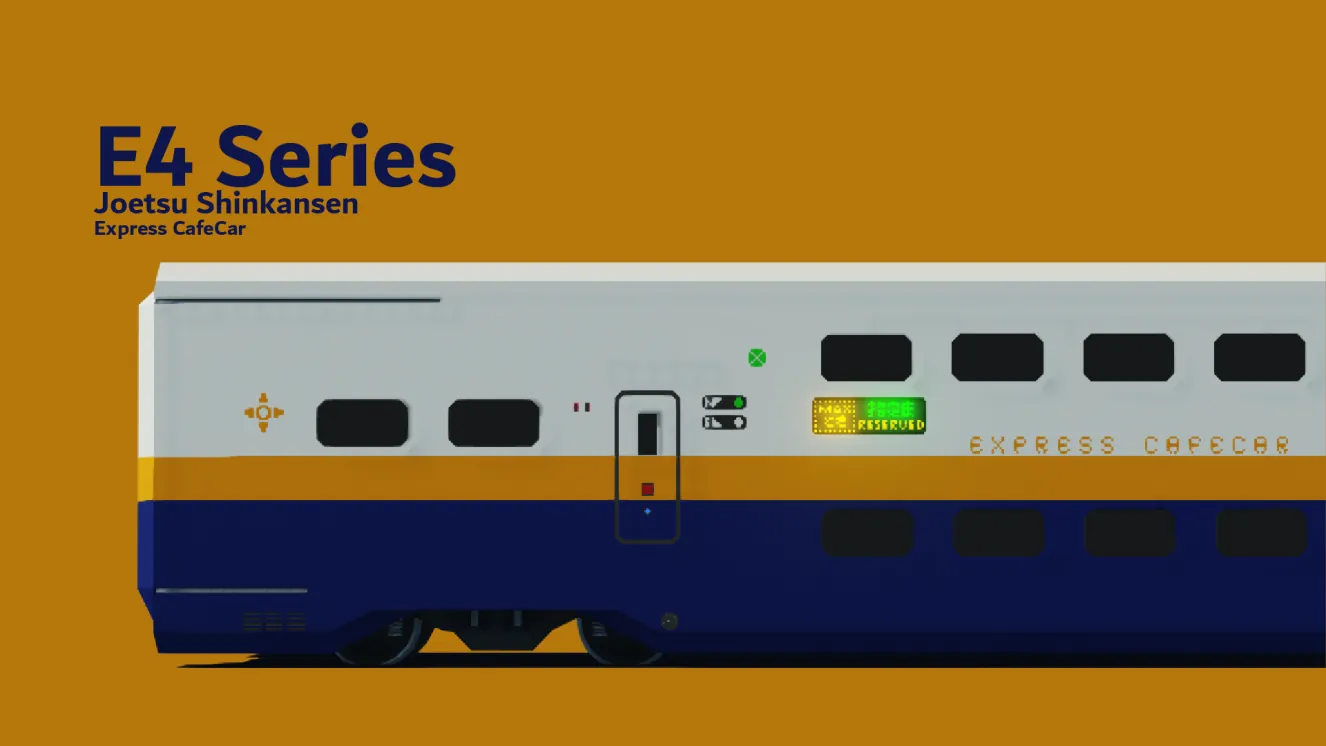
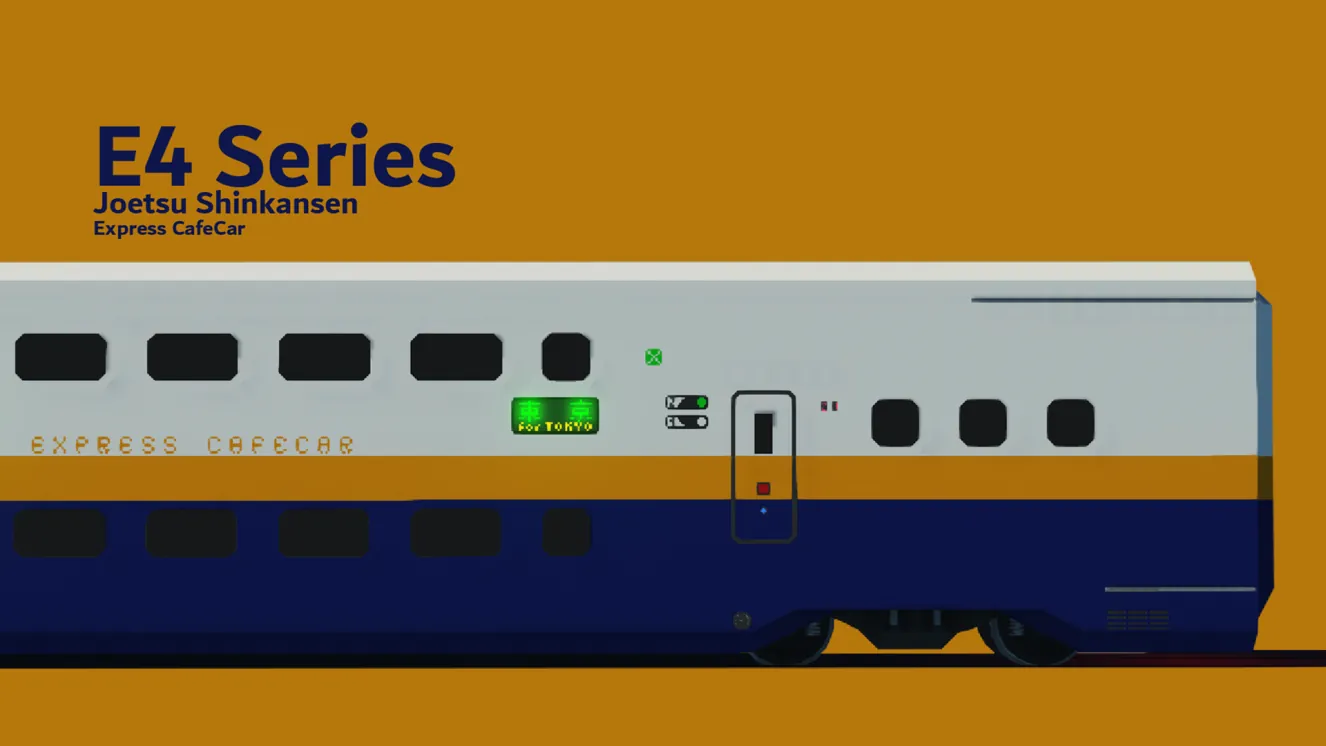
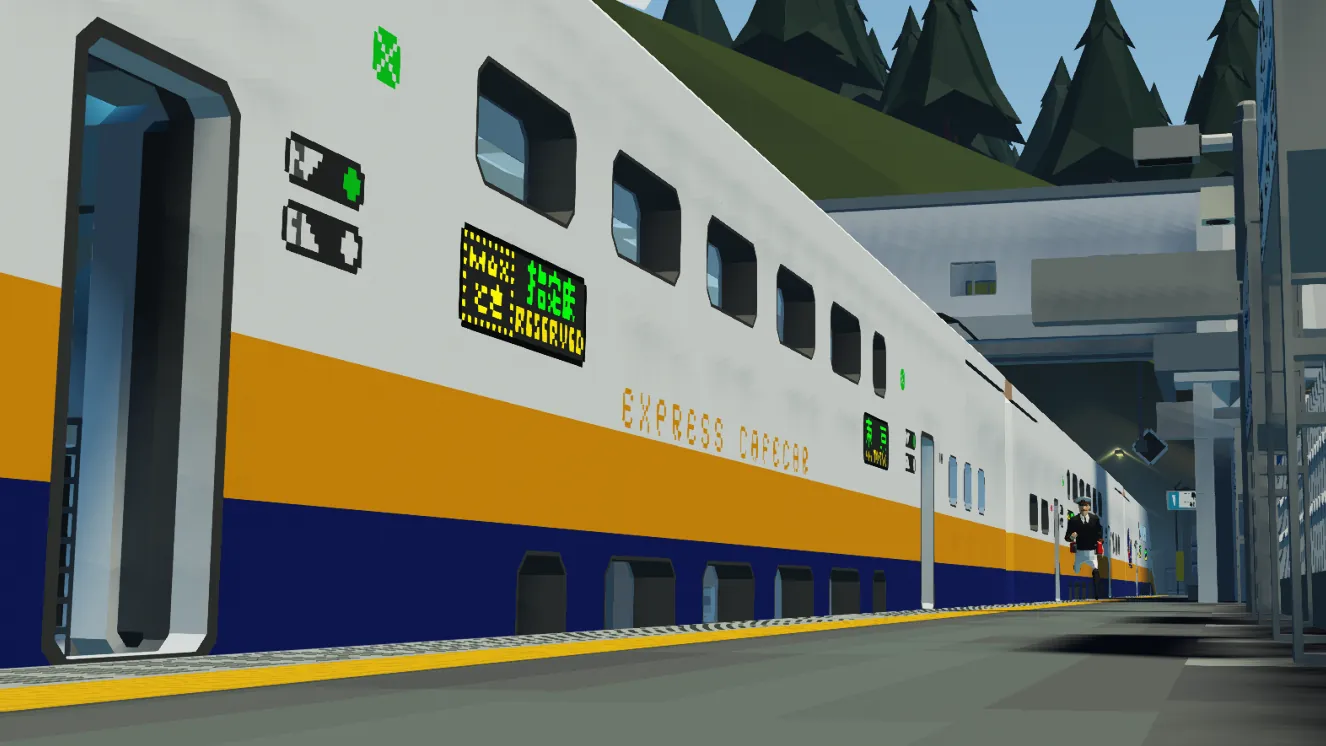
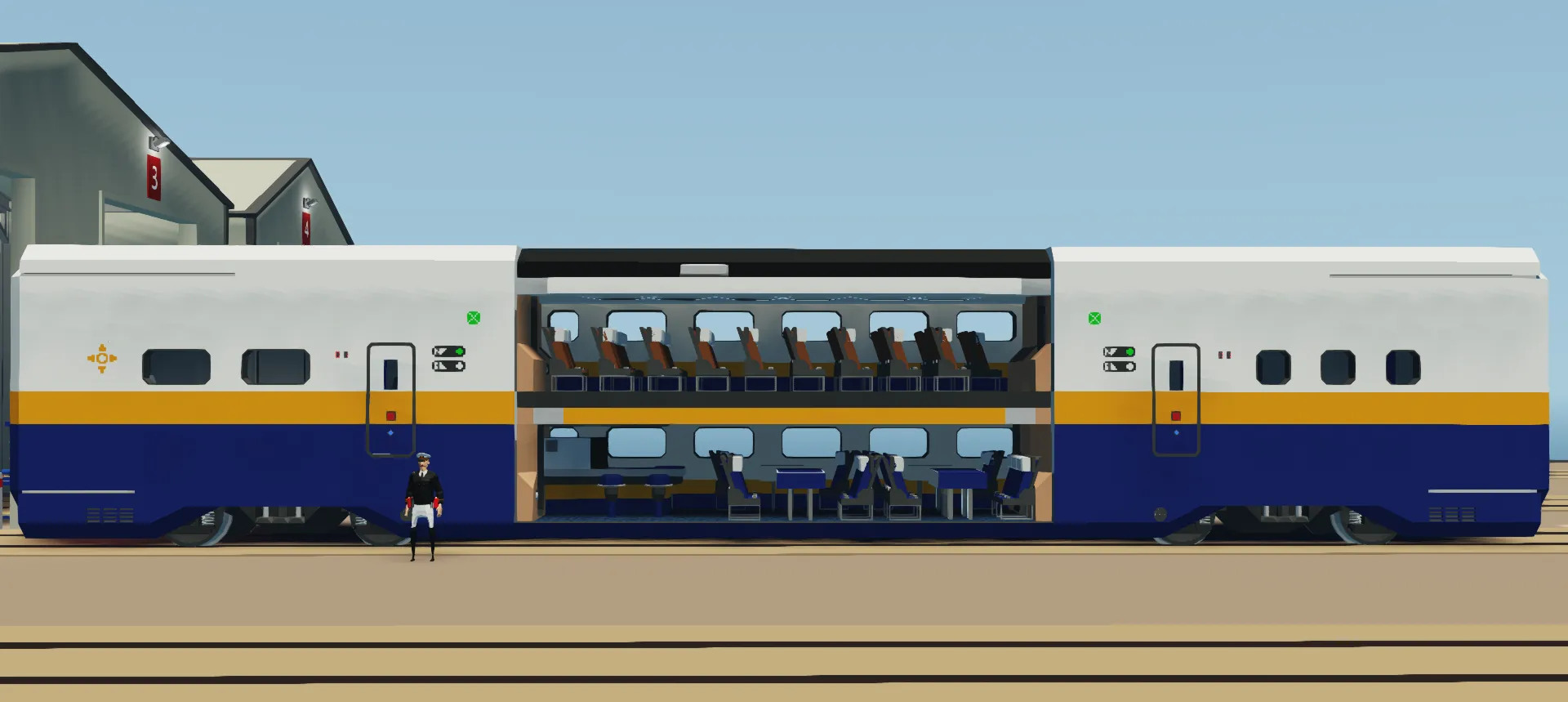
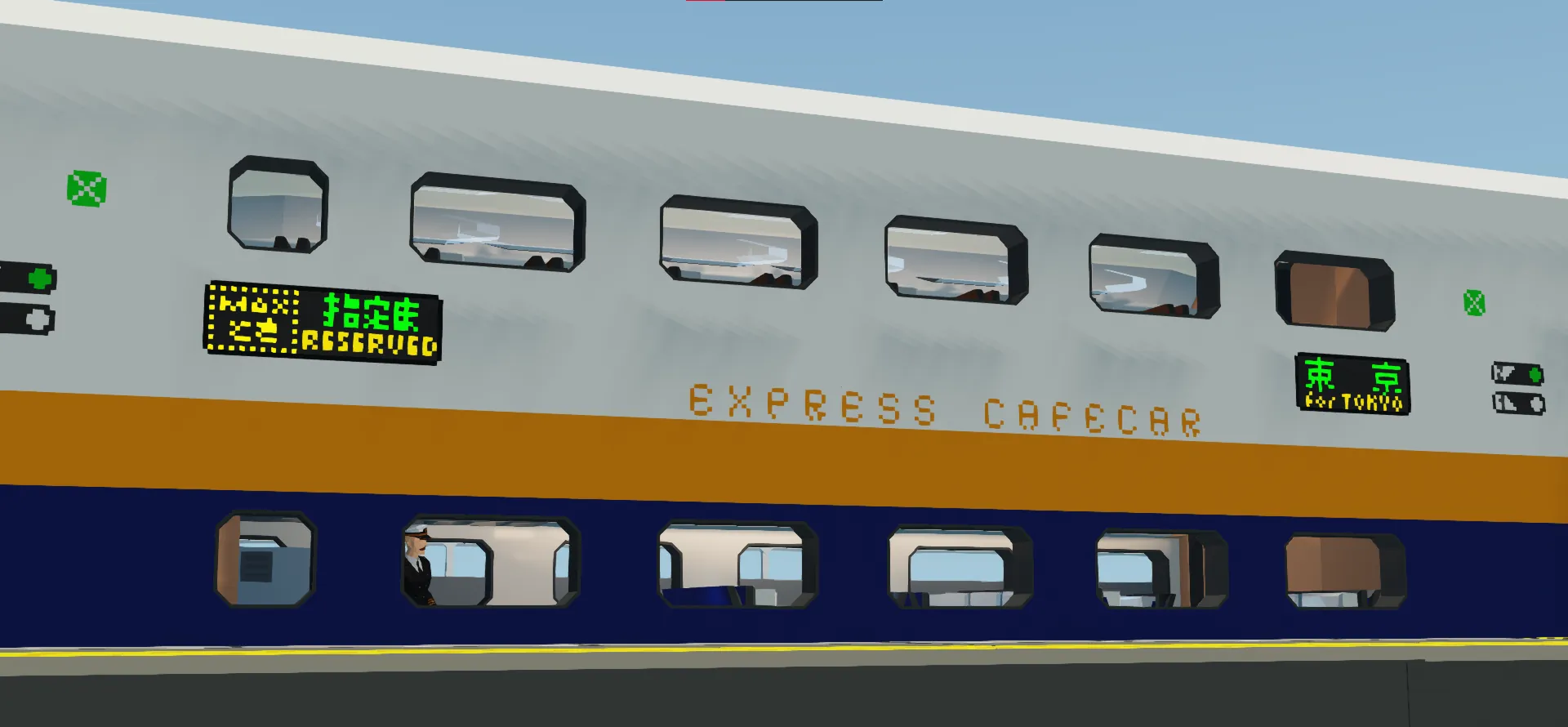
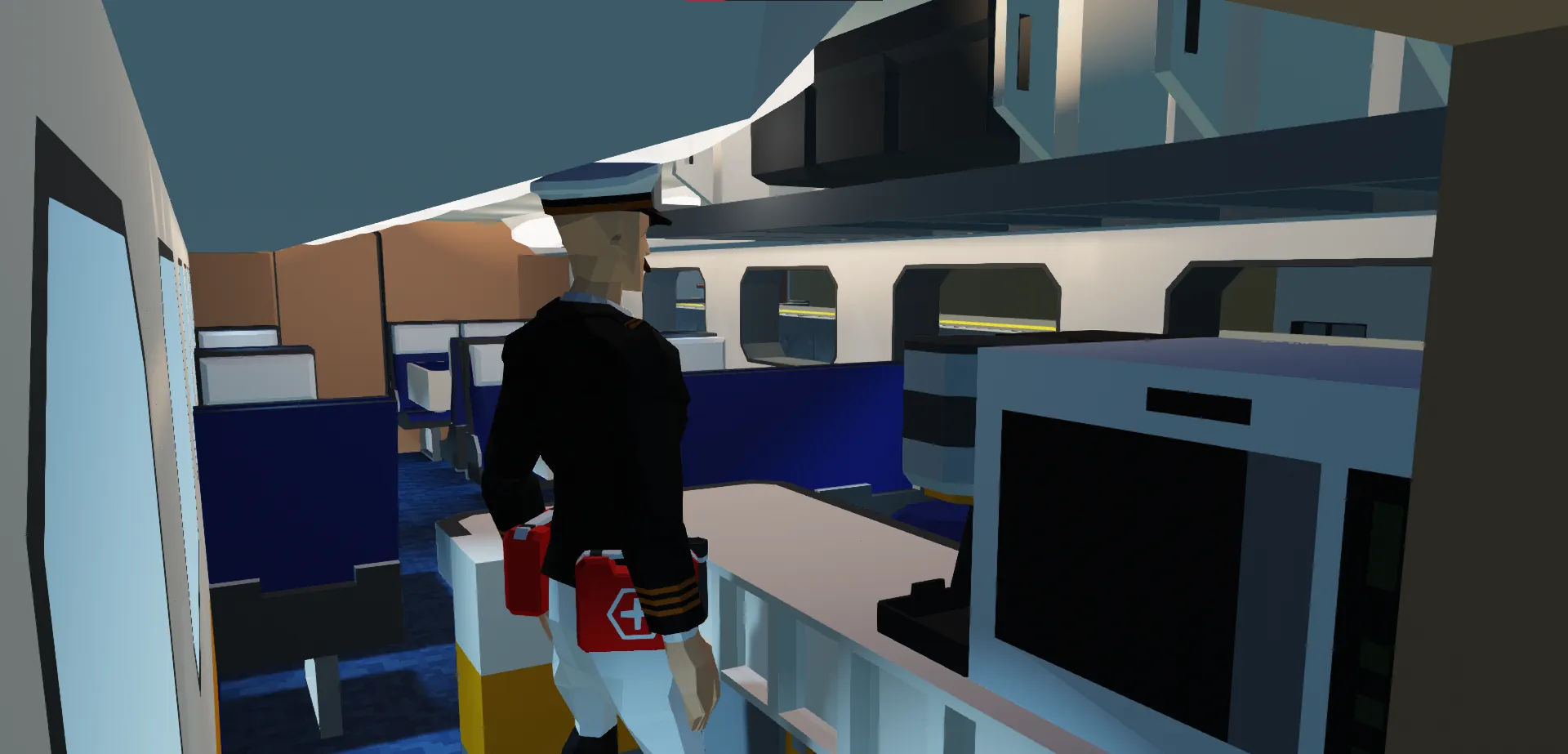
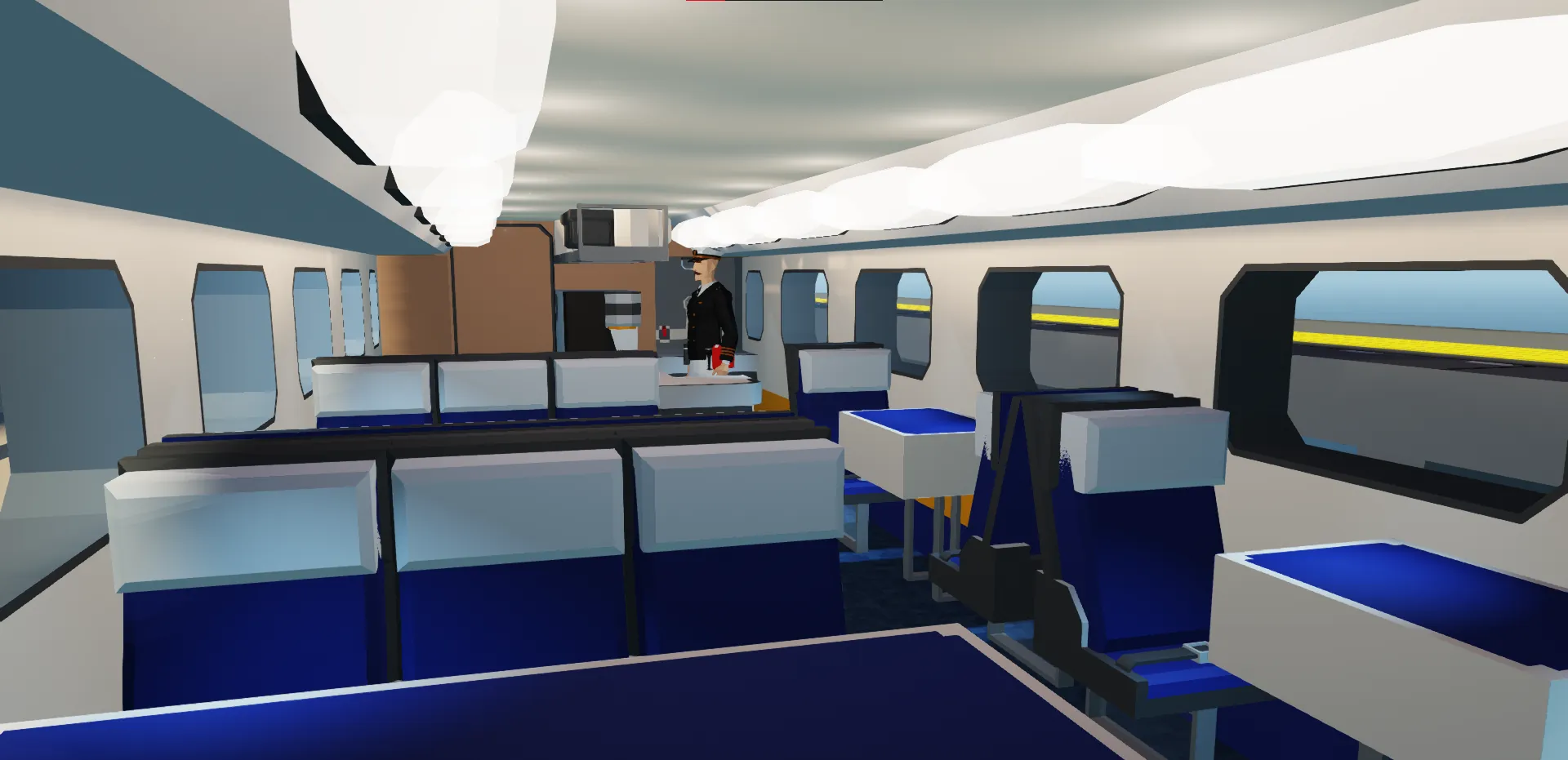
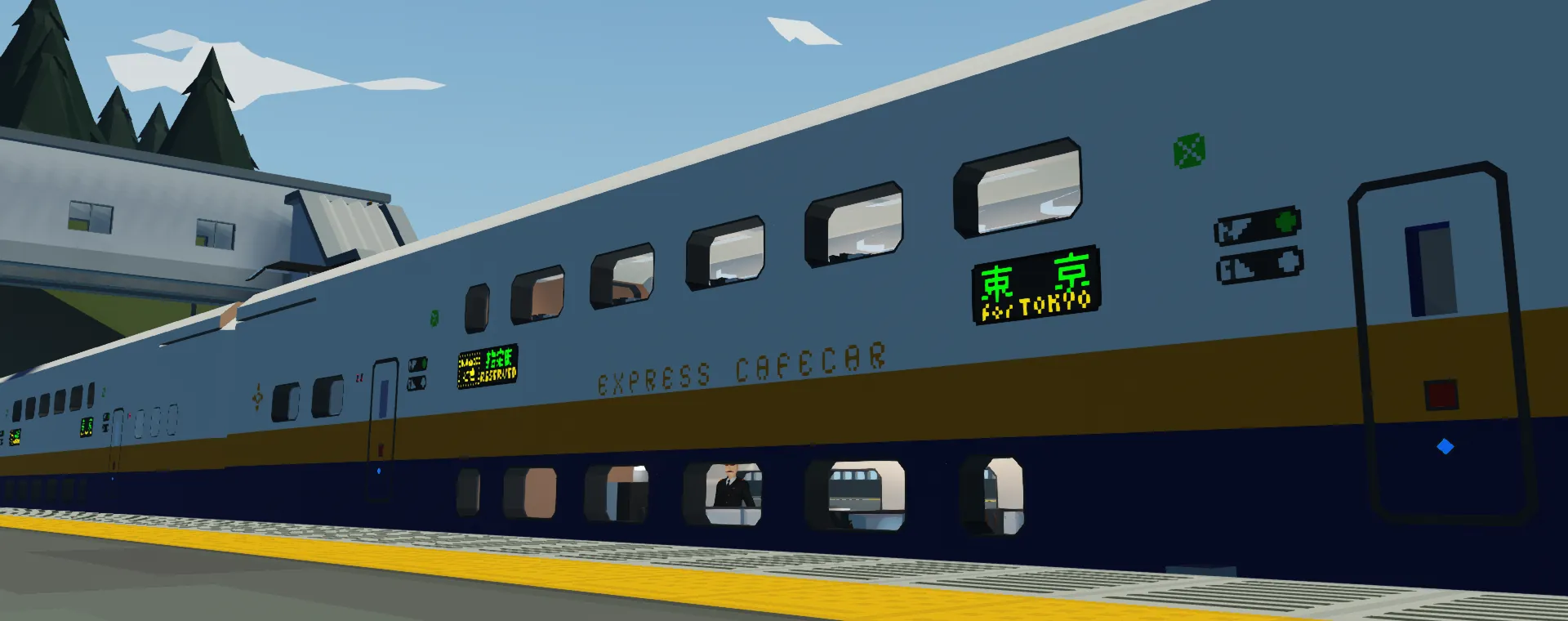
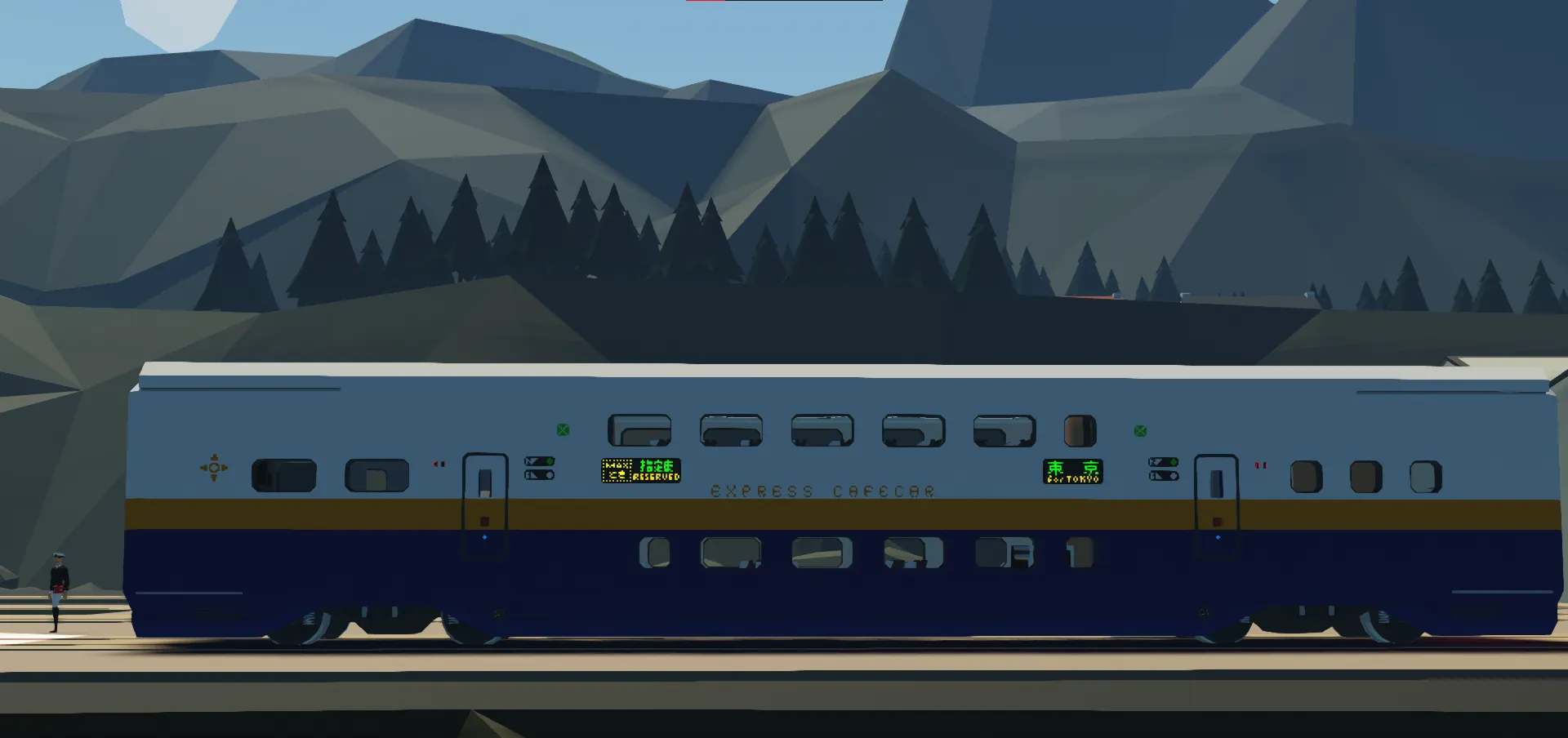
Almost identical to the regular Passenger Car, but the lower deck now houses the "Express Cafe" that serves light snacks and drinks on trips. Like it's sister coach, it relies on batteries.
Both decks are seated. The upper deck remains as a Green Car (first-class) status for its extra space, while the lower deck is home to the Express Cafe.
Max Speed
300 km/h
Total Seats
52
Deck 1 Seats
16
Deck 2 Seats
36
Weight
15,590 kg
Functionally identical to the Passenger Car but fitted with a pantograph for overhead collection. Like its sister coach, it relies on batteries alone when uncoupled, with real-world performance optimised in a full consist.
Seating and class layout mirror the Passenger Car: the upper deck is Green Car and the lower deck Ordinary Car.
Max Speed
300 km/h
Total Seats
72
Deck 1 Seats
36
Deck 2 Seats
36
Weight
15,705 kg
Unlike a regular pantograph car, it is equipped with a 12-cylinder diesel-engine generator—just like the Train Car. It's main task is to assist Train Cars in generating and delivering power through out the entire cars formation.
Because of the onboard generator, only the upper deck is seated and classified as an Ordinary Car.
Max Speed
285 km/h
Total Seats
36
Deck 1 Seats
0
Deck 2 Seats
36
Weight
17,709 kg
Fuel Capacity
24,000 L