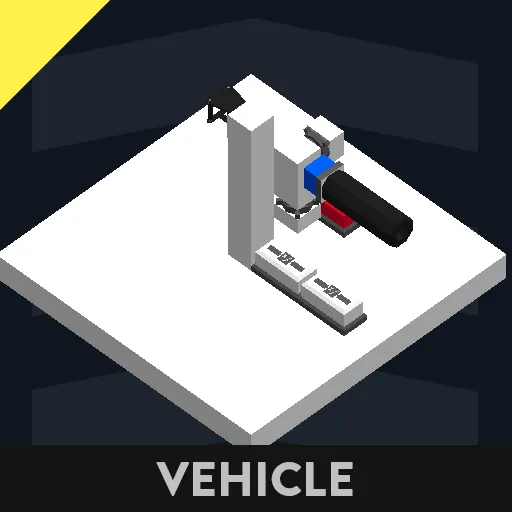
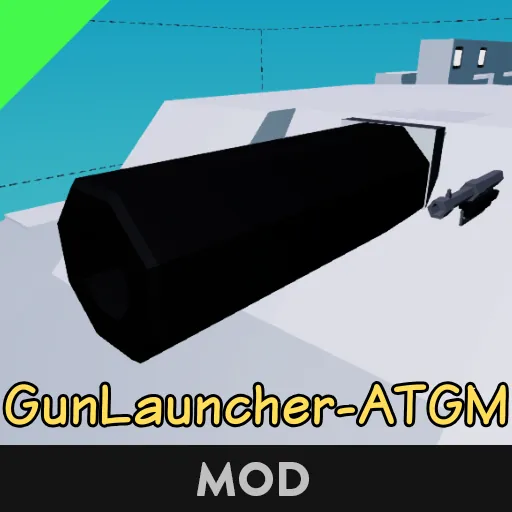
This is a config microcontroller for the (M)(INY) GunLauncher ATGM MOD.
Preset Overview
- Manual = uses all values exactly as set
- Balanced = general-purpose
- Stable = less overshoot
- Agile = faster response, more aggressive
Unit Notes
- Rad = radians, not degrees
- MPS = meters per second
- M = meters
- S = seconds
Practical Tuning Tips
- If the missile overshoots, increase Lookahead or reduce Gain.
- If the missile feels too slow, increase Cruise Speed or Max Turn Rate.
- If the missile feels unstable, reduce Gain or Max Turn Rate.
- If the missile clips the launcher or vehicle, increase Spawn Forward Offset or adjust Muzzle Offset.
Known Assumptions
- Muzzle offset usually needs to be adjusted for each vehicle.
- Guidance settings labeled Rad must be entered in radians, not degrees.
- Extreme values can make the missile unstable or produce unrealistic behavior.
Below is an explanation of each config setting.
Gun Launcher ATGM Config Microcontroller Guide
Config Mode
- Manual
Outputs all values exactly as set below.
- Balanced
Uses the Manual values as a base, then overrides only the ATGM flight and guidance behavior toward a standard balanced setup.
- Stable
Uses the Manual values as a base, then overrides only the ATGM flight and guidance behavior toward a stability-focused setup.
- Agile
Uses the Manual values as a base, then overrides only the ATGM flight and guidance behavior toward a maneuverability-focused setup.
Notes
- Presets only override the ATGM flight and guidance behavior.
- Offset values, ammo types, damage handling, shell speed, maximum range, maximum flight time, and reload times always use the Manual values.
- Any setting labeled with Rad uses radians, not degrees.
Example: Guidance Deadband Rad = 0.00873 is about 0.5 degrees
Example: Max Turn Rate Rad Per S = 0.5236 is about 30 degrees per second
Meaning of Each Setting
Shell Reload S
Reload time for the normal shell.
Unit: seconds.
Lower values allow the shell to be fired more often.
ATGM Reload S
Reload time for the ATGM.
Unit: seconds.
Lower values allow the missile to be fired again sooner.
Muzzle Offset X
Left-right offset of the muzzle position.
Unit: meters.
Positive is right, negative is left.
This affects projectile spawn position and visual effects.
Muzzle Offset Y
Forward-backward offset of the muzzle position.
Unit: meters.
Positive is forward, negative is backward.
This affects projectile spawn position and visual effects.
Muzzle Offset Z
Up-down offset of the muzzle position.
Unit: meters.
Positive is up, negative is down.
This affects projectile spawn position and visual effects.
Spawn Forward Offset M
Additional forward distance from the muzzle where the projectile is spawned.
Unit: meters.
Use this to prevent immediate collision with the barrel or vehicle.
Shell Projectile Type
Projectile Type ID for the normal shell.
This affects appearance and in-game shell behavior.
Shell Damage Type
Damage Type ID for the normal shell.
This affects the shell’s damage attribute.
Shell Speed MPS
Launch speed of the normal shell.
Unit: m/s.
Higher values increase shell velocity.
HEAT Impact Projectile Type
Projectile Type ID used for the HEAT projectile generated when the ATGM impacts.
This affects the appearance and handling of the terminal damage effect.
HEAT Impact Damage Type
Damage Type ID used for the HEAT projectile generated when the ATGM impacts.
This affects the damage attribute of the terminal impact effect.
HEAT Impact Projectile Count
Number of projectiles generated when the ATGM impacts.
Increasing this makes the terminal damage effect stronger.
HEAT Impact Speed MPS
Speed of the HEAT projectile generated on impact.
Unit: m/s.
Higher values increase the terminal projectile’s impact velocity.
HEAT Impact Spread Deg
Spread angle of the HEAT projectile generated on impact.
Unit: degrees.
0 means straight ahead. Higher values make it spread out.
HEAT Impact Backstep M
Distance behind the impact point where the HEAT projectile is spawned.
Unit: meters.
If too large, it spawns too far back.
If too small, it may spawn too close and clip into the target.
Eject Duration S
Duration of the ATGM ejection phase.
Unit: seconds.
Higher values make the low-speed ejection phase last longer.
Booster Delay S
Delay between ejection and main motor ignition.
Unit: seconds.
Higher values delay motor ignition.
Eject Speed MPS
Initial ejection speed of the ATGM.
Unit: m/s.
Higher values make the missile leave the barrel faster.
Cruise Speed MPS
Cruise speed of the ATGM.
Unit: m/s.
Higher values increase the missile’s top speed in flight.
Cruise Accel MPS2
Main motor acceleration of the ATGM.
Unit: m/s^2.
Higher values make the missile reach cruise speed faster.
Preboost Drag Per S
Deceleration before the booster ignites.
Unit: per second.
Higher values make the missile lose speed more easily after ejection.
Max Range M
Maximum flight distance of the ATGM.
Unit: meters.
If this distance is exceeded, the missile will self-destruct.
Max TOF S
Maximum time of flight of the ATGM.
Unit: seconds.
If this time is exceeded, the missile will self-destruct.
Min Impact Distance M
Minimum distance before impact is allowed.
Unit: meters.
Used to prevent immediate close-range detonation right after launch.
Fuse Arm Distance M
Distance before the fuse becomes armed.
Unit: meters.
Terminal damage will not activate until this distance is reached.
Track Hold S
How long the missile keeps the last LOS after tracking is lost.
Unit: seconds.
Higher values make it more tolerant of brief tracking interruptions.
Track Self Destruct S
How long the missile continues flying after tracking is lost before self-destructing.
Unit: seconds.
Higher values let it continue flying longer after track loss.
SACLOS Min Along M
Minimum forward distance used when placing the guidance target point along the LOS.
Unit: meters.
If too small, the missile is more likely to behave erratically at short range.
SACLOS Lookahead M
Lookahead distance along the LOS.
Unit: meters.
Higher values make guidance more stable.
Lower values make it more responsive, but also more prone to overshoot.
Guidance Deadband Rad
Range of small error that will be ignored.
Unit: radians.
Higher values reduce end-phase wobble, but slightly reduce tracking precision.
Guidance Gain
Strength of the guidance response.
Unit: dimensionless.
Higher values make the missile turn more aggressively, but too much can cause weaving and overshoot.
Max Turn Rate Rad Per S
Maximum turn rate of the ATGM.
Unit: radians per second.
Higher values allow sharper turning, but setting it too high can make the missile unstable.