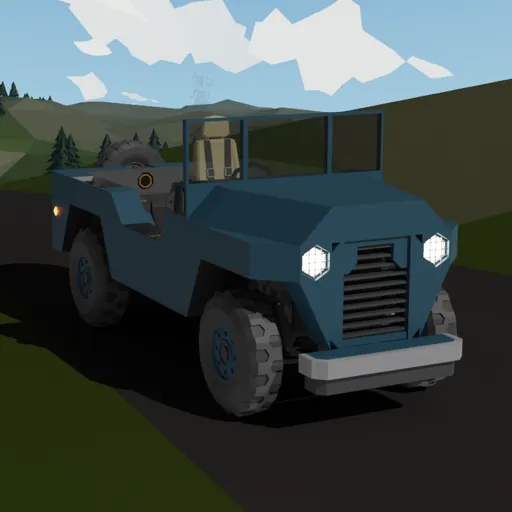
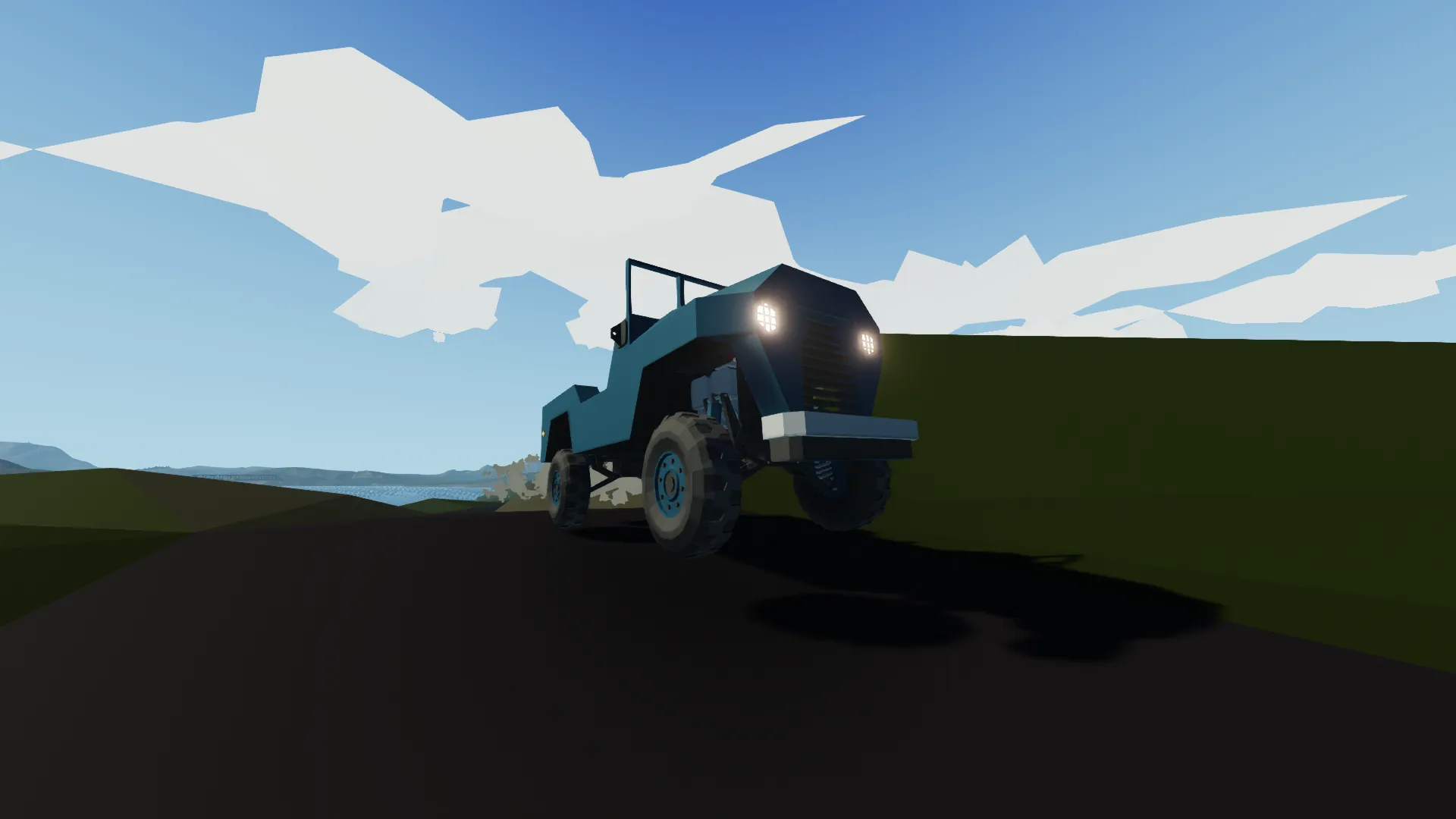
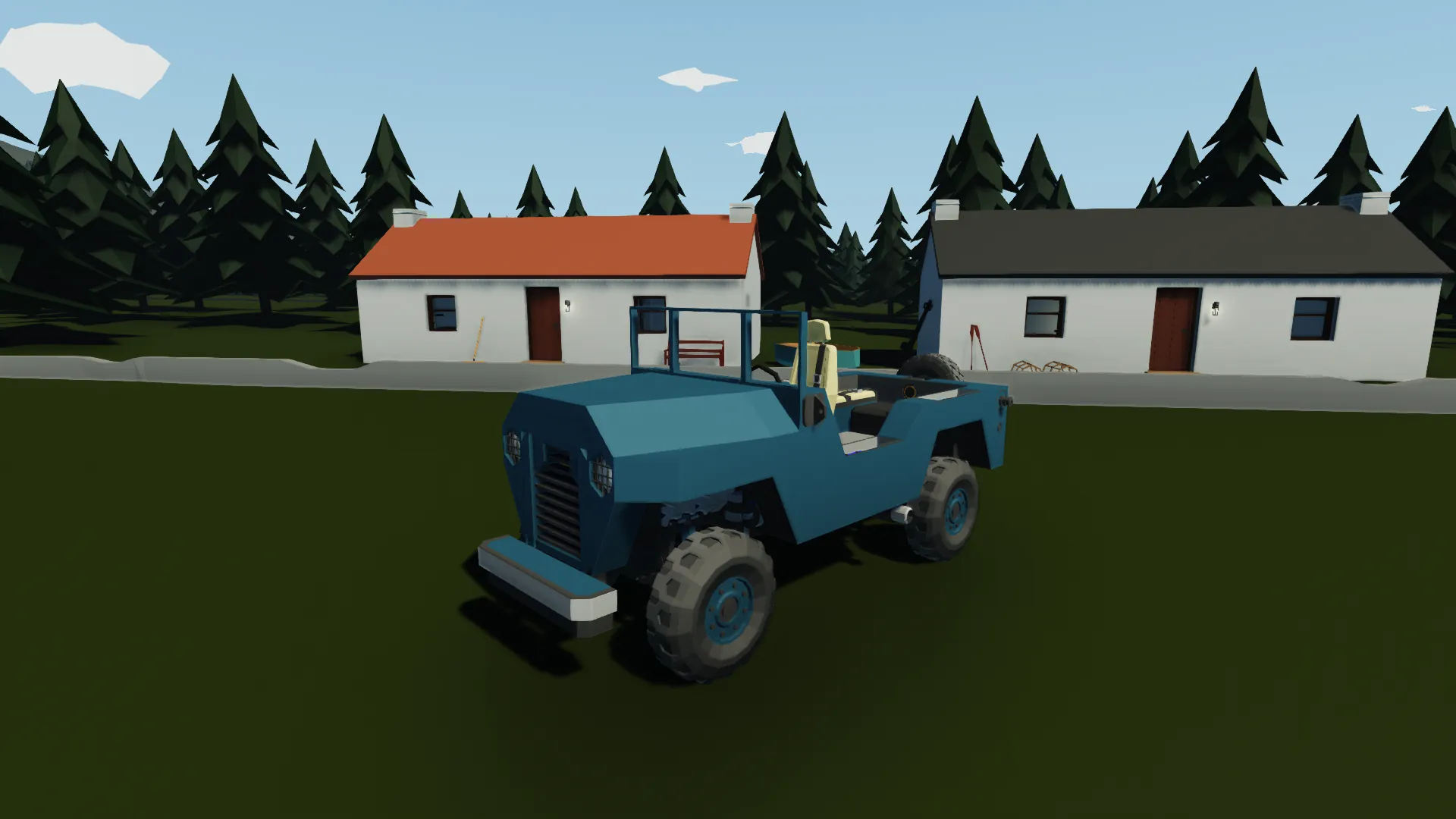
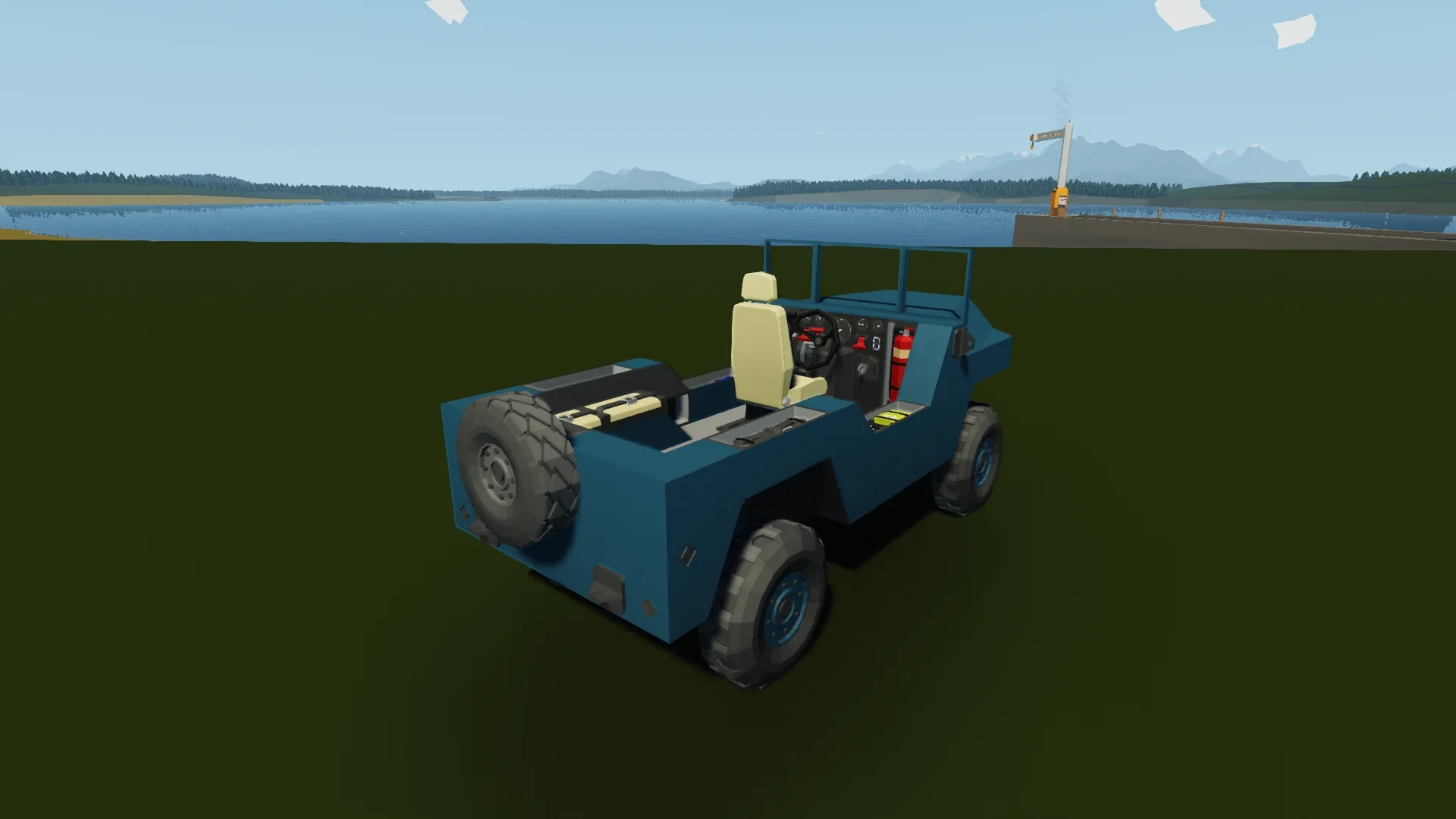
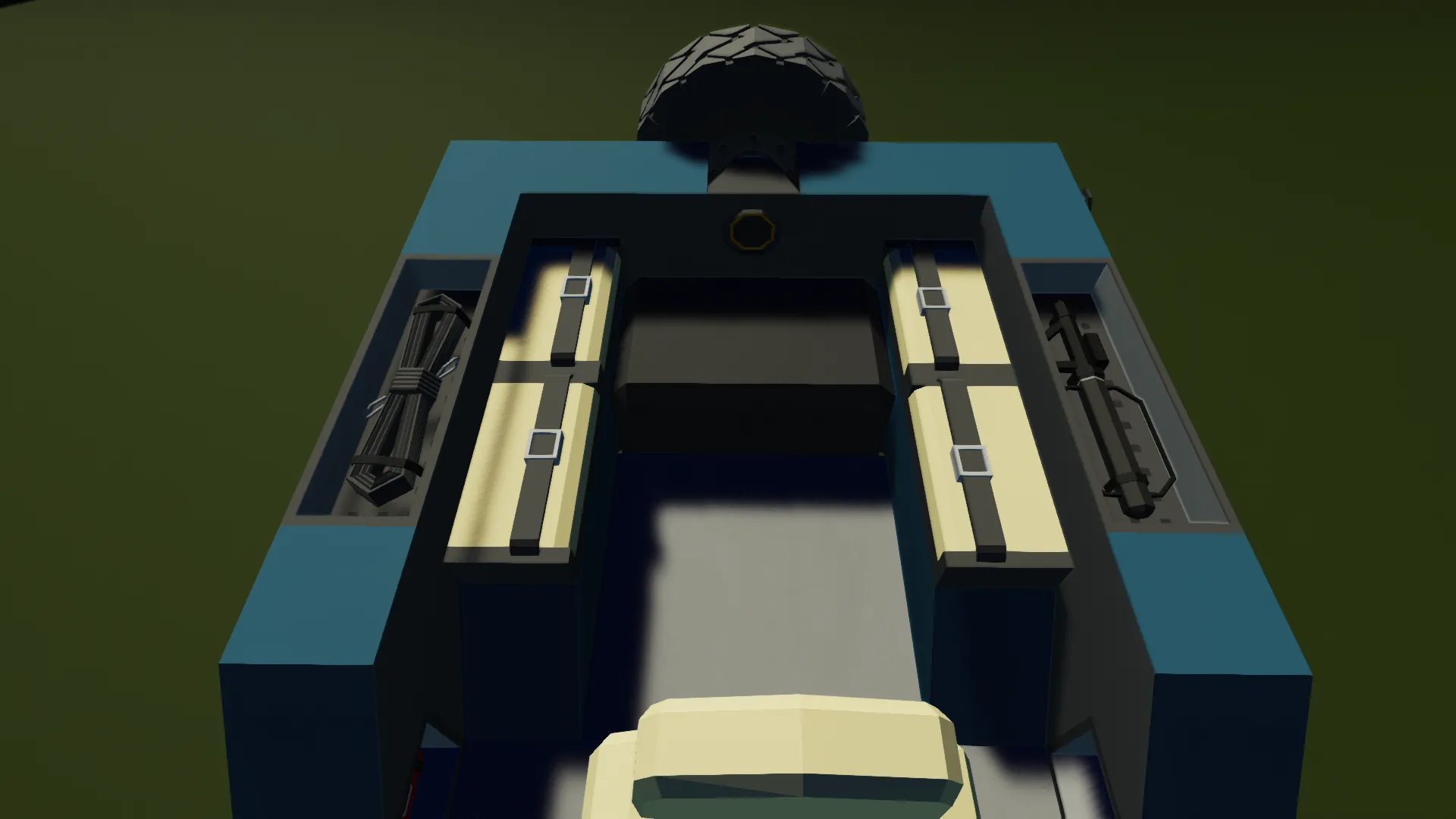
A Willys Jeep from World War II built for rescues and exploration. Incredibly robust and cheap, $6500 in career mode. Steering has been changed from the traditional logarithmic steering curves in favor of a more simple linear curve that makes it much easier to steer with keyboard. Steering sensitivity is based on the vehicle speed. Higher speed means slower steering which helps prevent understeering. If using a controller, open the property panel on the small microcontroller and set "Input Hardware" to controller.
Features and Specs
- Excellent Handling and Grip
- Four Wheel Drive
- Range Box (Hi/Lo Gear)
- 3 Speed Manual Transmission
- 60 MPH Top Speed
- 65 Mile Range
- Rope Anchor Points
- Auto Steering Sensitivity Adjustment
- Horn
Equipment
- Fire Extinguisher
- Rope
- Handheld Transponder
- Handheld Radio
- Defibrillator
- Welding Blowtorch
- 3x First Aid Kits
- 4x Passenger Seats
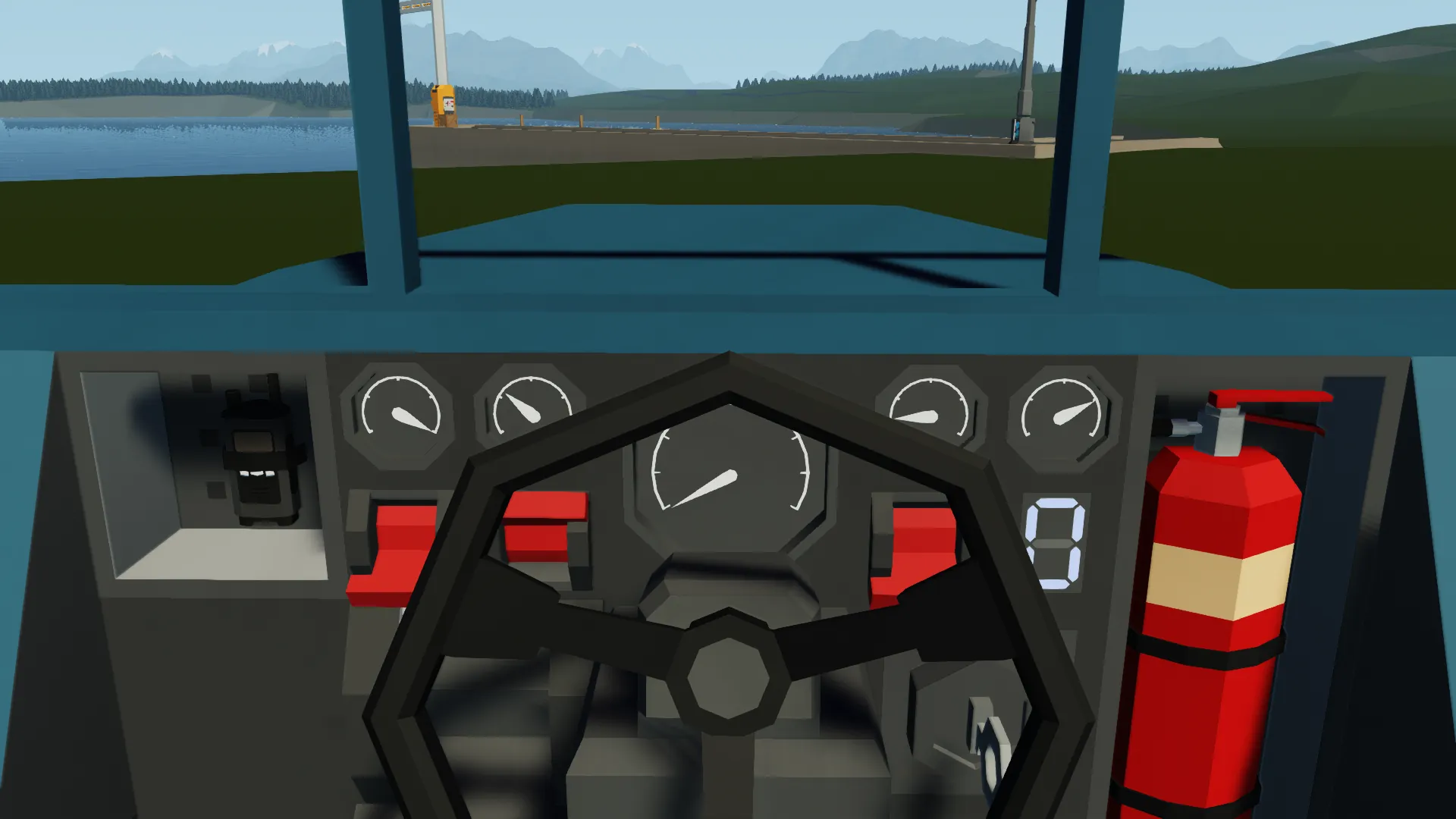
Starting/Shutdown - For the vehicle to start the ignition key must be on and the vehicle needs to be in neutral ("0" on the dashboard). The vehicle will start automatically if the engine isn't already running. Disable the ignition to shut off the engine. If the vehicle stalls while driving: Stop and shift into neutral, the engine will automatically restart.
Shifting - The vehicle has an automatic clutch so using the clutch is not necessary when shifting gears. "2" key is downshift, "3" key is upshift. The seven segment display on the far right of the dashboard displays the current gear. Shifting does not work unless the ignition is on. The switch to the left of the seven segment display enables the low gear box which allows for slower speeds and higher torque when towing or climbing.
Battery - If the battery should ever die, the circuit breaker on the bottom left of the dashboard can be used to enable the reserve battery. Both batteries are automatically charged while the vehicle is running. If both batteries die, there is an electric cable connector behind the front passenger side wheel.