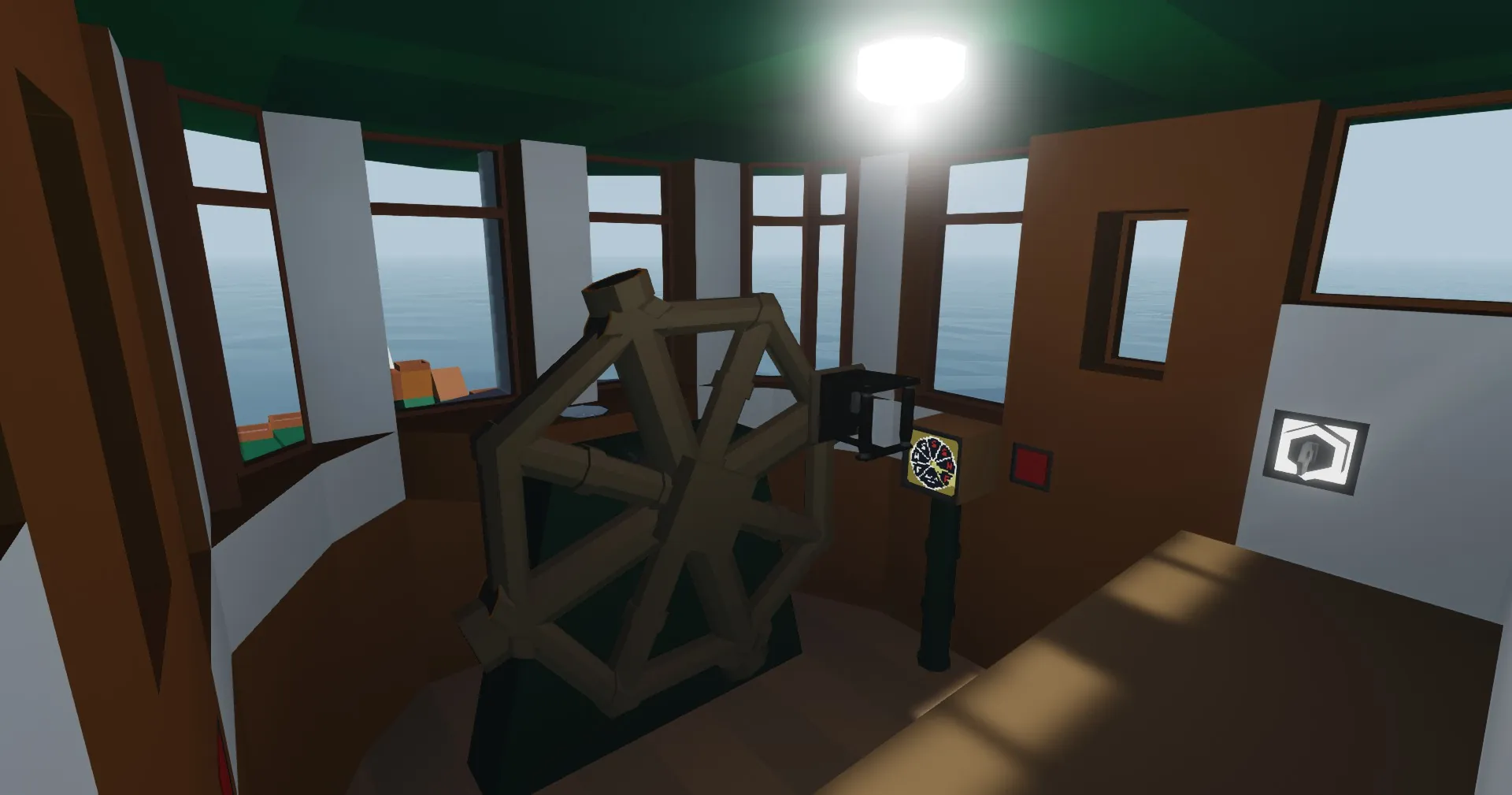
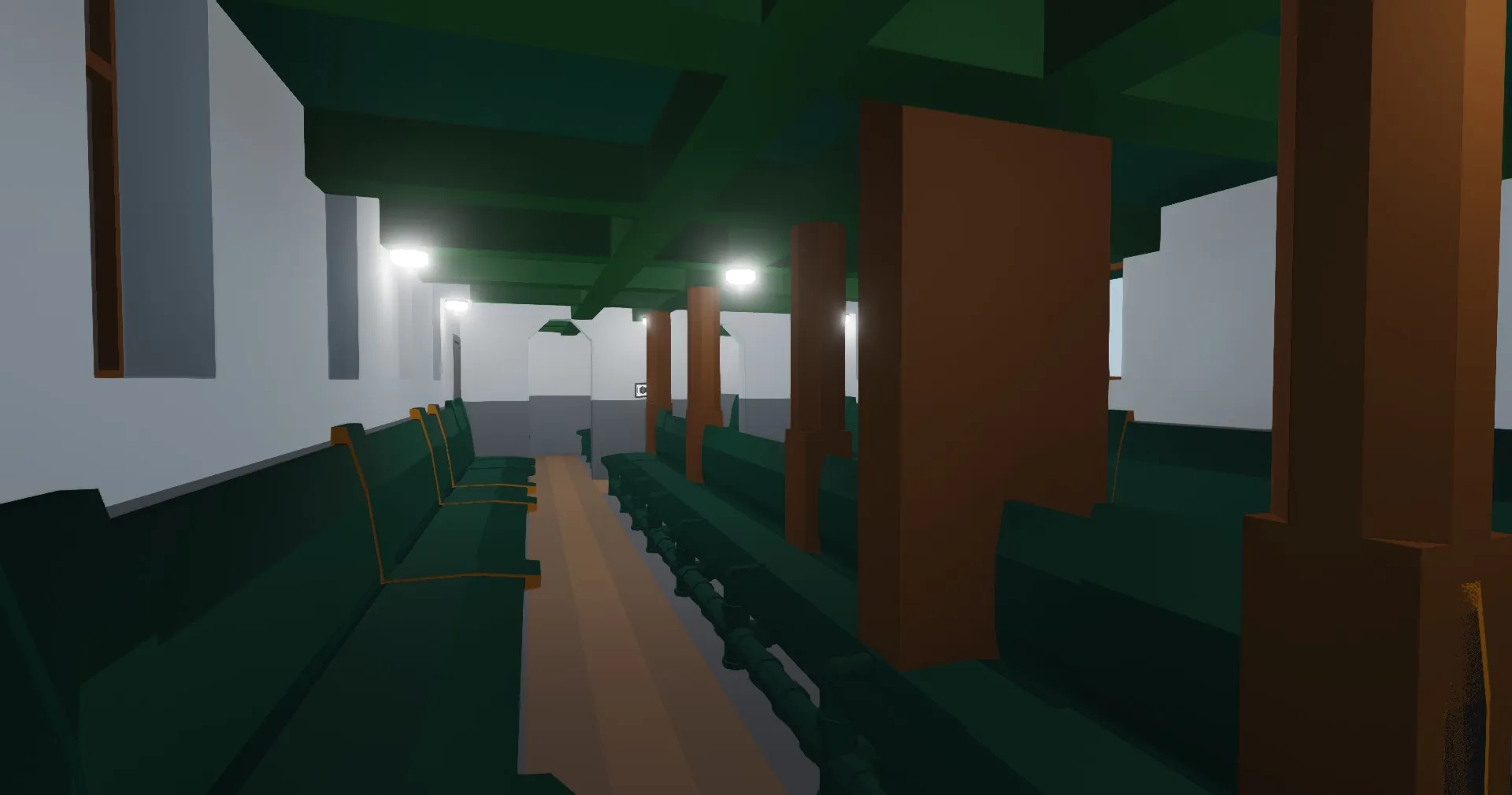
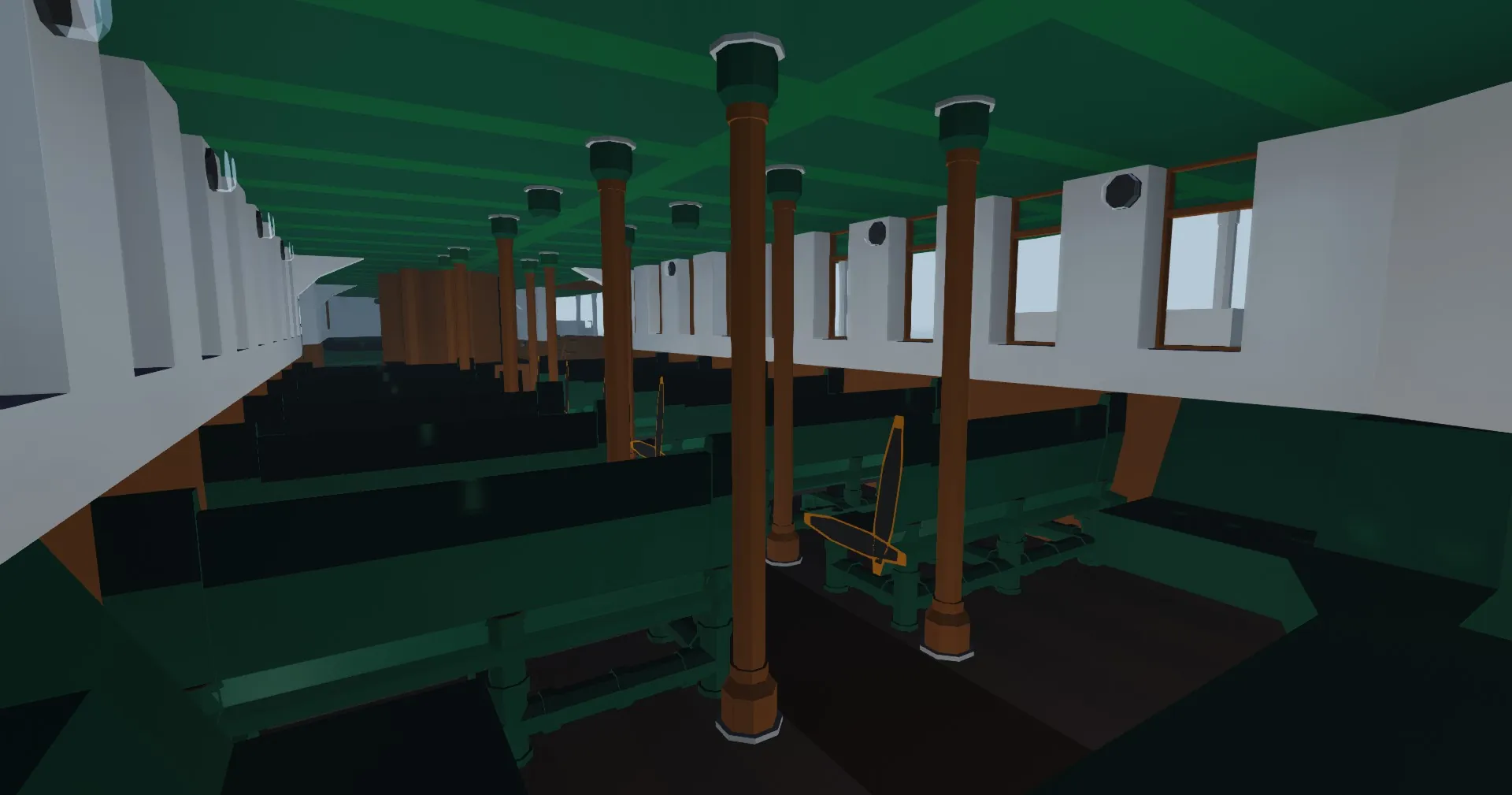
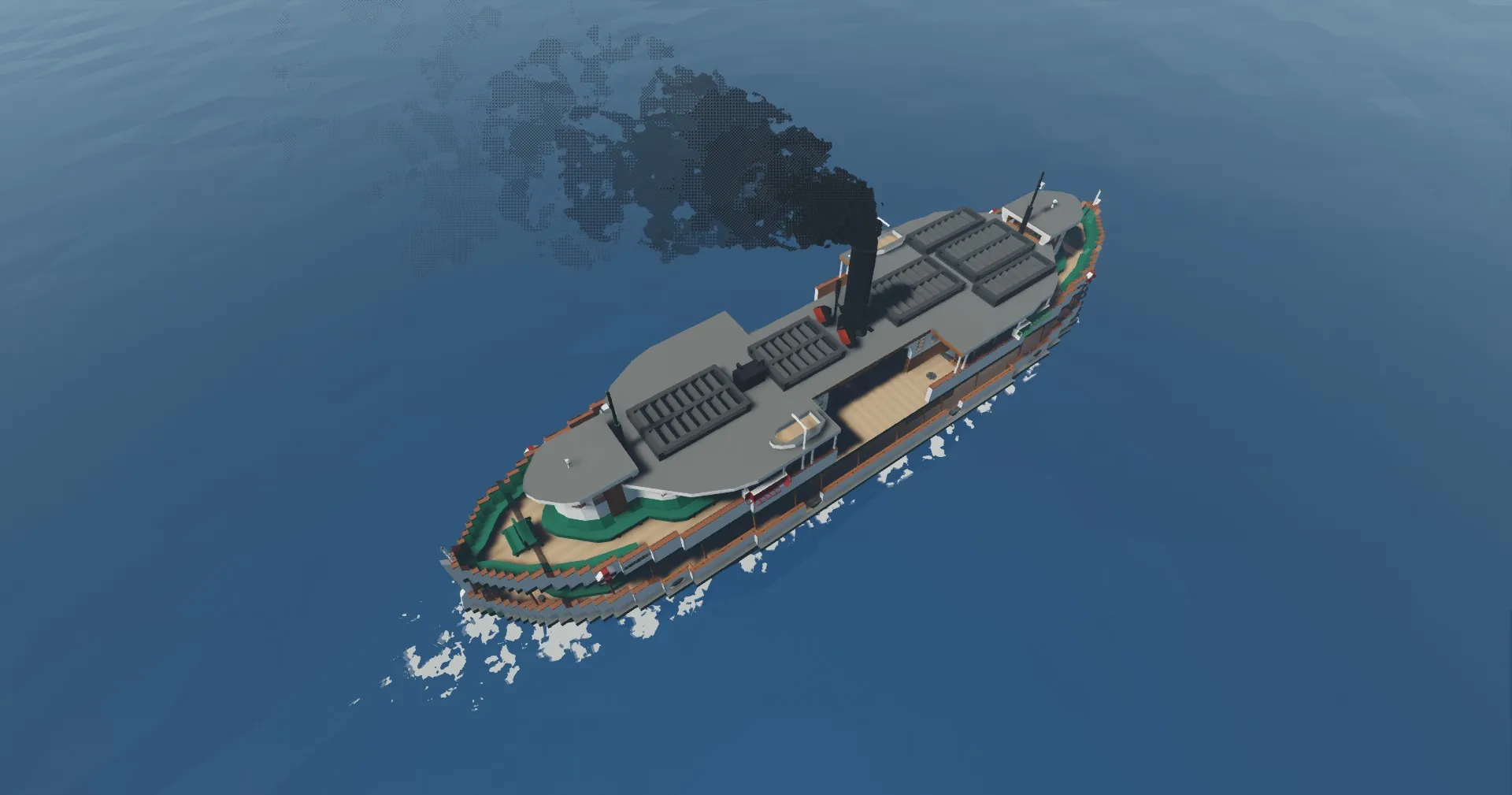
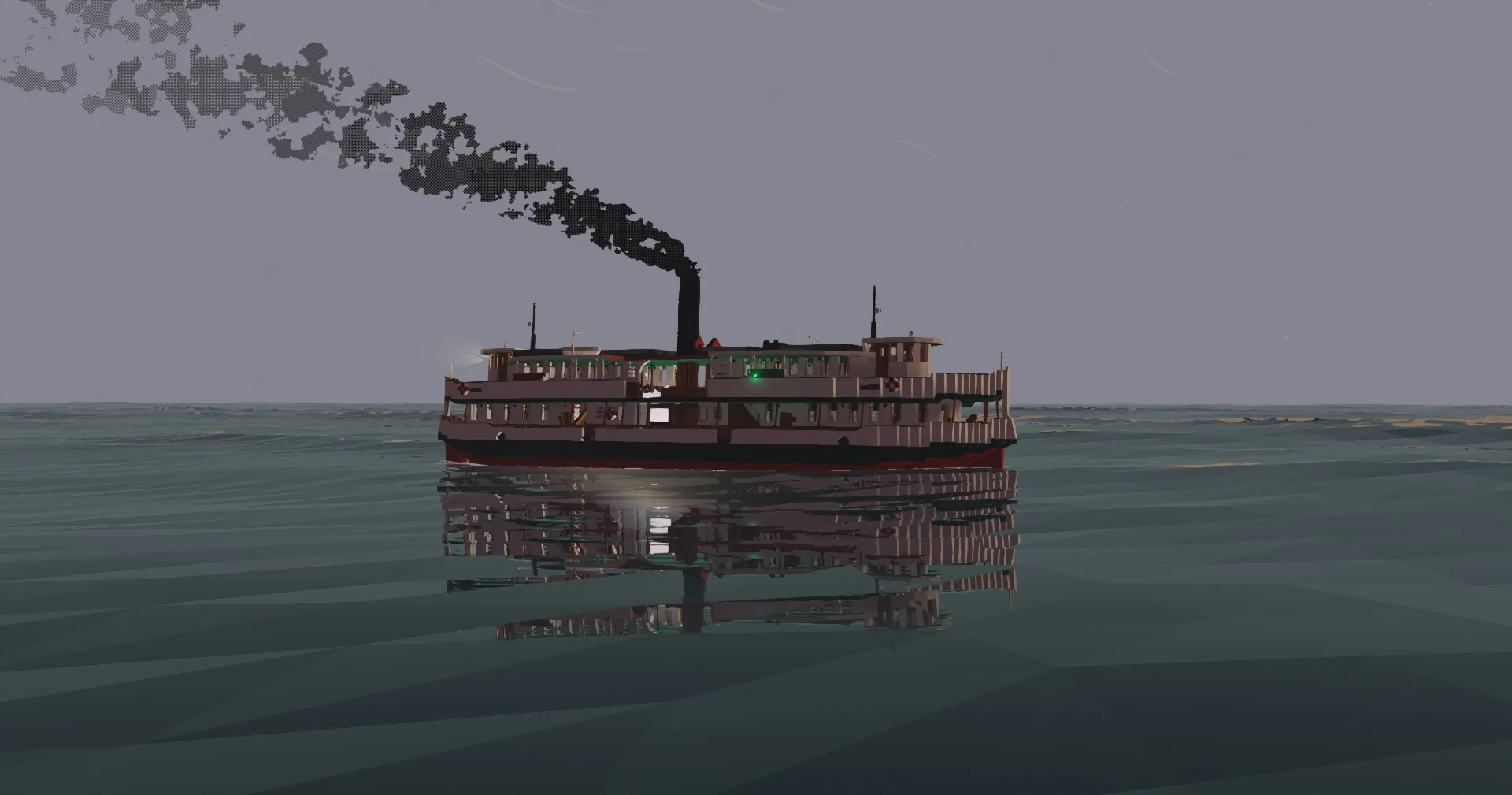
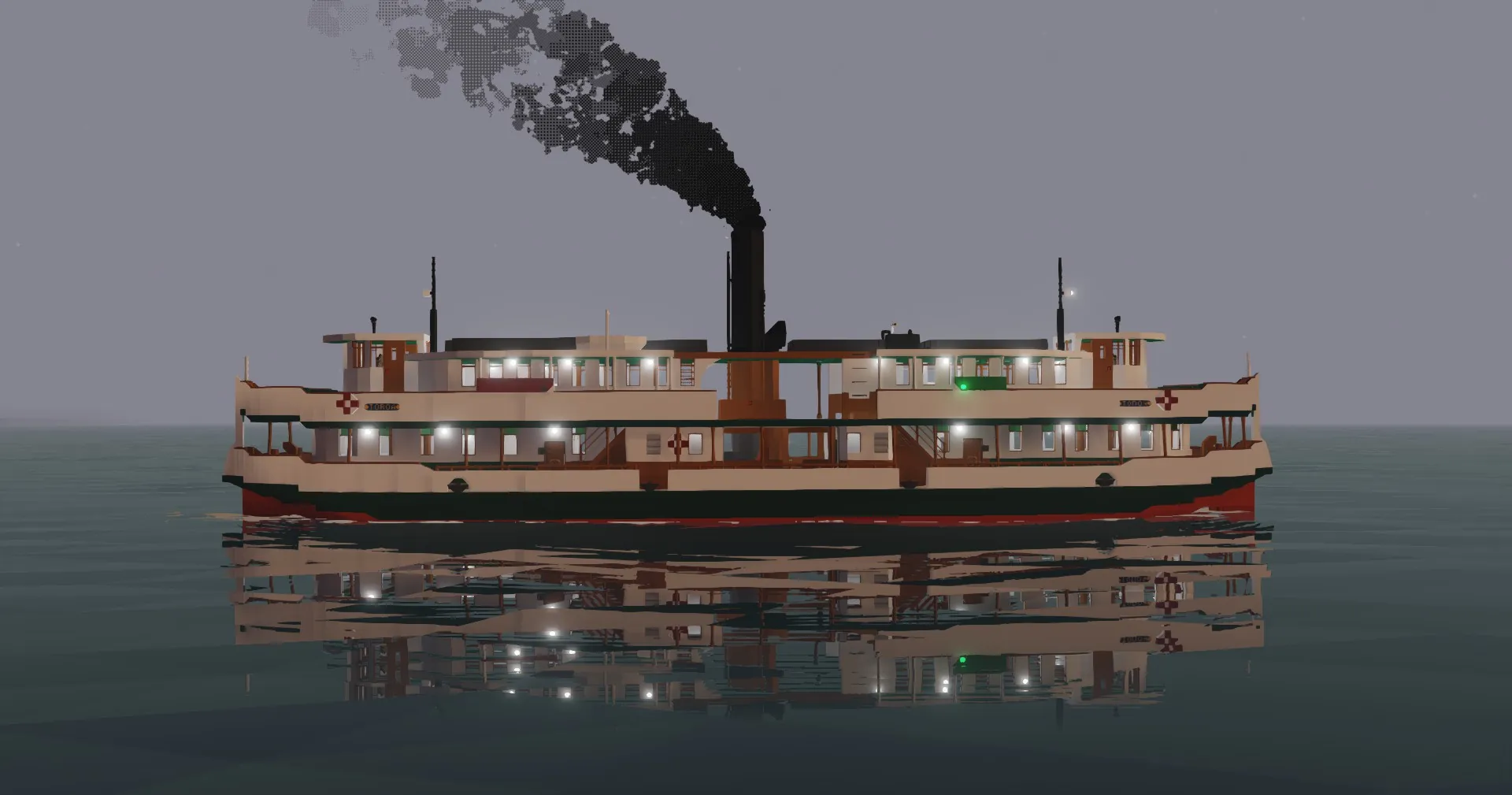
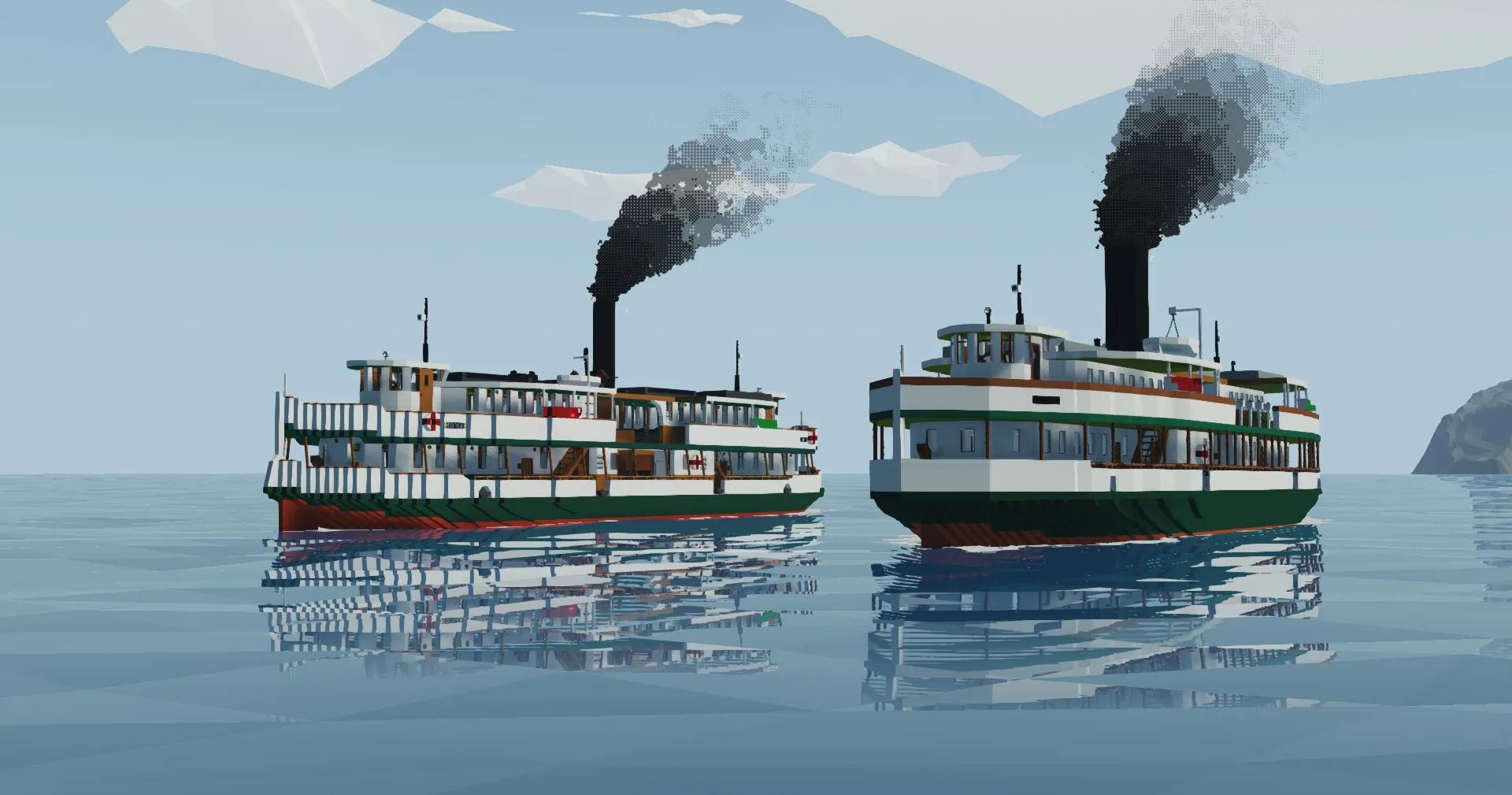
S.S. TOROA
 Requires infinite electric!!
The ship is can sink in rough enough weather. \
Telegraph credit: Runar_MountainView
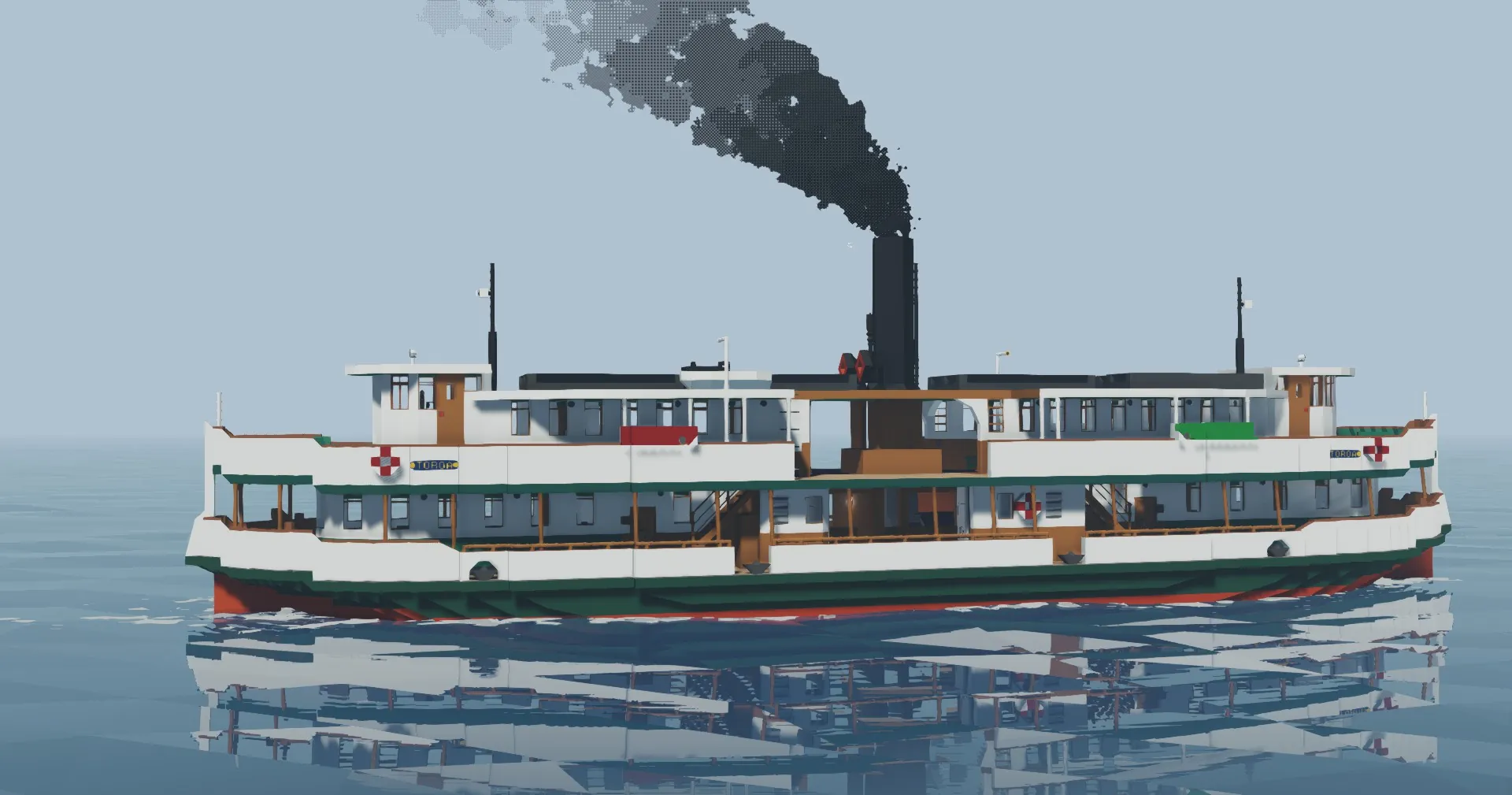
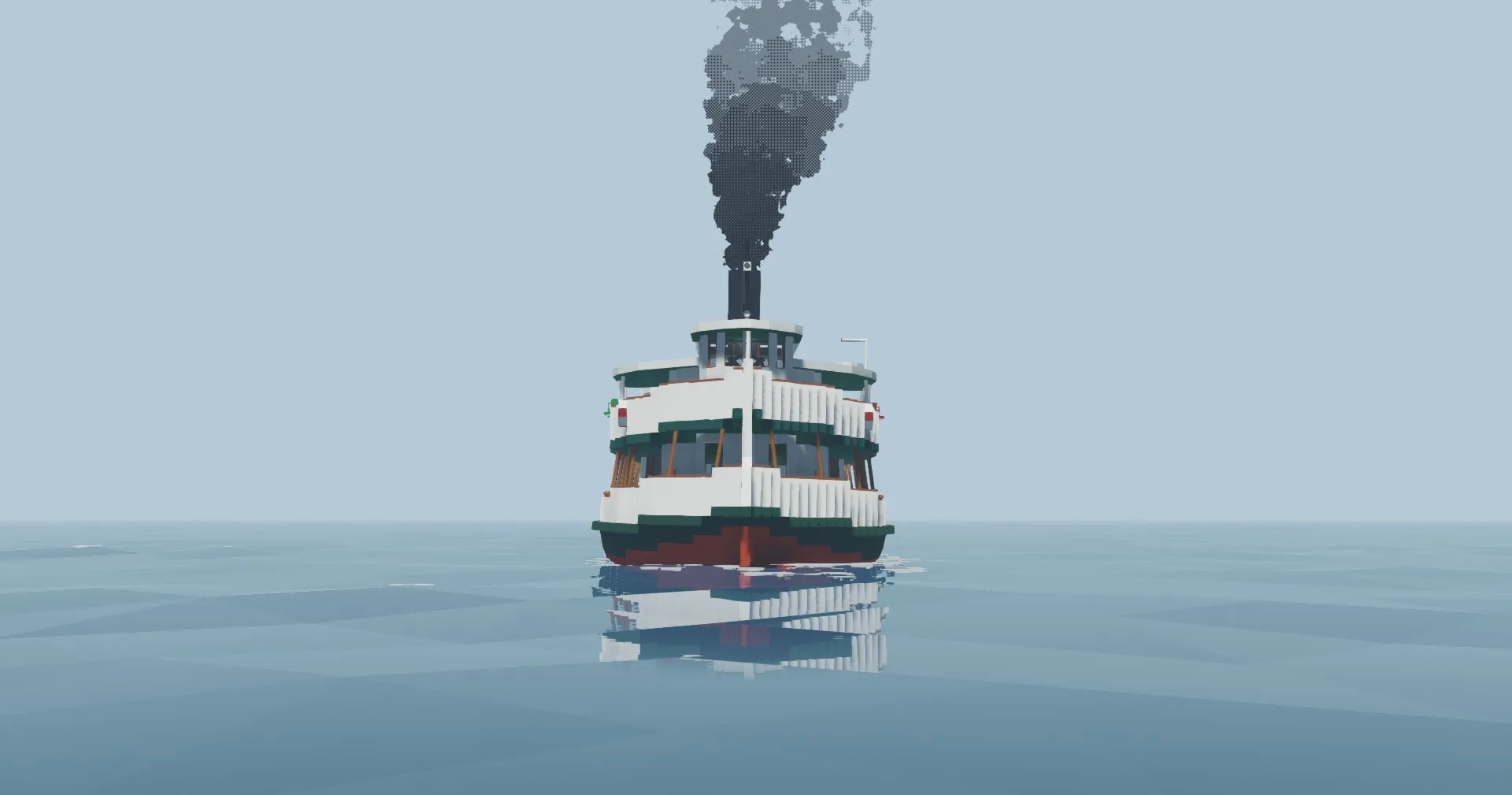
A remake of my original Toroa, this time more accurate in all ways.
If you have any NZ ship suggestions, please comment them.
SPECIFICATIONS
SS Toroa
Speficiations
Builder
George Niccol, ship owner & ship builder, St Mary’s Bay, Auckland, New Zealand. Ironwork by the Senior Foundry. Machinery installed by H.M. Warner, Quay Foundry, Auckland
LAUNCHED
28th April 1925
OUT OF SERVICE
8th August 1980
LOA
40.5M
BEAM
9.57M
GROSS TONNAGE
309 Tons
COMPLEMENT
Crew: Four—skipper, deck-hand, engineer, stoker
Passengers:1221 river limits (enclosed water limits) ; 682 extended river limits (inshore water limits)
History
Most info comes from the David Balderston book "The Double Enders"
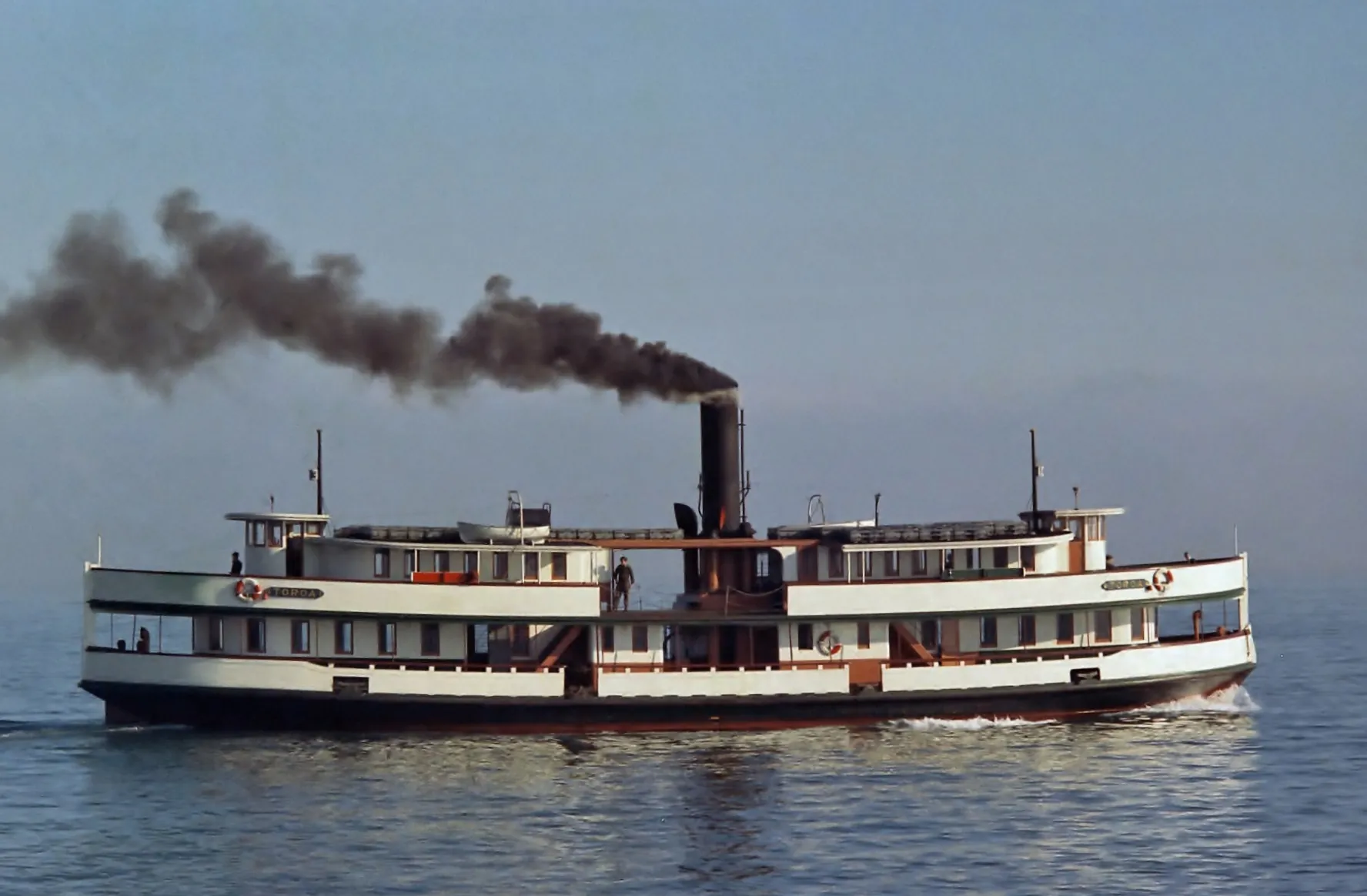
Tenders for a new ferry for the St Heliers service were called in September 1923, using plans and specifications provided by the DSFCoy, and were opened on October 11 1923, George Niccol's tender was accepted, but shortly after bus services started increasing in number. So they cancelled and renegociated for Niccol to build a ferry based off "The Peregrine". Contracts were signed in January 1924, and the keel was laid on April 28th 1924. Toroa was built off plans of the Takapuna Tramway Company's steamer "Lake Takapuna", making the ships identical sisters. Toroa was launched on April 28th, 1925, exactly a year after her keel was laid. Trials began in early July, the company was pleased with the lack of engine vibration at full speed. And she was put into service on the Devonport run on July 8th, 1925. With the Toroa in service, they finally retired their final paddle steamer, the PS Osprey.
Toroa had multiple events during her service career, including collisions. One notable one was on May 30th, 1941, when she collided with her sister ship Kestrel. 2 people (Albert Charles Dacre, and William Crossale) died aboard Toroa, both collapsed suddenly.
Toroa was one of the ferries not to be laid up after the Harbour bridge opened on May 30th, and she continued on with service, and ownership was given to North Shore Ferries.
In September 1959 there was a proposal to be converted to diesel, and she was to be converted after The Peregrine, and Takapuna were converted to diesel. Neither of these ships ever were converted, and both never saw service again.
After the layup of Makora in december 1973, she became the last coal burning ferry in service, and one of 2 Albatross class ferries still in service (The other being Kestrel).
In Toroas final years, she was mainly used as a "Broken shift boat", backing up the main shift boats Kestrel and Baroona. (And Motunui or Iris Moana).
Finally, on August 8th, 1980 at midday, she left Devonport for the final time, sailing directly to the ferry yard to sit with all the derelict ferries, which had lay there for years.
She was originally intended on being put back into service, as she wasnt exactly obsolete, and some machinery repairs were completed, and preparations to renovate the hull were made, the Kestrel's refit held priority over Toroa. Paul Londrigan, engineer at the ferry yard, said she needed 4 frames replaced. But 1 or 2 of them were under the boiler, which would have been a big project, and the company had very little money. After George Hudson took the North shore ferry company over in October 1981, he planned to put Toroa back into service but she was set aside while the Baroona was modernised and put into survey, and these plans never came to anything.
In 1984, Toroa was sold to the Toroa Preservation society, and in 1985 was taken over by the NZ Maritime trust. She was shifted to the Western Viaduct in 1985, Trouble arose in March 1988 when the Harbour board declared she was derelict, and if not given a satisfactory restoration in 2 months, was to be broken up. But the board had a change of heart and agreed to give the Toroa a full maritime survey to establish a cost and extent of survey work, She was slipped for 3 days in August 1988, and fully inspected by marine experts, with reports on options including replacing the hull with original materials, or steel. She was shifted by the William C Daldy to Birkenhead wharf in 1990.
In 1995 it was announced that a floating dock for Toroas restoration was to be constructed, built of of 8 Ferro cement pontoons. It was said it would be cheaper than keeping her on drydock, but construction of the floating dock would cost $120,000. By January 1998, all pontoons were completed, and In April 1998, they were given permission to berth the pontoon at Stanley Bay Wharf for the restoration effort.
But on June 1st, 1998, tragedy struck when during a large storm, she sank. A meeting was convened, and it was decided that she was to be salvaged. And on July 1st, salvage was successful and she was raised, with only the loss of the upper cabin.
Public opinion moved on mooring Toroa on her floating drydock, and so plans to haul her ashore were considered.
In 2001, she was brought ashore at Henderson after Radio NZ agreed for the society to use a site that was unused by the company, and restoration is undergoing at this site. So far virtually her entire steel skeleton has been replaced, and stringer plates replaced. Replanking is thought to begin very soon, and the society has supplied all the wood it needs for this.