Sea Skimmer - Bi-C-1 | Experimental High-speed ferry
EXPERIMENTAL SEA SKIMMER "Bi-C-1"
(Fictional)
Some people shouldn't be allowed to make things.
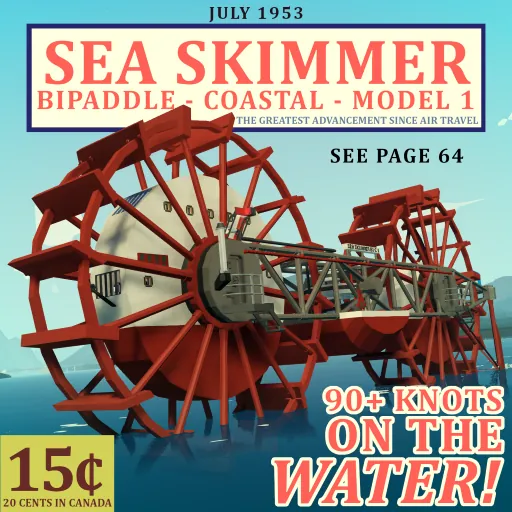
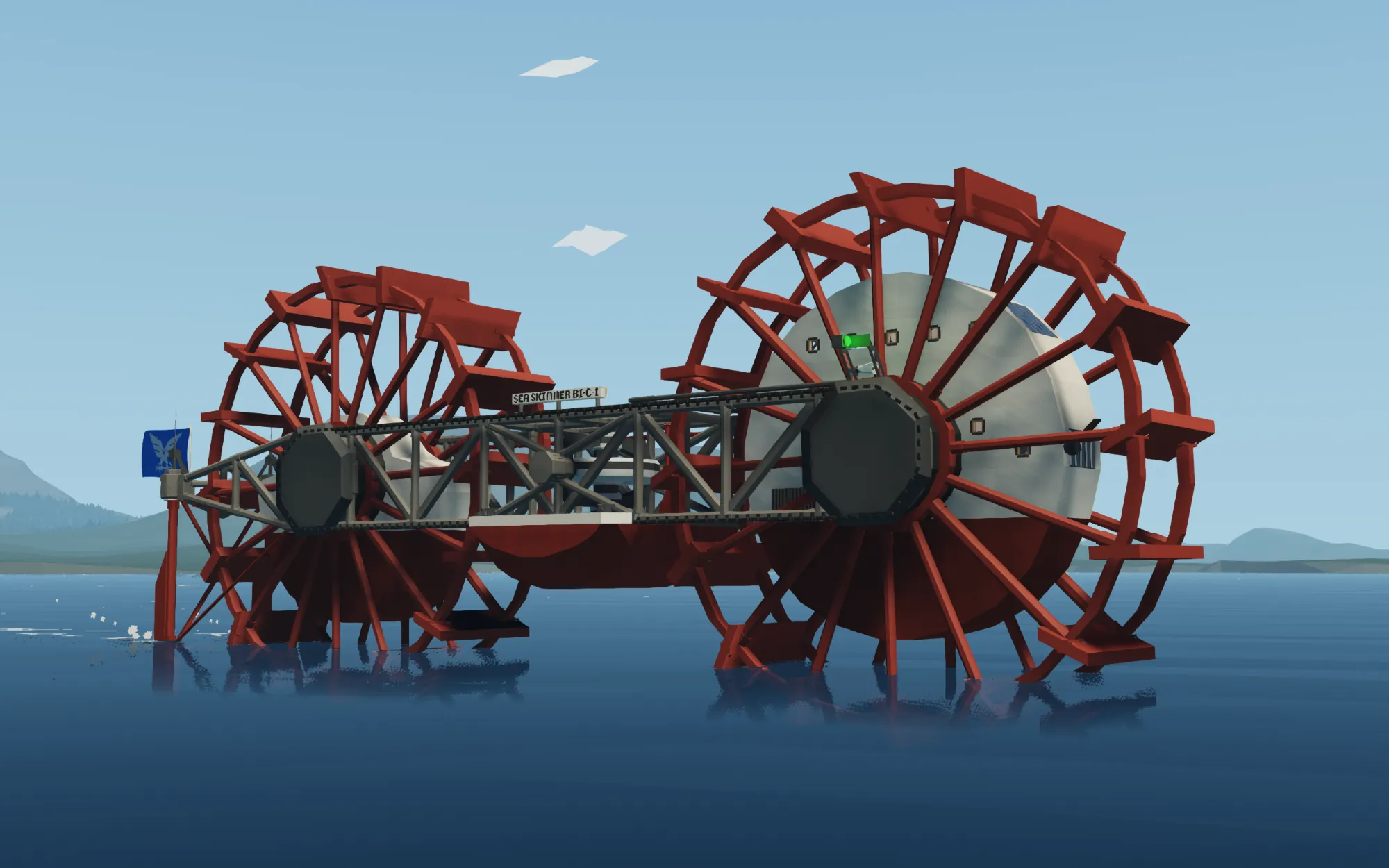
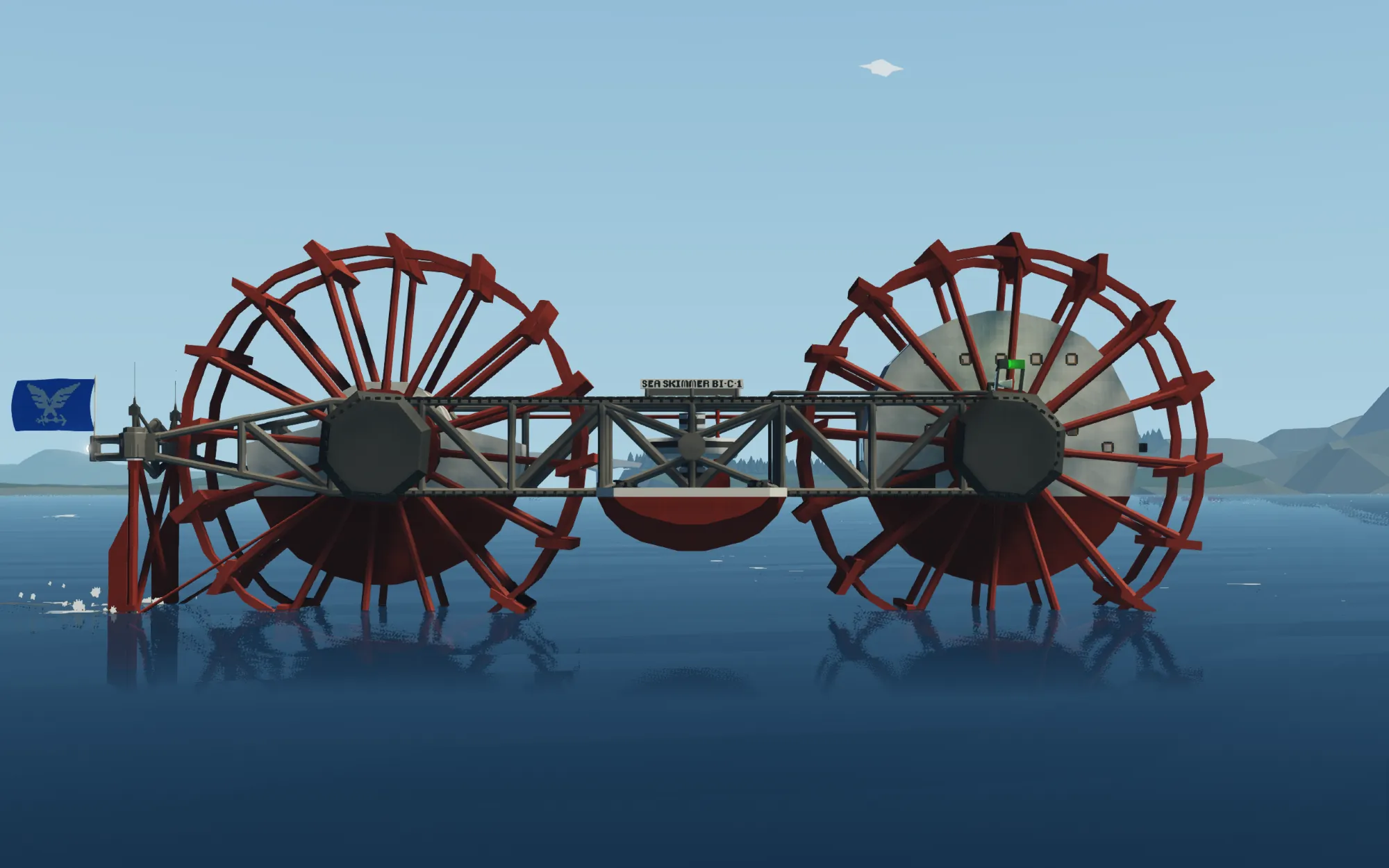
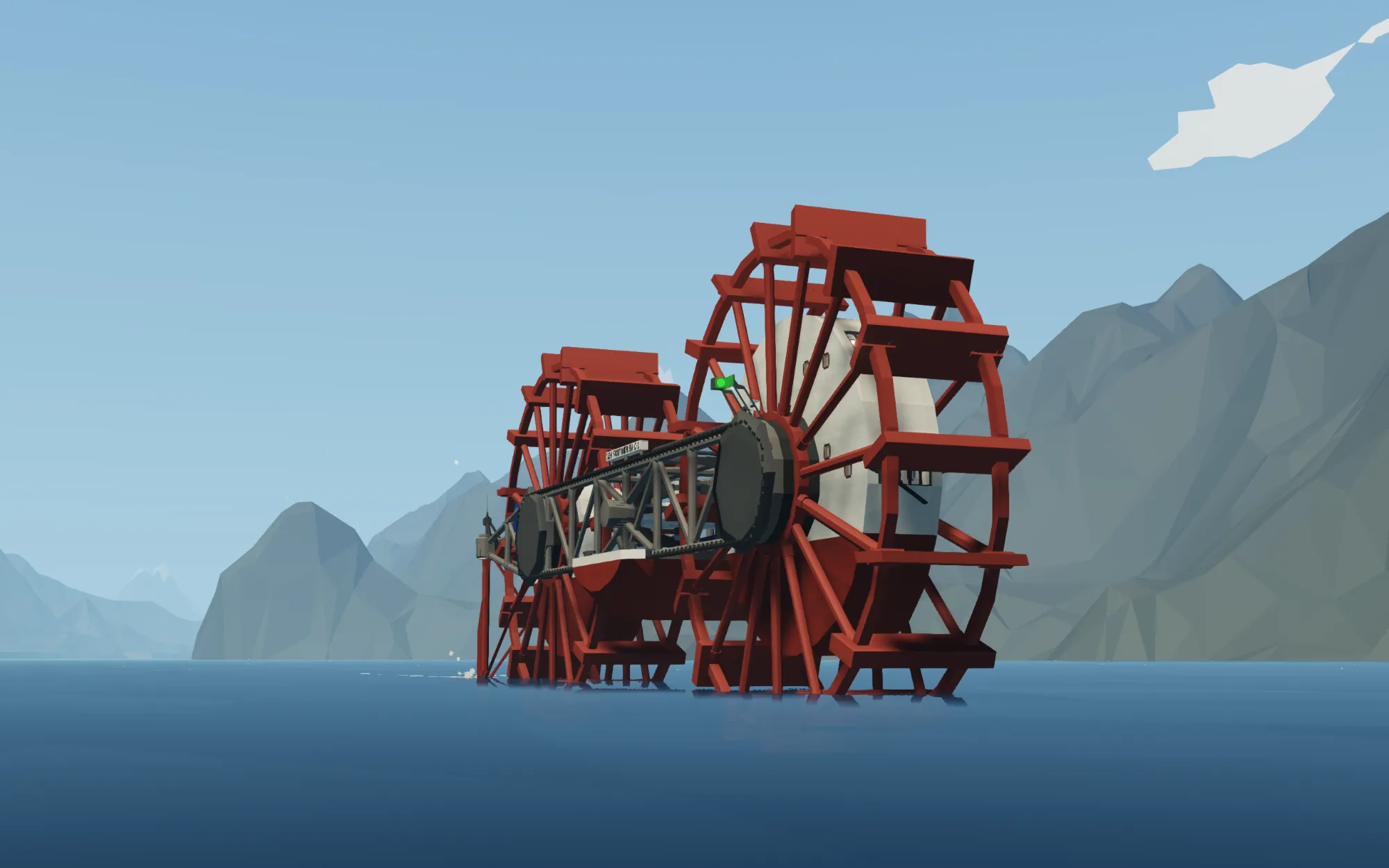
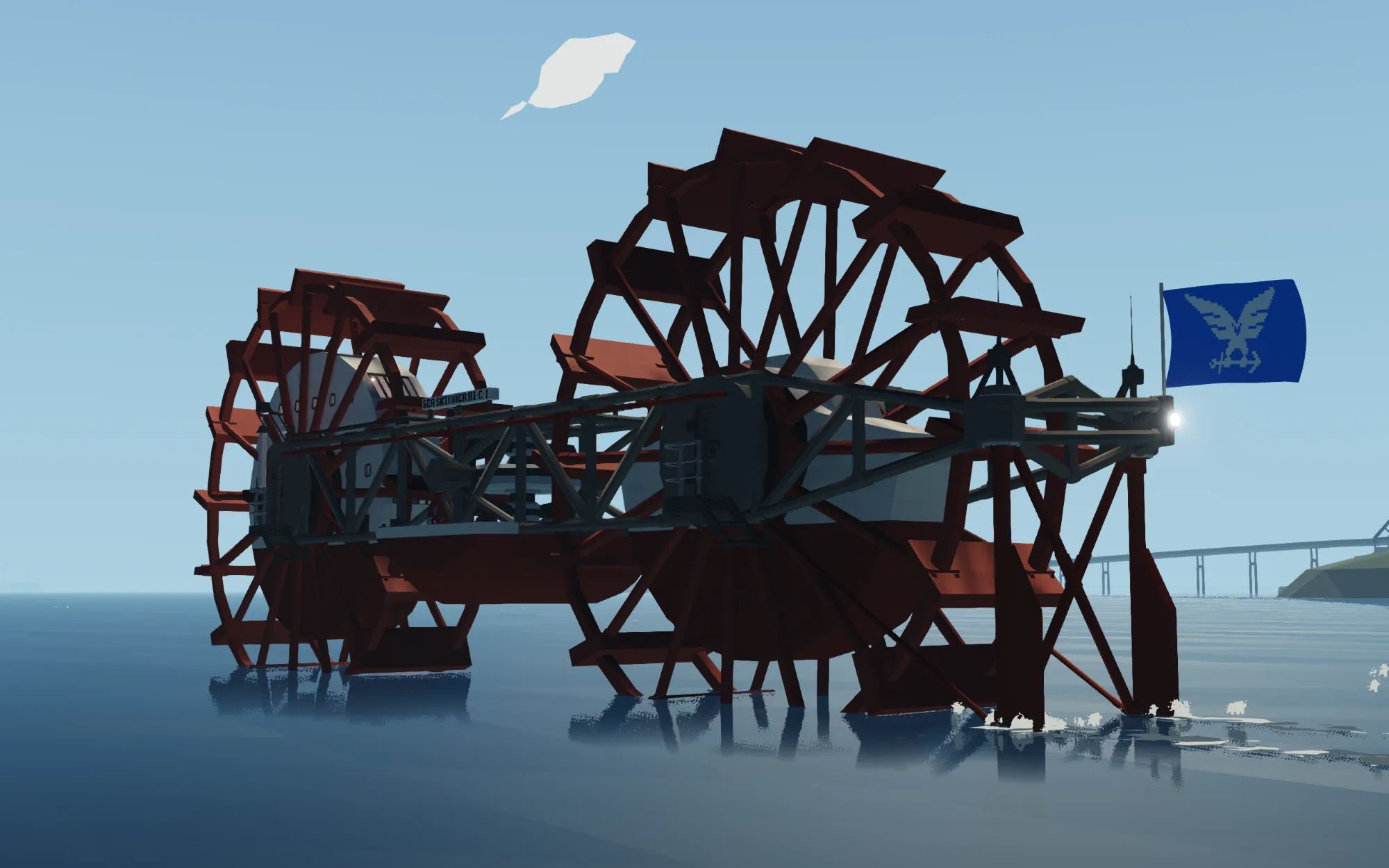
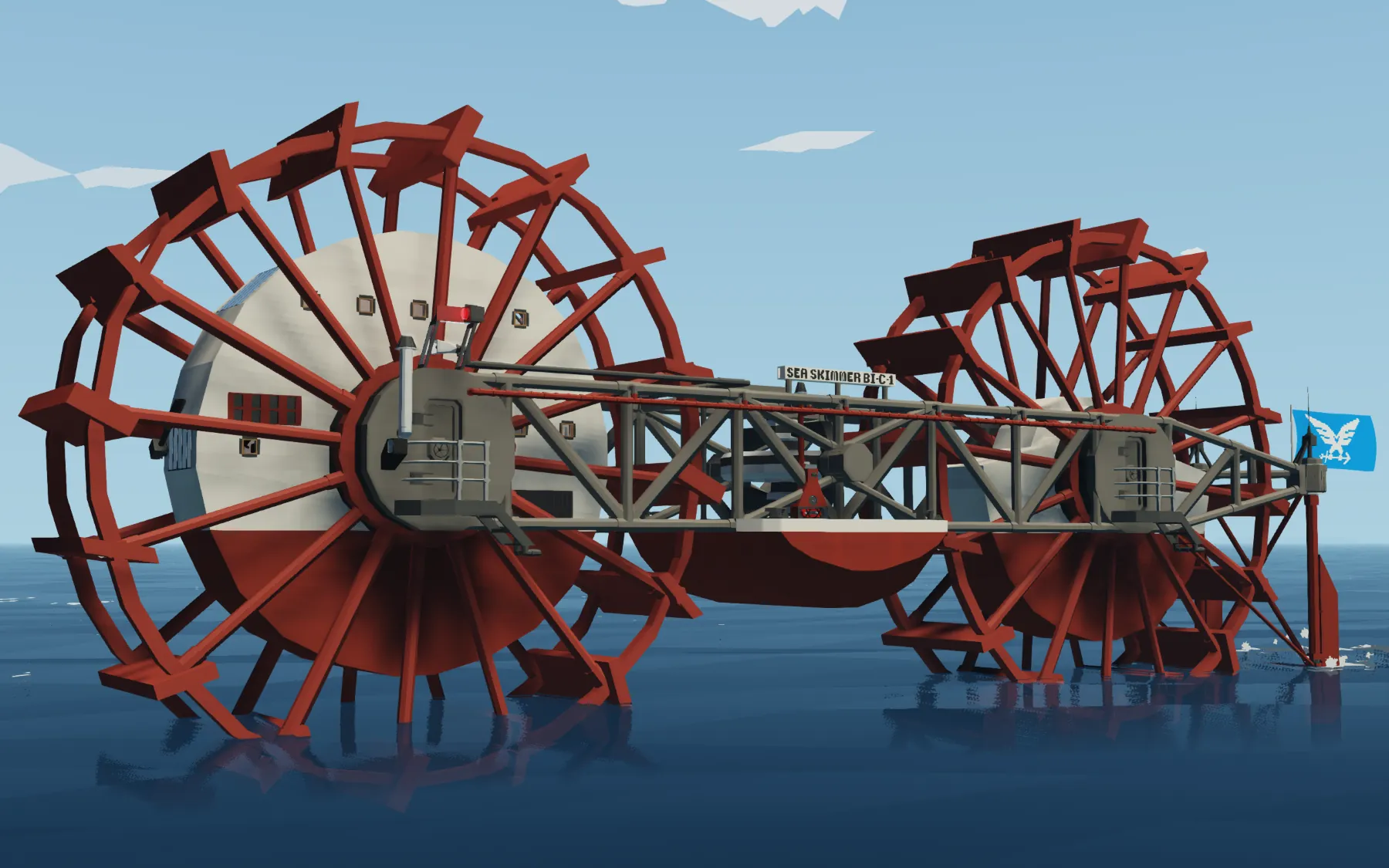
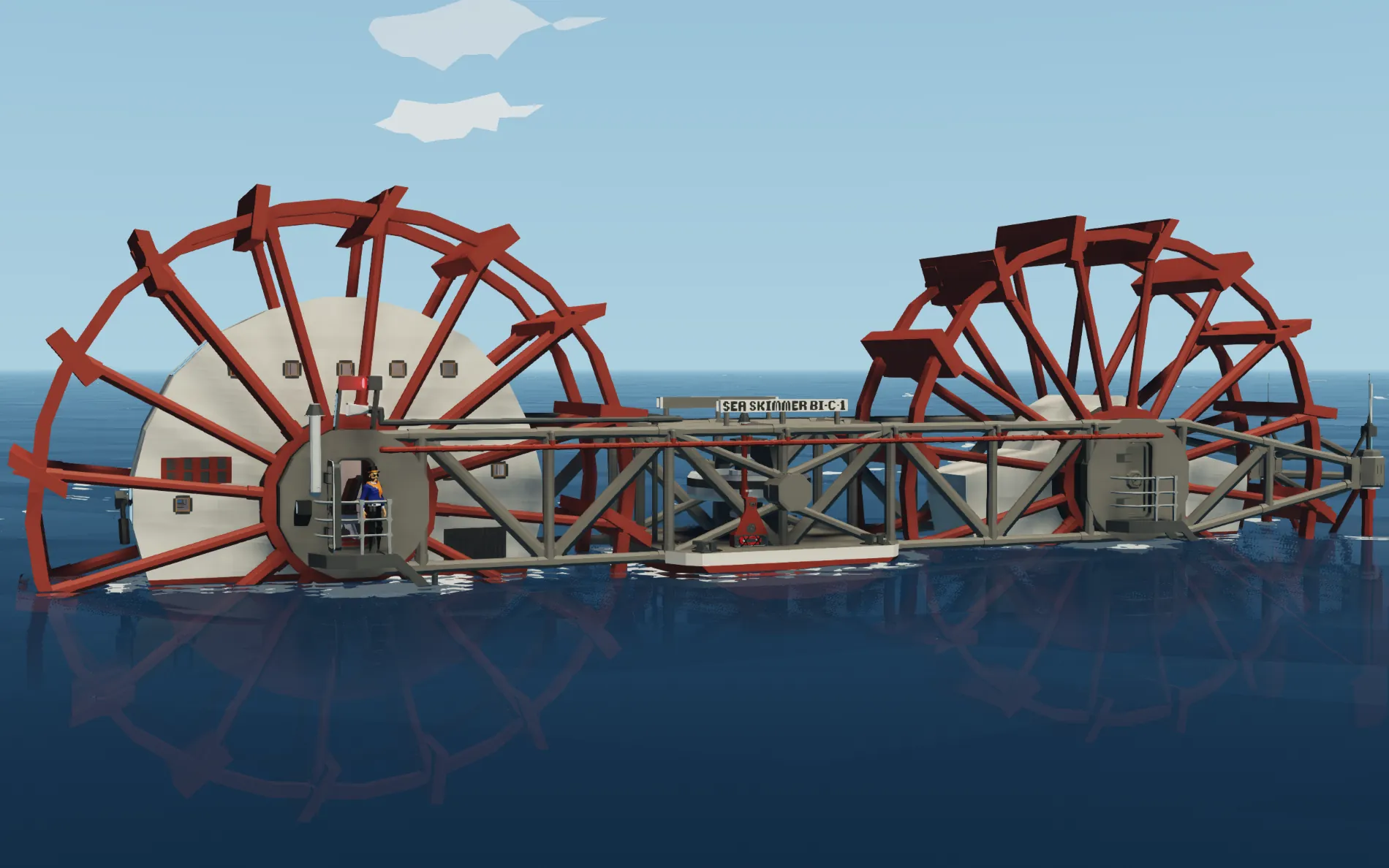
Dubbed "The greatest advancement since air travel" this ludicrous contraption was created primarily as a testbed for a radical new concept. Sea-skimming paddle wheels. The idea is that, by setting the paddles at an angle sloped backwards relative to the spokes, the paddle wheels will force the vessel [i] upwards [/i] as well as forwards. And if spun fast enough, they can lift the entire vessel out of the water and propel it above the sea, allowing it to travel speeds outpacing that of even an express locomotive.
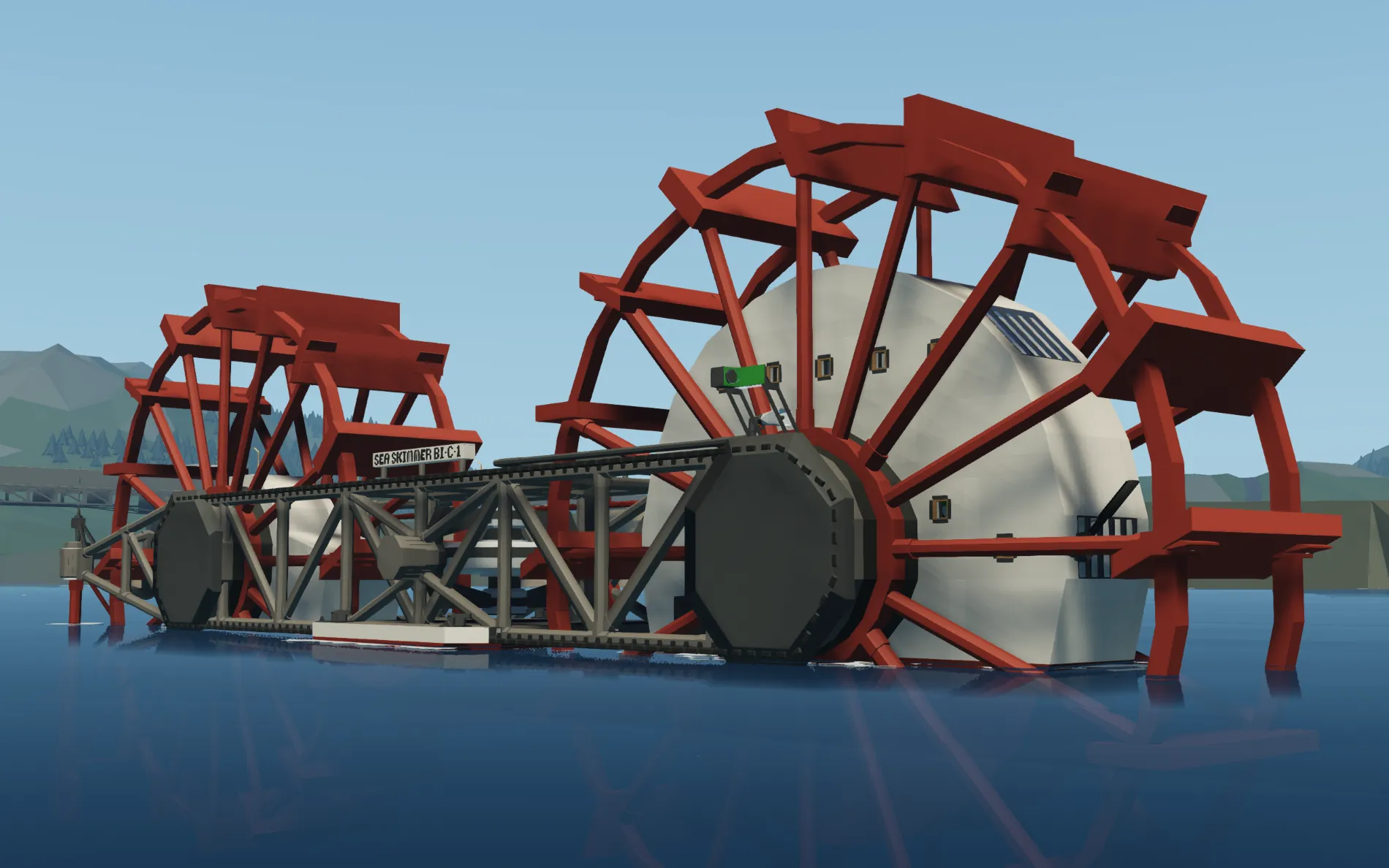
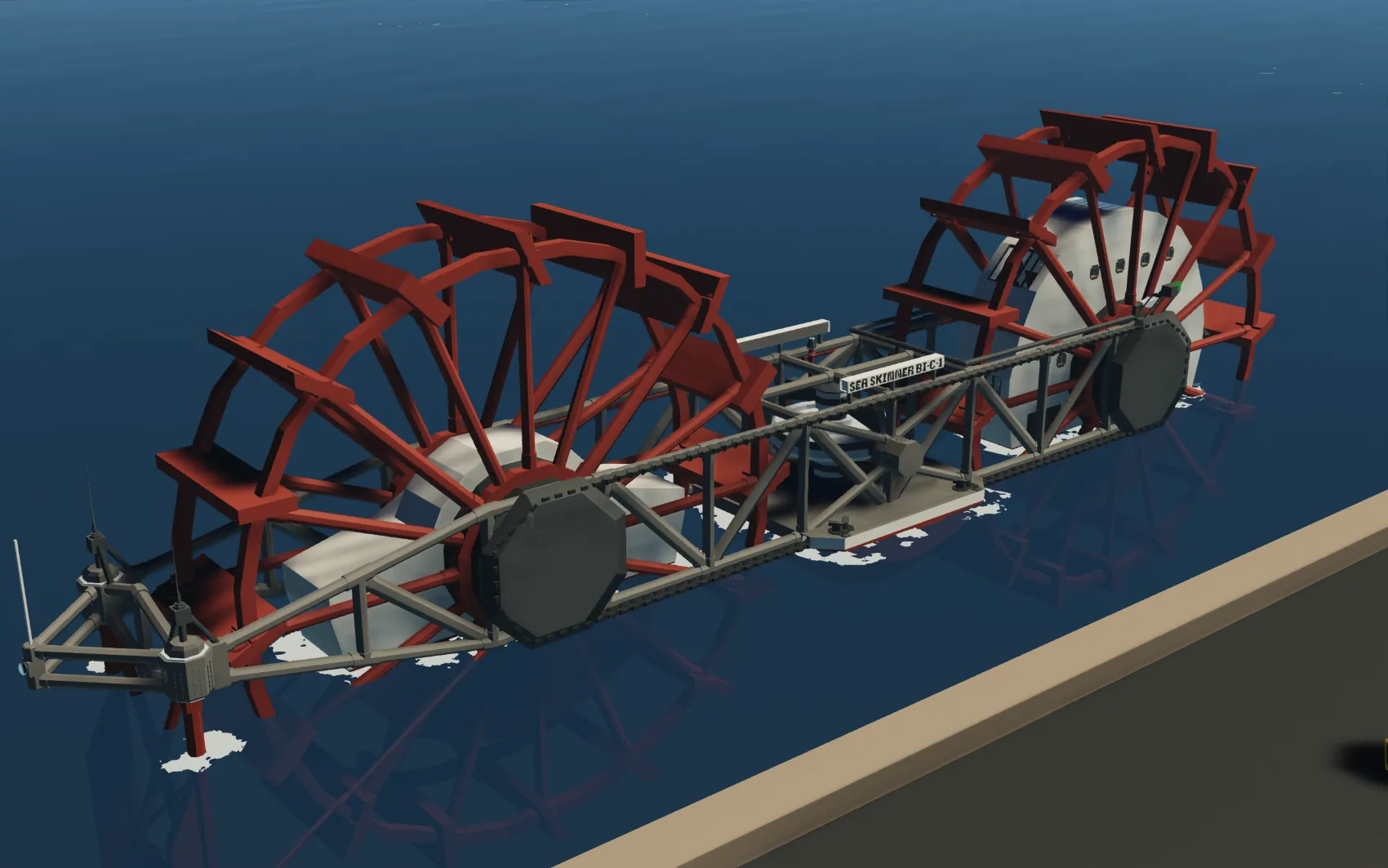
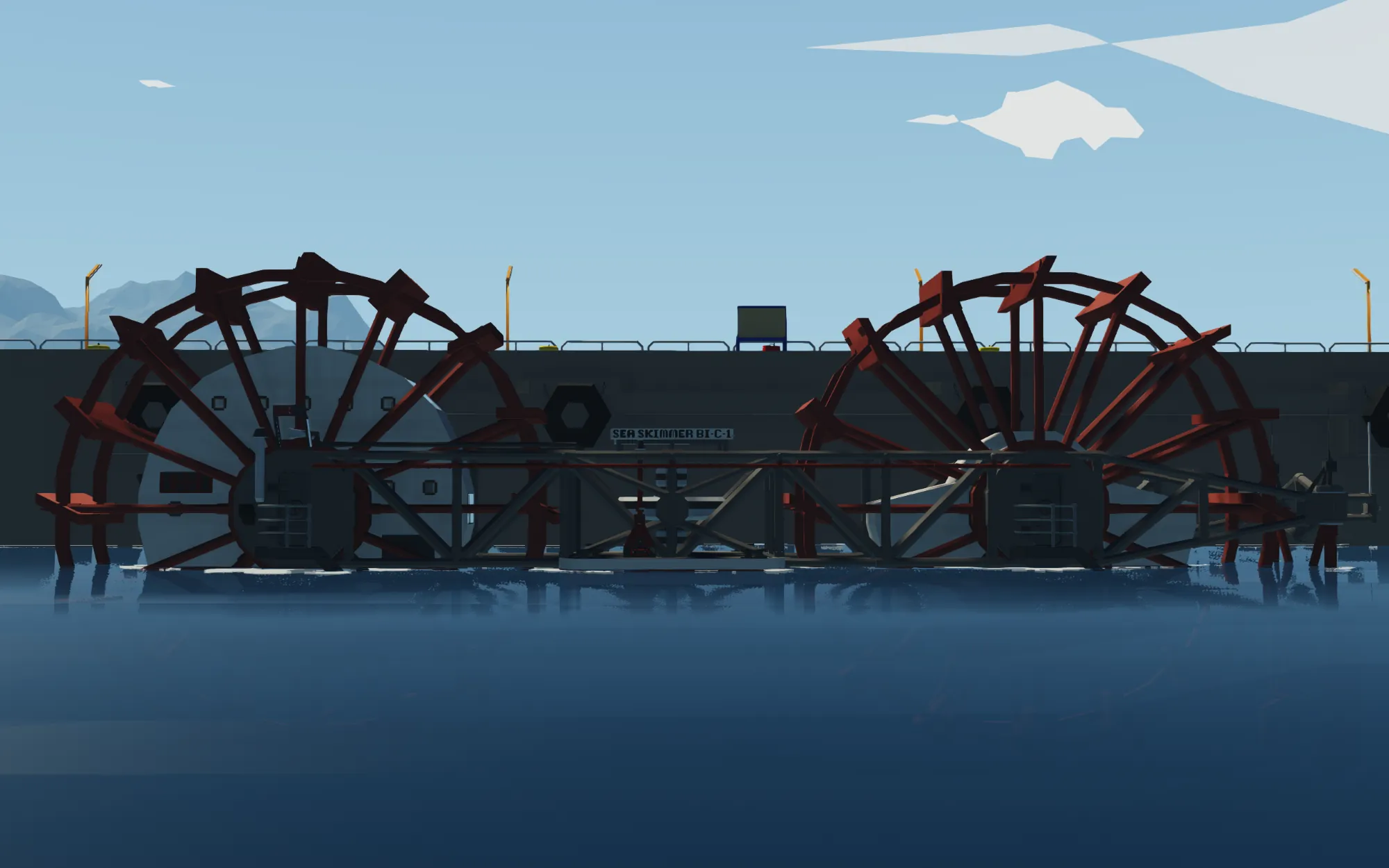
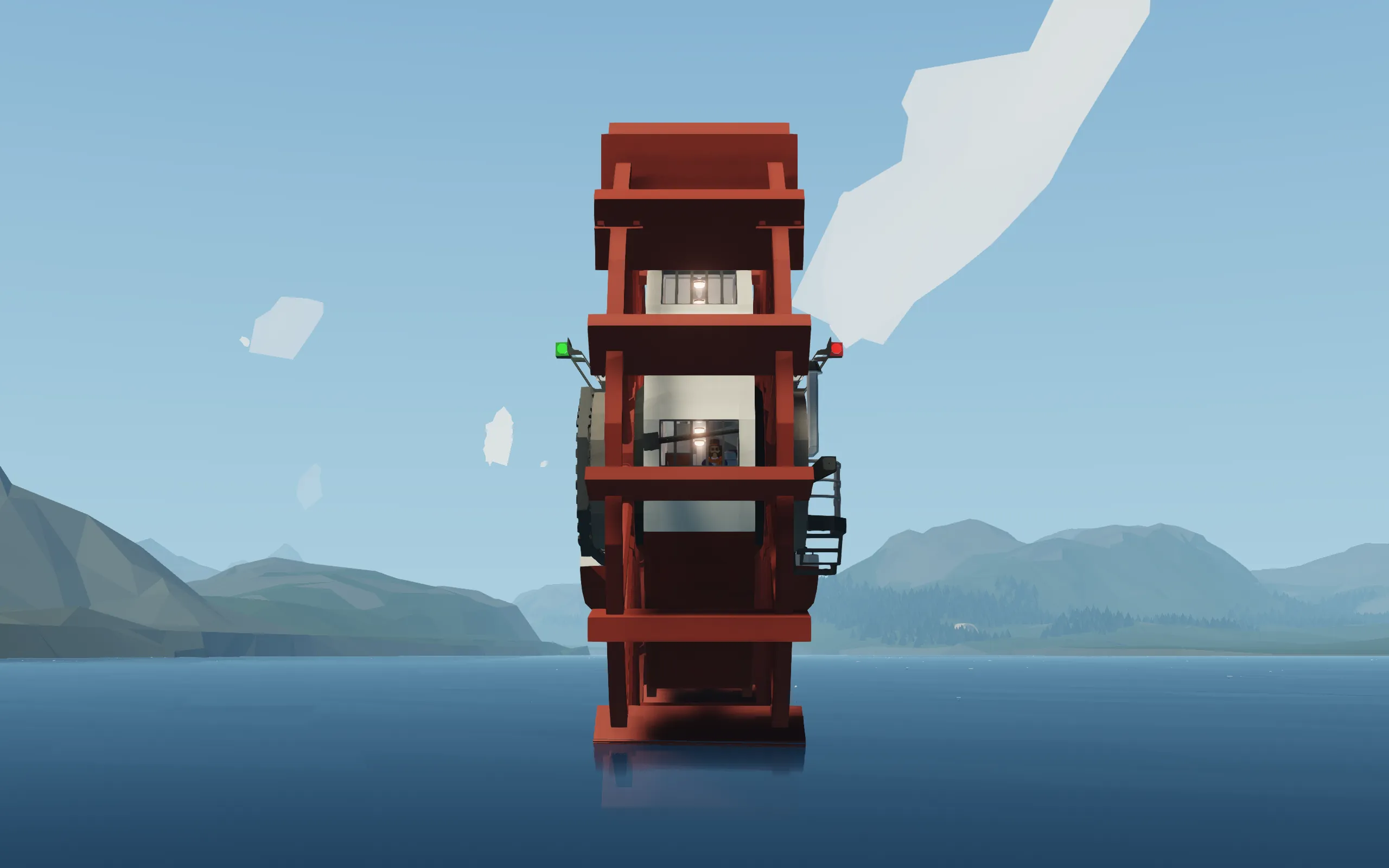
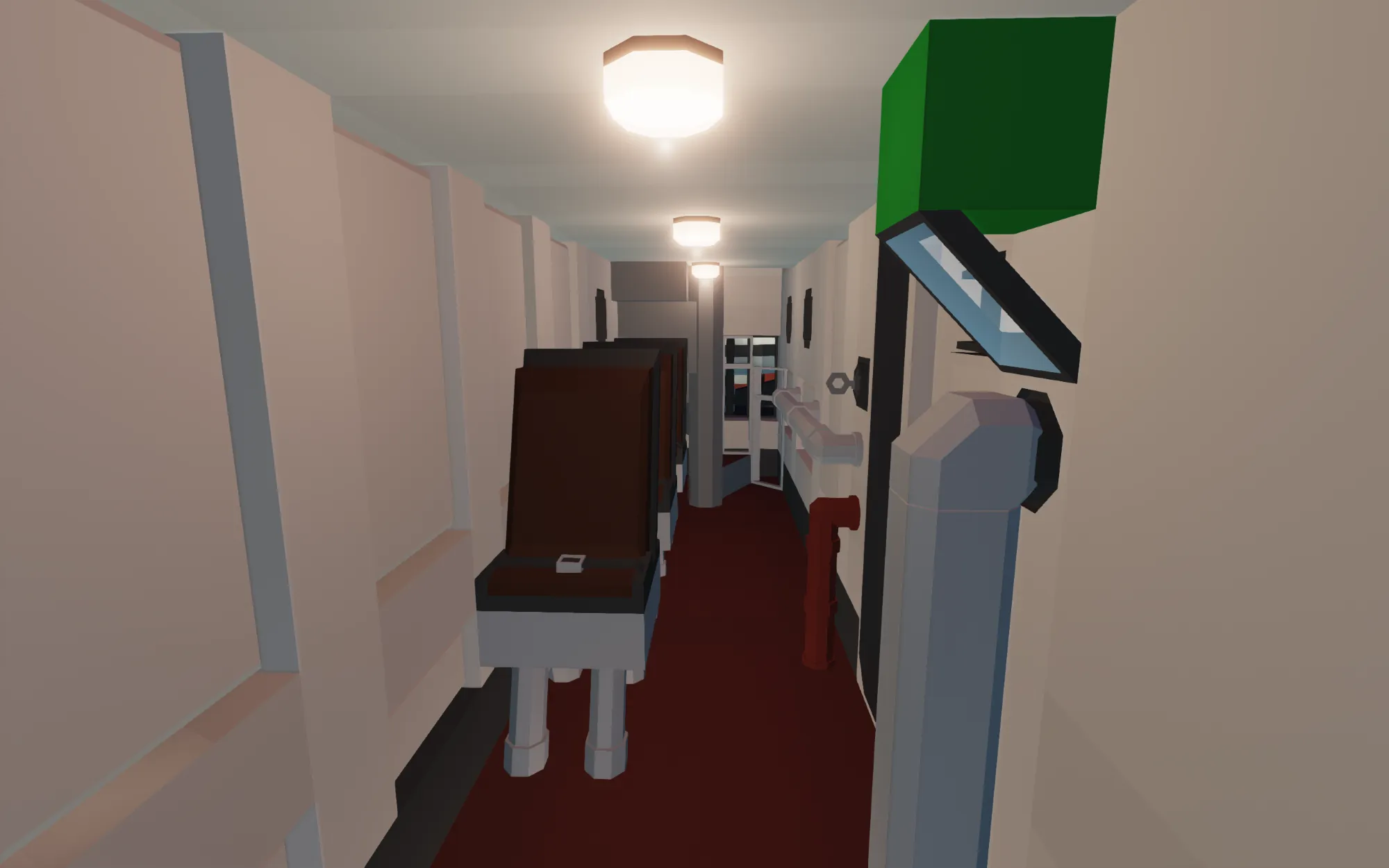
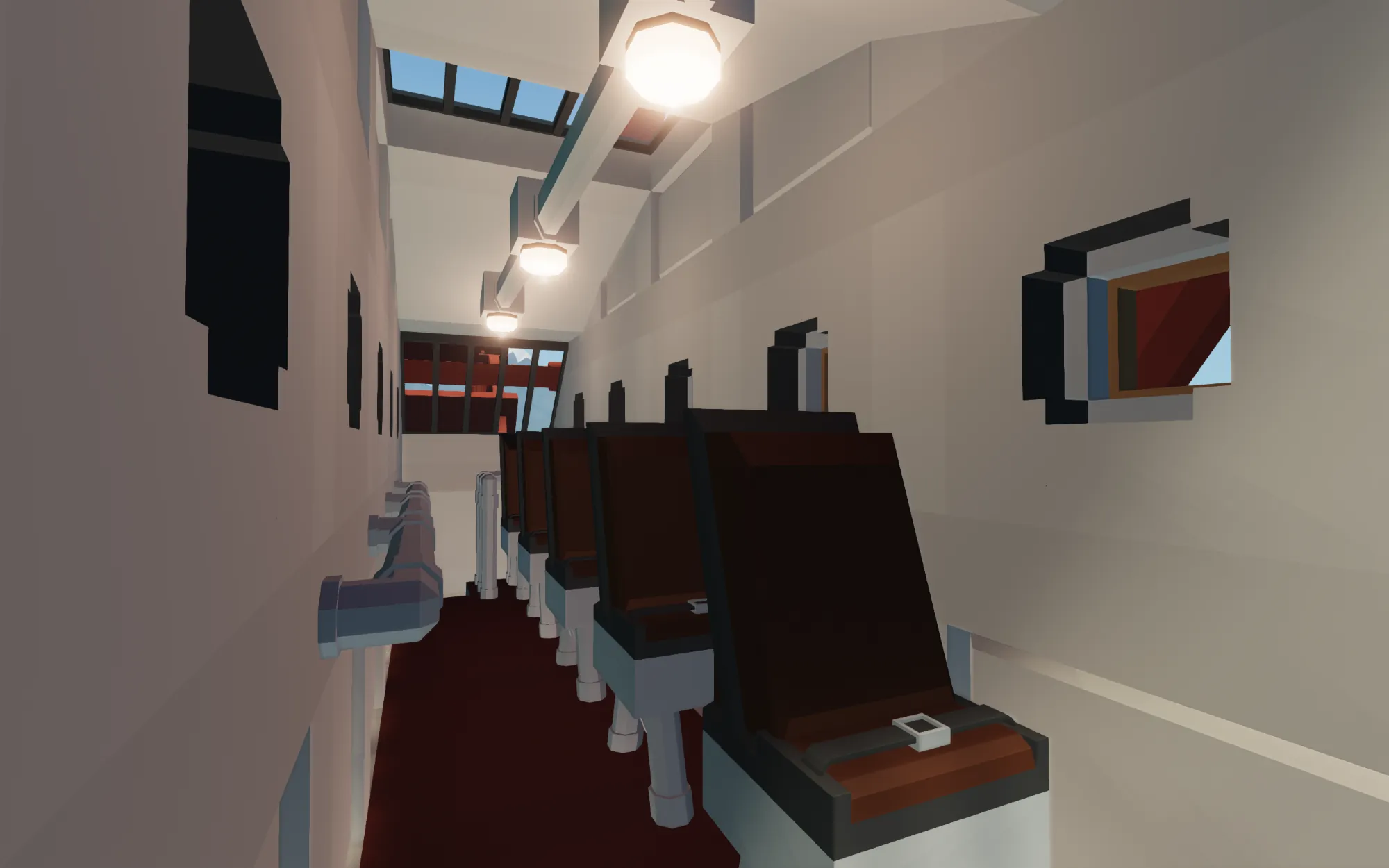
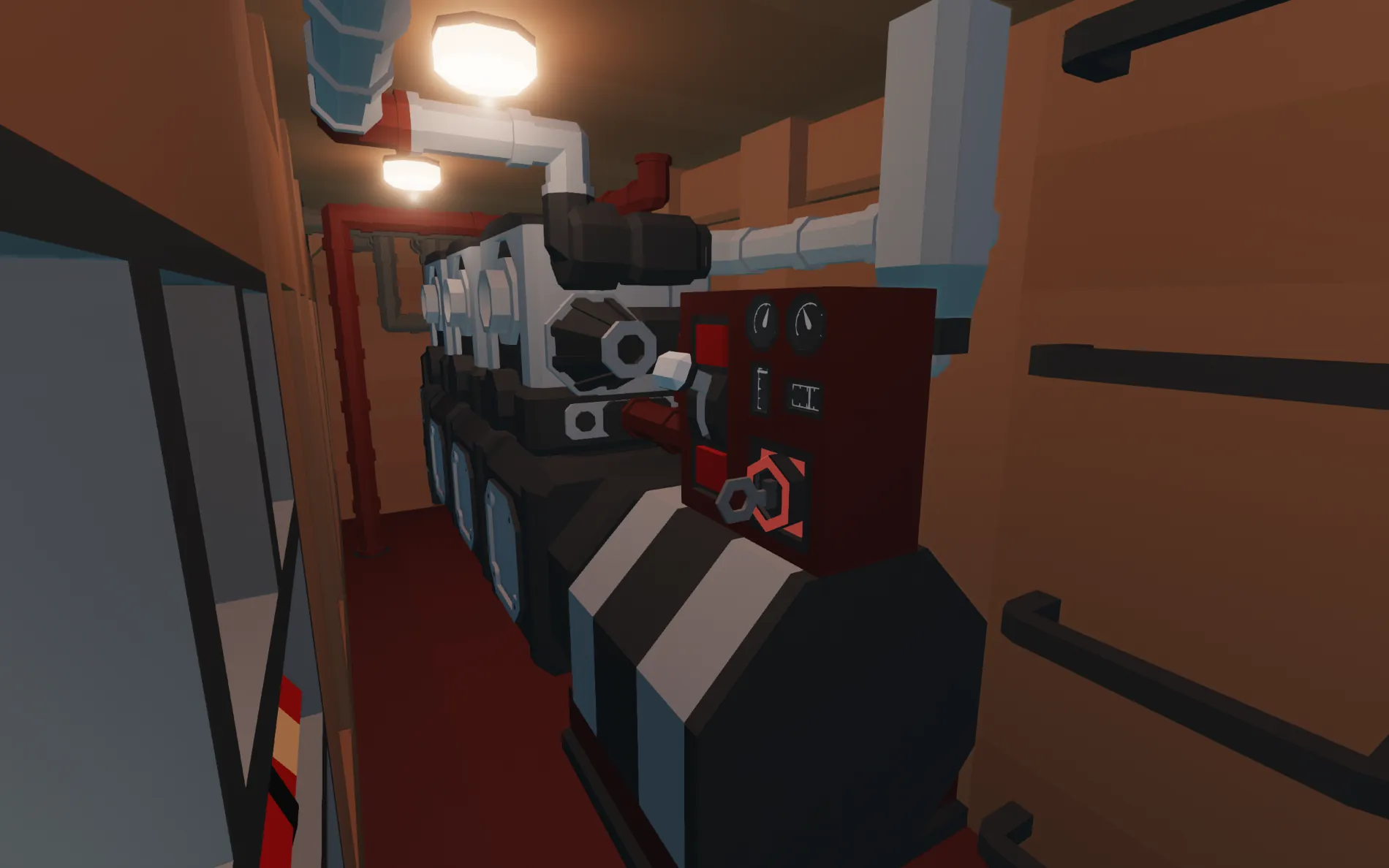
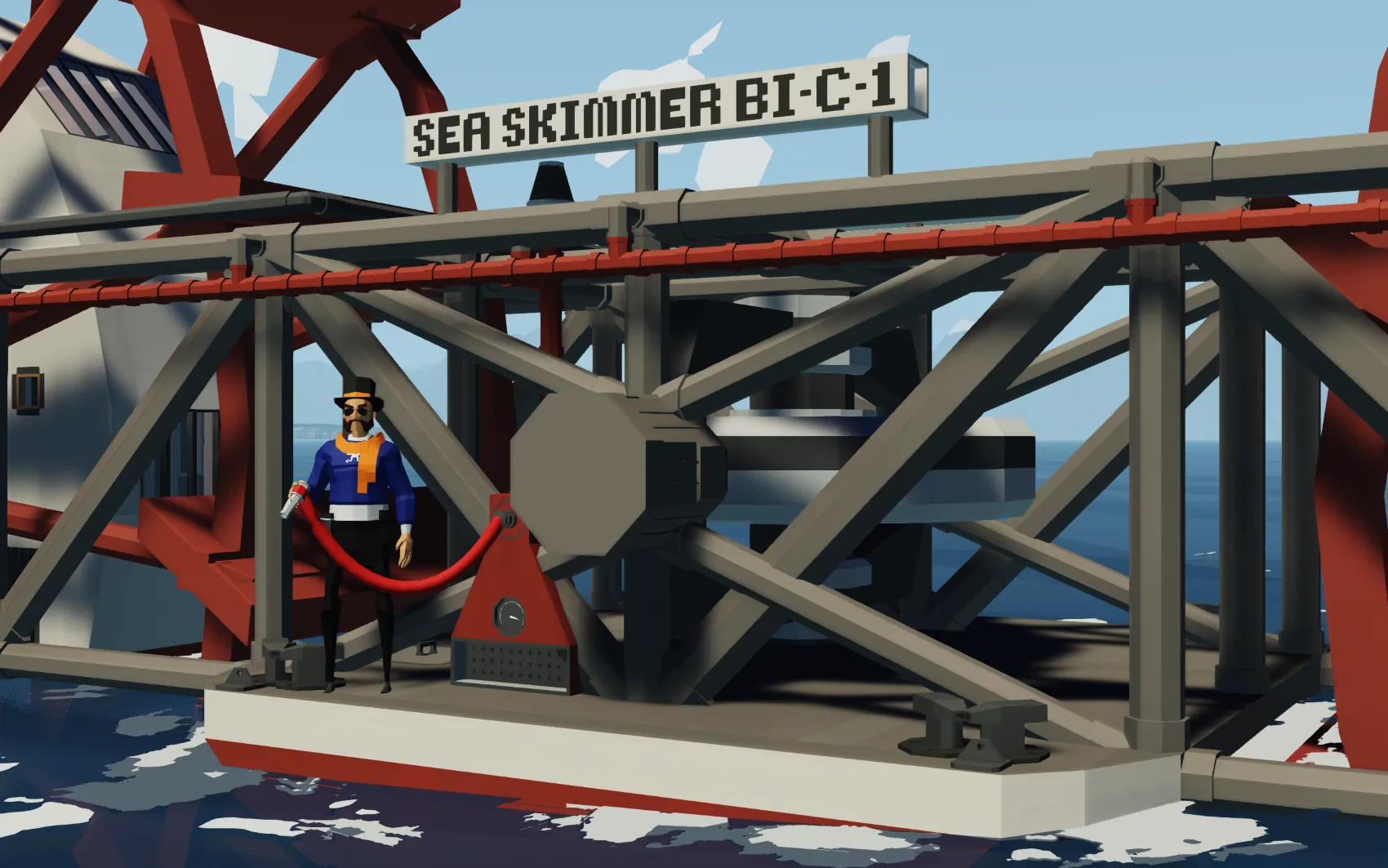
Lack of adequate funds meant that the design had to be minimized as much as possible, and thus instead of a more sensible quad-paddlewheel or even a tri-paddlewheel design, a bicycle-like bi-paddlewheel design had to be made do with, the obvious stability issues being remedied by a gyroscopic stabilizer. The forward hull, which was encased by the forward paddle wheel, housed the engine, command center, and passenger seating. The center hull served as a buoyancy tank and also housed the compressor for the horns. The after hull housed the electric motor that drove the paddle wheels, as well as a secondary fuel tank. The electric motor drove the aft paddle wheel directly, and then the forward wheel via a long, exposed chain drive. The entire assortment was held together by a framework resembling a railroad bridge. A pair of rudders - which were sunk low enough to steer the vessel even while it's skimming above the water - were attached to the aft end of the frame, along with a pair of radio antennae and a flagpole. The vessel was restricted to coastal operations due to its size and experimental nature. and although most people were sensibly highly cautious of such a machine, it did just about manage to pave the way for further development, even far enough to venture to the open ocean.
SPECIFICATIONS
[b] LENGTH: [/b] 32 Meters
[b] BEAM: [/b] 5.25 Meters
[b] HEIGHT FROM WATERLINE: [/b] 7.5 Meters
[b] DRAFT: [/b] 4.75 Meters
[b] TOP SPEED: [/b] 90+ Knots
[b] ENGINE TYPE: [/b] x1 3-cylinder medium diesel engine, 1 obnoxiously large electric motor
[b] FUEL CAPACITY: [/b] 4000 Liters
FEATURES
-Two giant paddle wheels
-passenger seating in the forward hull
-Custom-made animated electric motor in the aft hull
-Animated window wiper
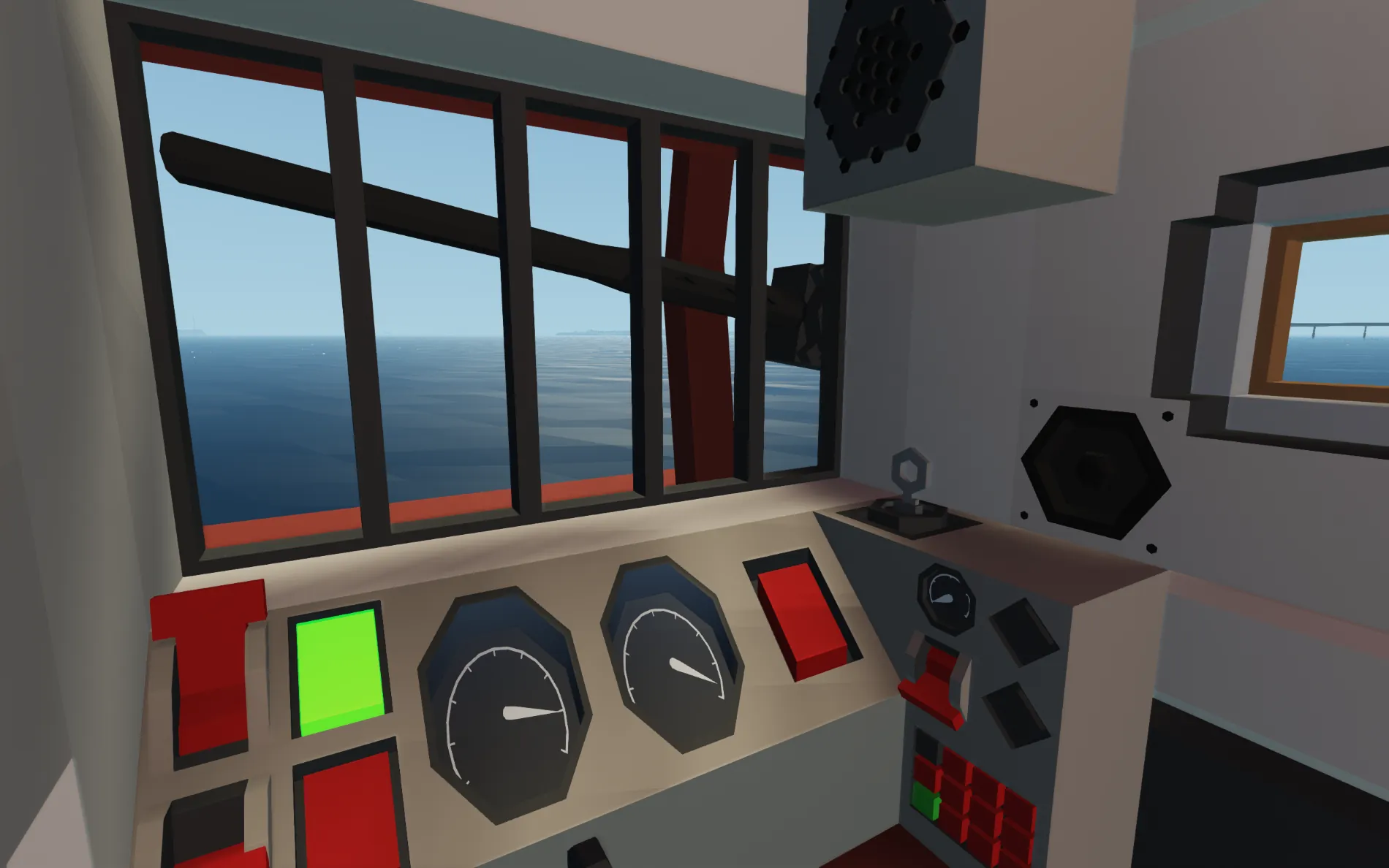
-Optional camera monitor at the control center so you don't have to stare through a rapidly spinning paddle wheel
-2 Horns
-2 Heaters
-2 Manual bilge pumps (hey I said funds were scant)
-NAV lights
-Simple radio equipment
HOW TO START/OPERATE
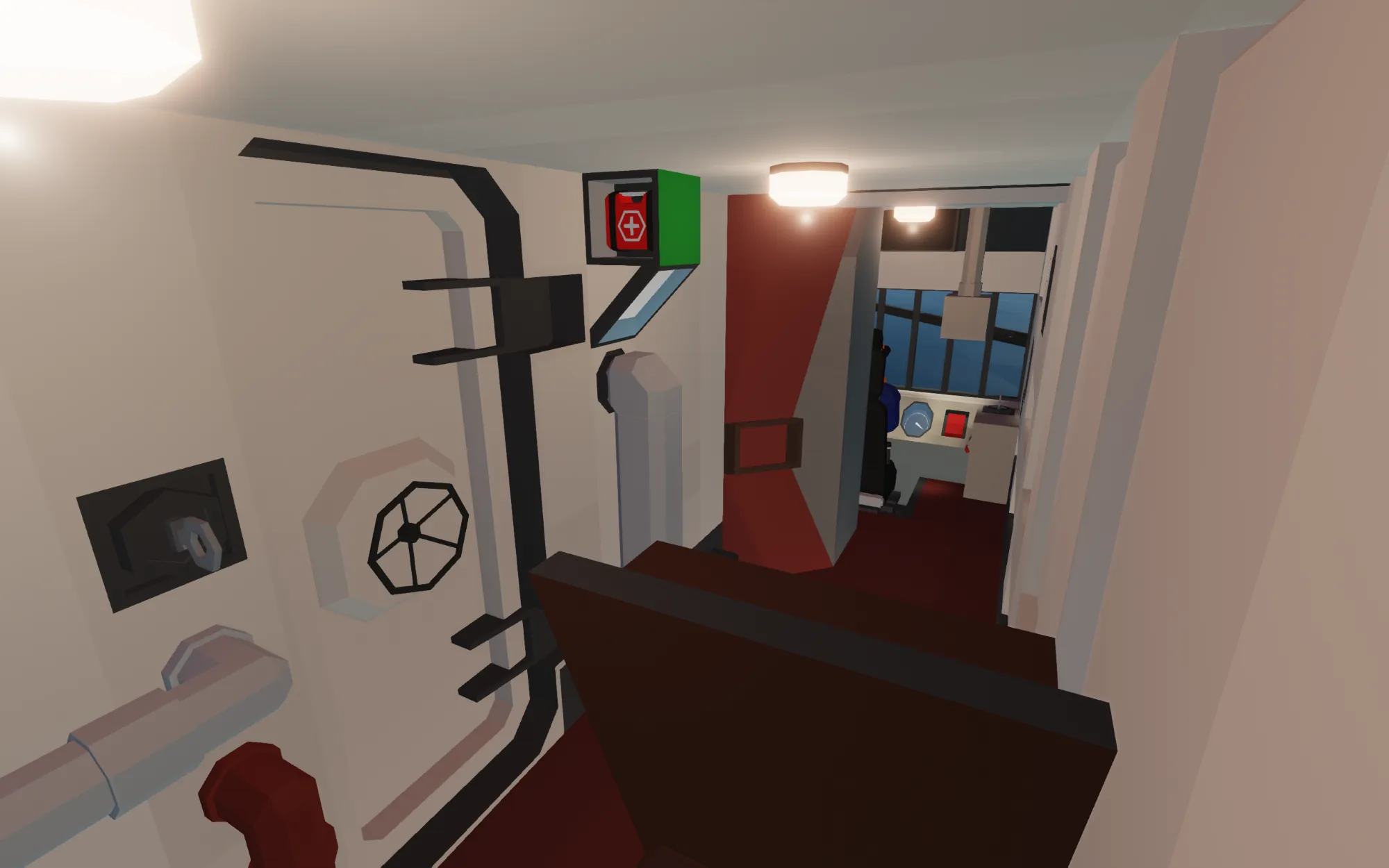
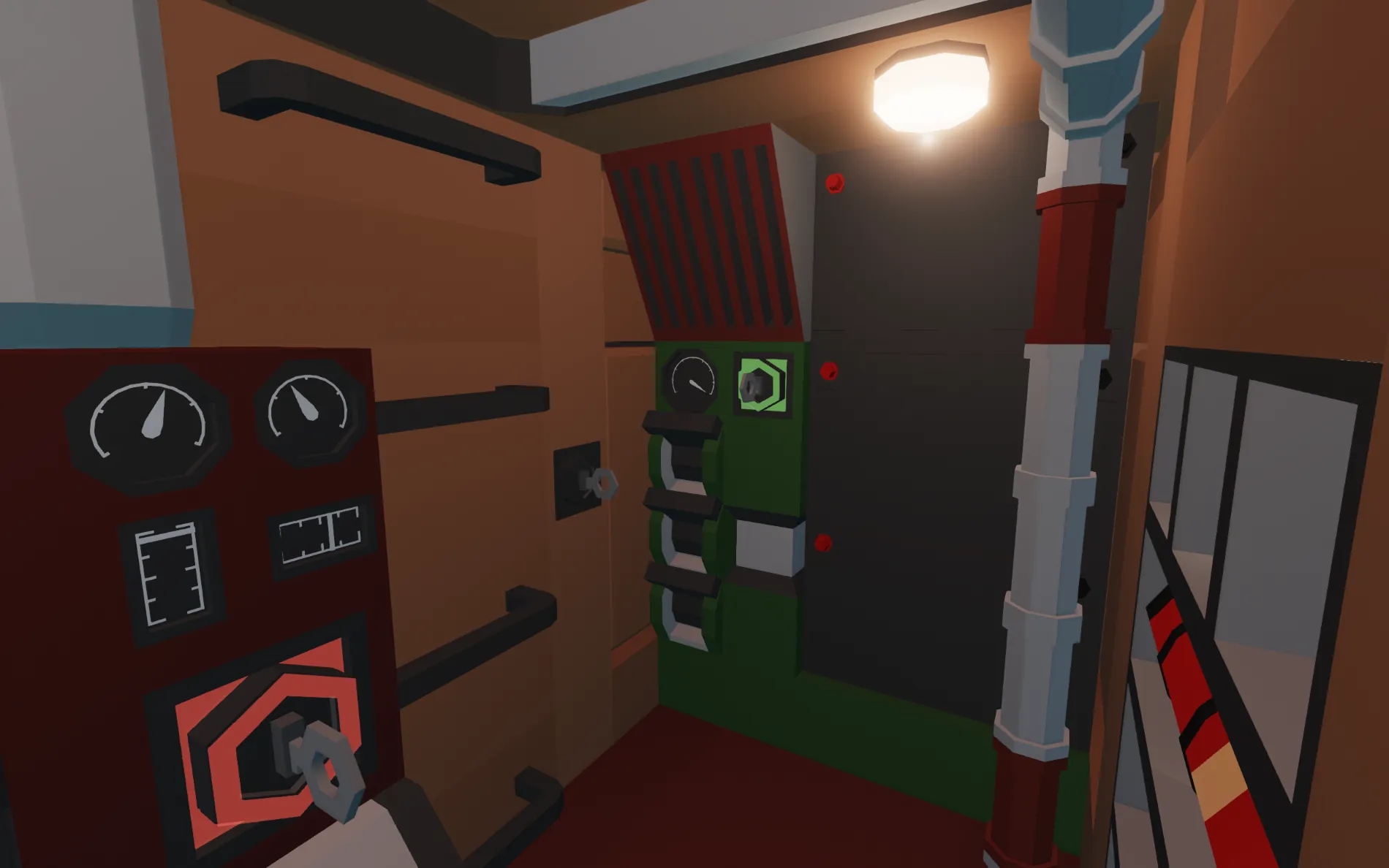
[b] 1. [/b] Enter the forward hull and go down to the engine room
[b] 2. [/b] Turn the throttle all the way up
[b] 3. [/b] Start engine, and you're good to go.
-The vessel is controlled entirely from the pilot's seat.
-The throttle has 4 settings. Slow astern, stop, slow ahead, and full ahead. (-1,0,1,2)
-Slow ahead and astern are entirely for maneuvering around ports and such, only going 5.5-6 knots. The vessel only "skims" the water at full ahead.
-There's an option to pull down a camera monitor for visibility if the paddles flashing in front of the window is too irritating.
SINK SWITCHES
[img]https://i.imgur.com/bNUVBng.jpeg[/img]
EXTRA NOTES
-I had to use a superstabilizer to keep the vessel upright. Although I'd like to have it be able to pitch and roll while turning or in choppy waters, the force of the paddle wheels is far too great for the vessel to handle normally, even if I used a superstabilizer set on pivots to restrict its movements.
-There's a couple known issues with the vessel which I either don't know how to fix or would have to make drastic undesired changes to fix.
First and foremost, there's an issue I refer to as "wrenching" in which a physics body on the build bugs out slightly and tries to force itself into another physics body, causing the whole vessel to constantly be pushed in the direction the physics body is trying to drag it. For some reason it only effects the vessel when it's pointing in a certain general direction, otherwise it's completely fine going the other way.
This isn't a constant issue, rather it will occasionally happen at random during operations, and once it sets in, it doesn't seem to go away, so you'll have to respawn the vessel. (this is also the same issue that plagues building smooth-sheer hulls like that of my steam tug Wisconsin.)
The second issue is only visual, and it's that neither paddle wheel splashes. Early in construction only the aft paddle wheel splashed, but that randomly went away for reasons I don't know.
I discussed how to keep/remove the splashing of paddle wheels in my paddle wheel guide, but the lack of splashing doesn't appear to be due to the reason I noted, and so I have no idea how to fix it. So unfortunately the vessel will have to just look a bit odd aggressively driving on the water without causing much of a splash
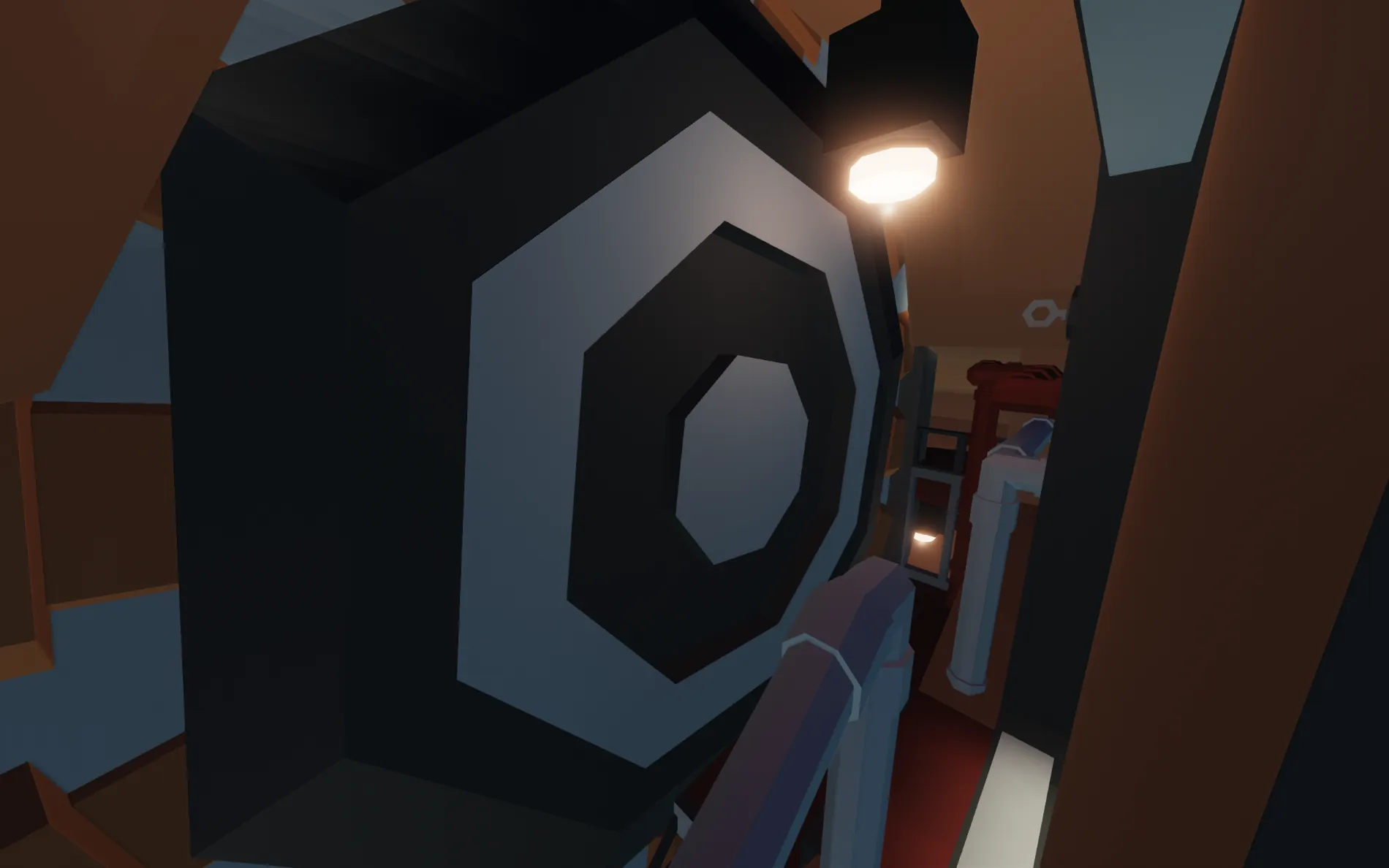
The third issue is that the space between the doors in the wheel hubs isn't actually watertight (hence why there's two sets of door in the first place), so make sure the inside doors are never left open.
-Although the engine can get alarmingly hot while operating in hot climates, it shouldn't overheat. A test run showed that it should level off at 106 degrees.
Not consciously based off of anything, although there's probably a connection somewhere between it and a concept vehicle from an old Popular Mechanics magazine.
Guide to building paddle wheels:
[url=https://steamcommunity.com/sharedfiles/filedetails/?id=3329559951]https://steamcommunity.com/sharedfiles/filedetails/?id=3329559951[/url]
Discord server for seeing how new builds are coming along, hanging out, sharing builds, memes, and ship's plans, and participate in build challenges! :D
[url=https%3A%2F%2Fdiscord.gg%2F7Z2VWqvDwq]https://discord.gg/7Z2VWqvDwq[/url]