Description
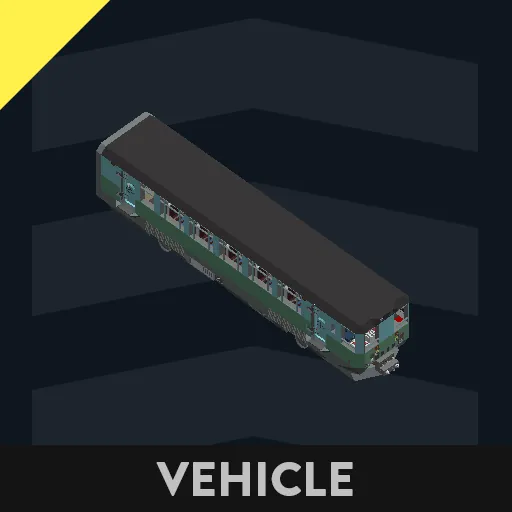
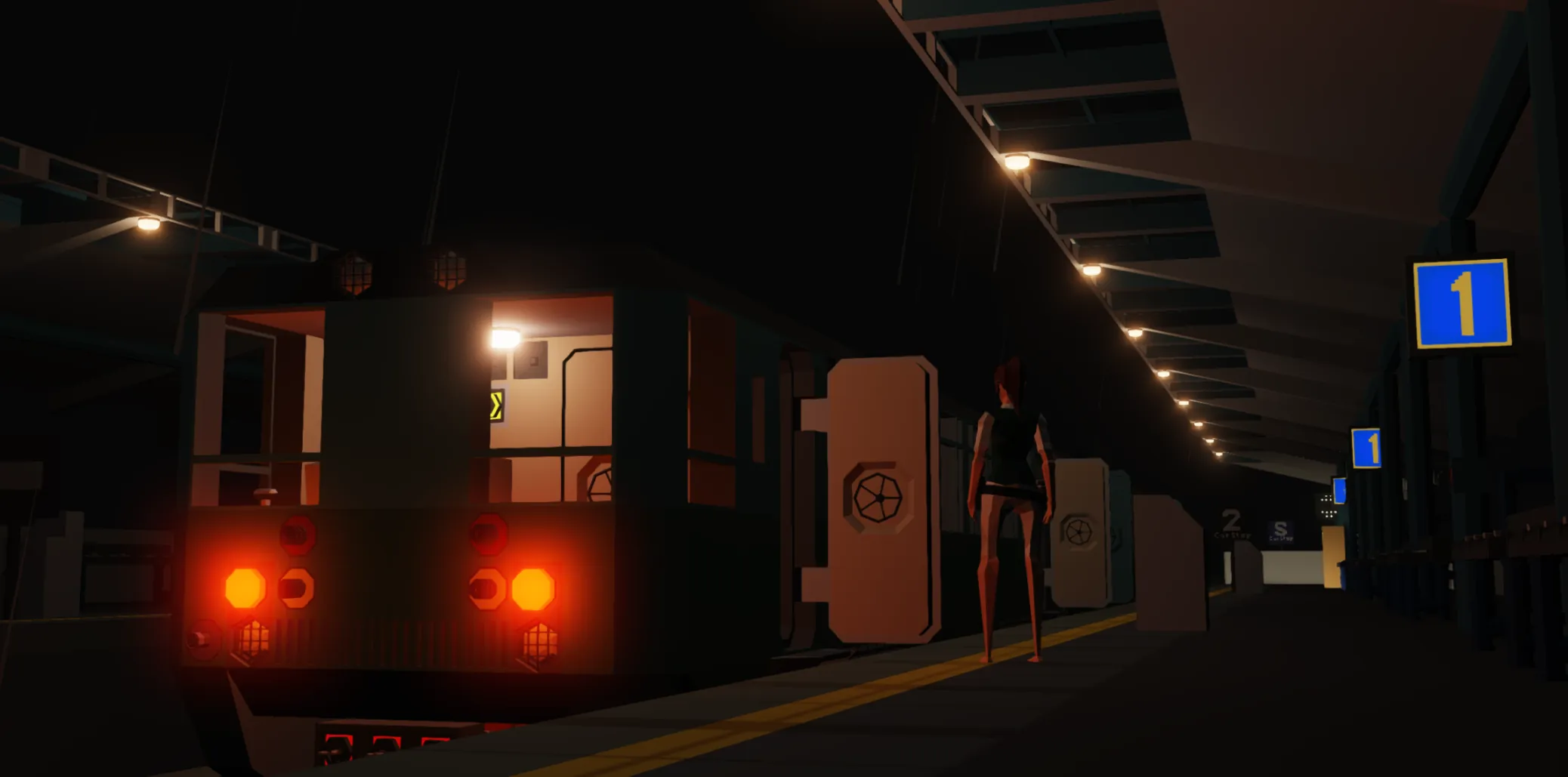
The class 210 is a railbus with diesel electric transmission. Multiple working is possible with units of classes 115, 210, 215 and 220/221.
Service braking is rheostatic for 1st range and pneumatic using distributor valve for 2nd range. No independent or EP brake is fitted. Emergency braking is pneumatic using distributor valve.
Automatic train stop, speed regulation and signal attention are provided using balises.
(Following: copy of document OPS-210-1)
Operation
1.1 Connecting units together
□ Connect brake pipe using automatic coupler or brake hose
□ Connect drive control cable
□ If working with units fitted with EP brake: connect main reservoir hose
1.2 Startup checklist (all units)
□ Enable battery (cab rear wall)
□ Verify emergency brake disconnected (passenger cabin)
□ Verify emergency doors unlock off on the outside of the unit (left side)
□ Verify emergency doors unlock off on the inside of the unit (passenger bay rear)
□ Verify local door unlock off (cab guard's controls)
□ Press "close doors" button (cab guard's controls)
□ Enable passenger cabin lights (driver's controls)
□ Enable headlights (driver's controls; red is default, white is set automatically by MU system)
□ Start engine (driver's controls)
□ Start compressor (driver's controls)
□ Disconnect brake lever and reverser (driver's controls, on floor)
□ Verify brake lever in position 0 (running)* (driver's controls)
* rheostatic braking is still available in slave units
1.3 Startup checklist (master unit)
□ Start up according to OPS-210-1 1.2
□ Set reverser (cab floor)
□ Connect brake lever (cab floor)
□ Set brake lever into position -1 (charging position)
* pressure units are gauge pressure
□ Wait for brake pipe pressure 6,0 bar (~600 kPa) in own unit
□ Wait for brake pipe pressure >5,9 bar (~590 kPa) in tail unit (ask guard)
□ Set brake lever into position 0 (running position)
1.4A Boarding and alighting (driver in DCO)
□ Set brake lever to +1,5 (full service braking)
□ Tell guard to open doors
□ Wait for and acknowledge guard's "ready to start" signal (2 taps horn or bell/buzzer if fitted)
□ Verify doors closed lamp lit
□ Set brake lever to 0 (running position)
□ Set off
1.4B Boarding and alighting (guard in DCO)
□ Move to the unit which is the furthest aft but still on the platform
□ Wait for driver's signal to open doors
□ Set local door unlock switch, open one door as your local door
□ Outside the train, verify the train is platformed and safe to board and alight
□ Inside the train, press either "open doors" button to allow passengers to open doors
□ Outside the train, wait for platform signal not at danger
□ Make a sound signal for passengers that boarding is complete
□ Inside the train, press the "close doors" button
□ Close all doors but your local door, verify platform signal or repeater not at danger and that it is safe to depart
□ Verify all door interlock lights (amber outside, above doors) unlit on all but your unit
□ Close your local door and disable "local door unlock" switch
□ Verify doors closed lamp (or interlock light on guard's panel, if fitted) lit on your unit
□ Signal to driver that the train is ready to start (2 taps horn or bell/buzzer if fitted)