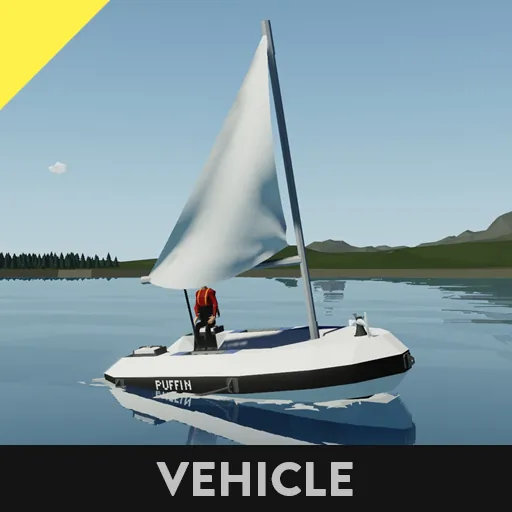
Training Sailboat "Puffin" (working sails)
# # # An update has corrupted this boat # # #
# # # Mod is not working until further notice # # #
Required mods:
[b][url=https://steamcommunity.com/sharedfiles/filedetails/?id=3547794312]https://steamcommunity.com/sharedfiles/filedetails/?id=3547794312[/url]
[url=https://steamcommunity.com/sharedfiles/filedetails/?id=3535295022]https://steamcommunity.com/sharedfiles/filedetails/?id=3535295022[/url][/b]
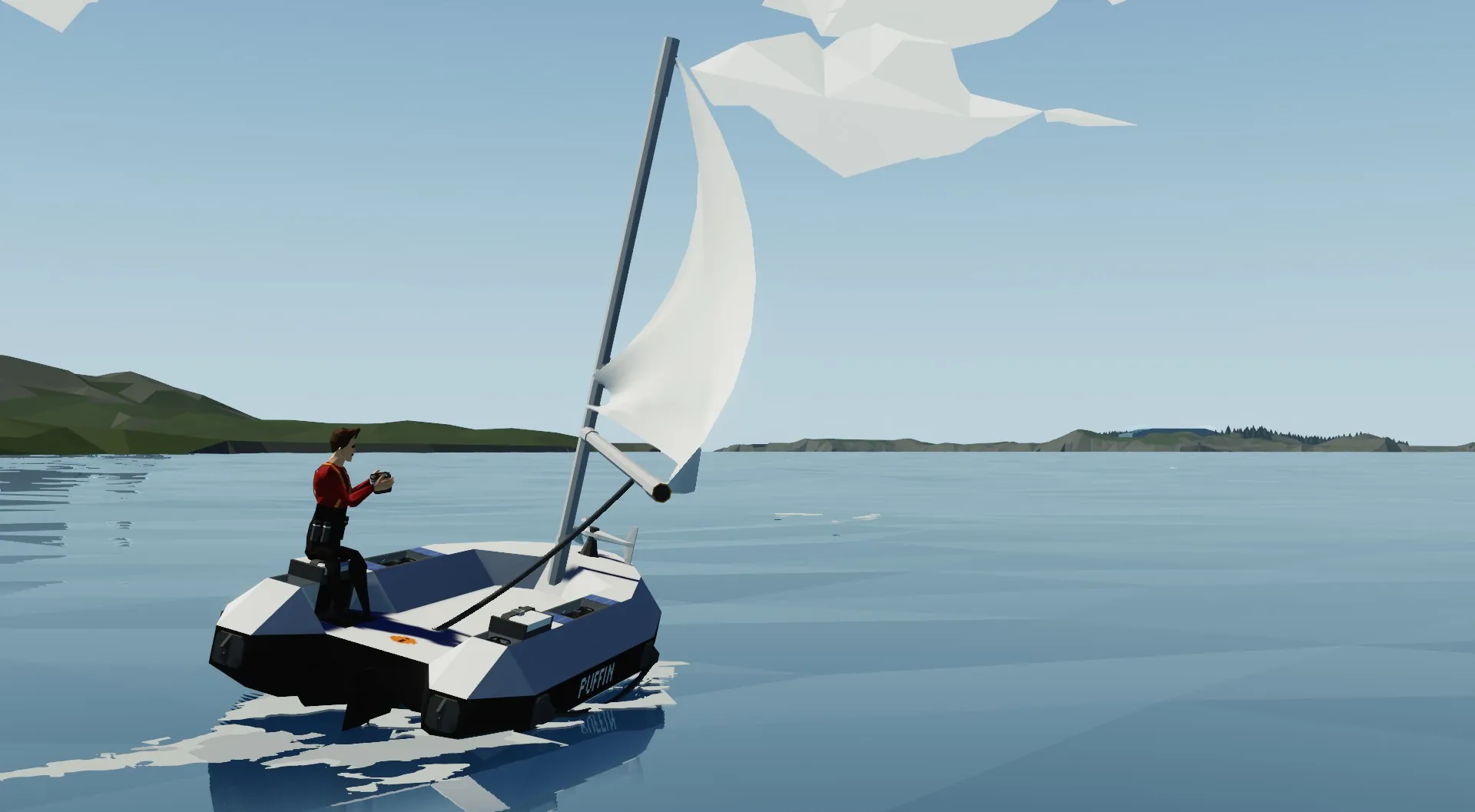
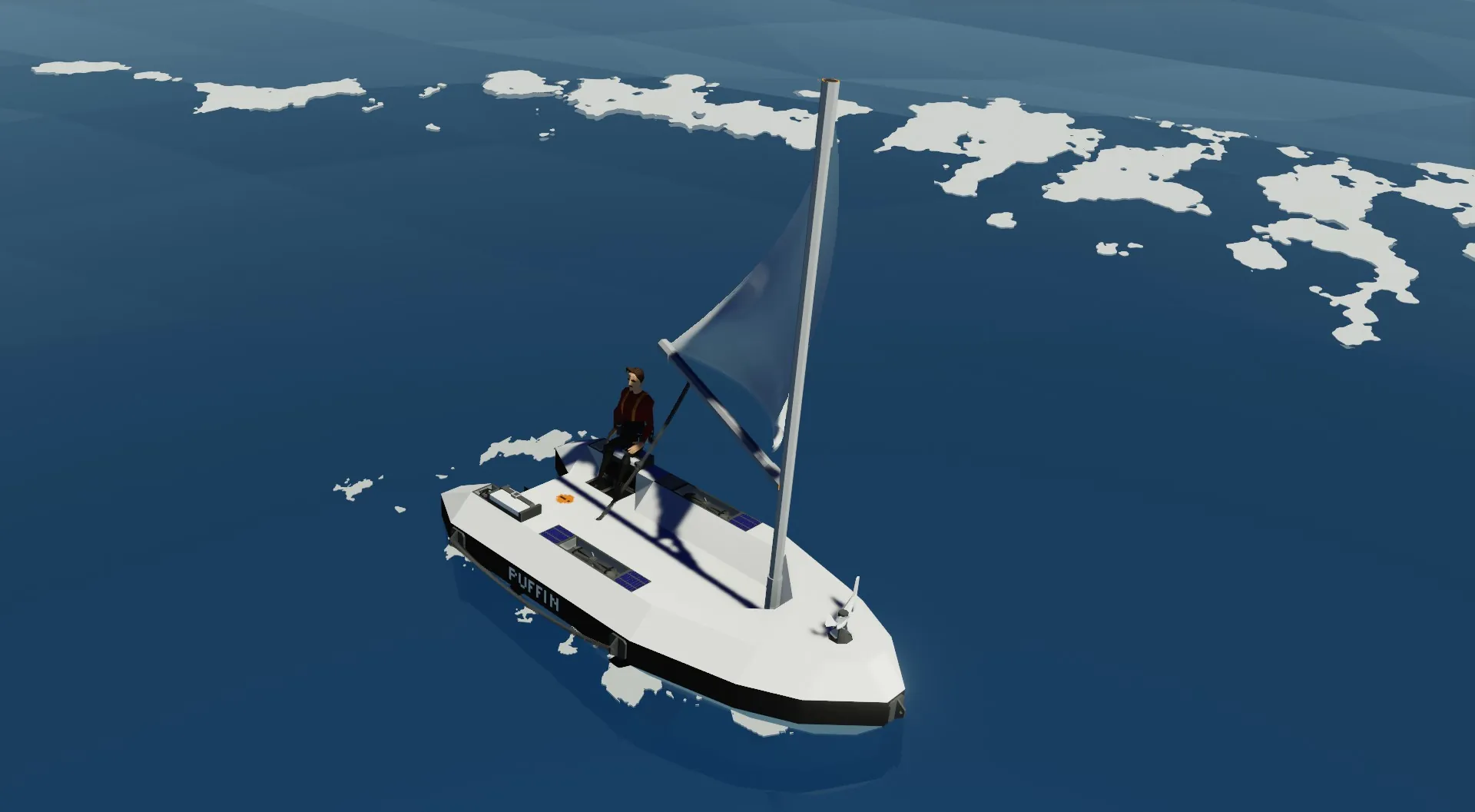
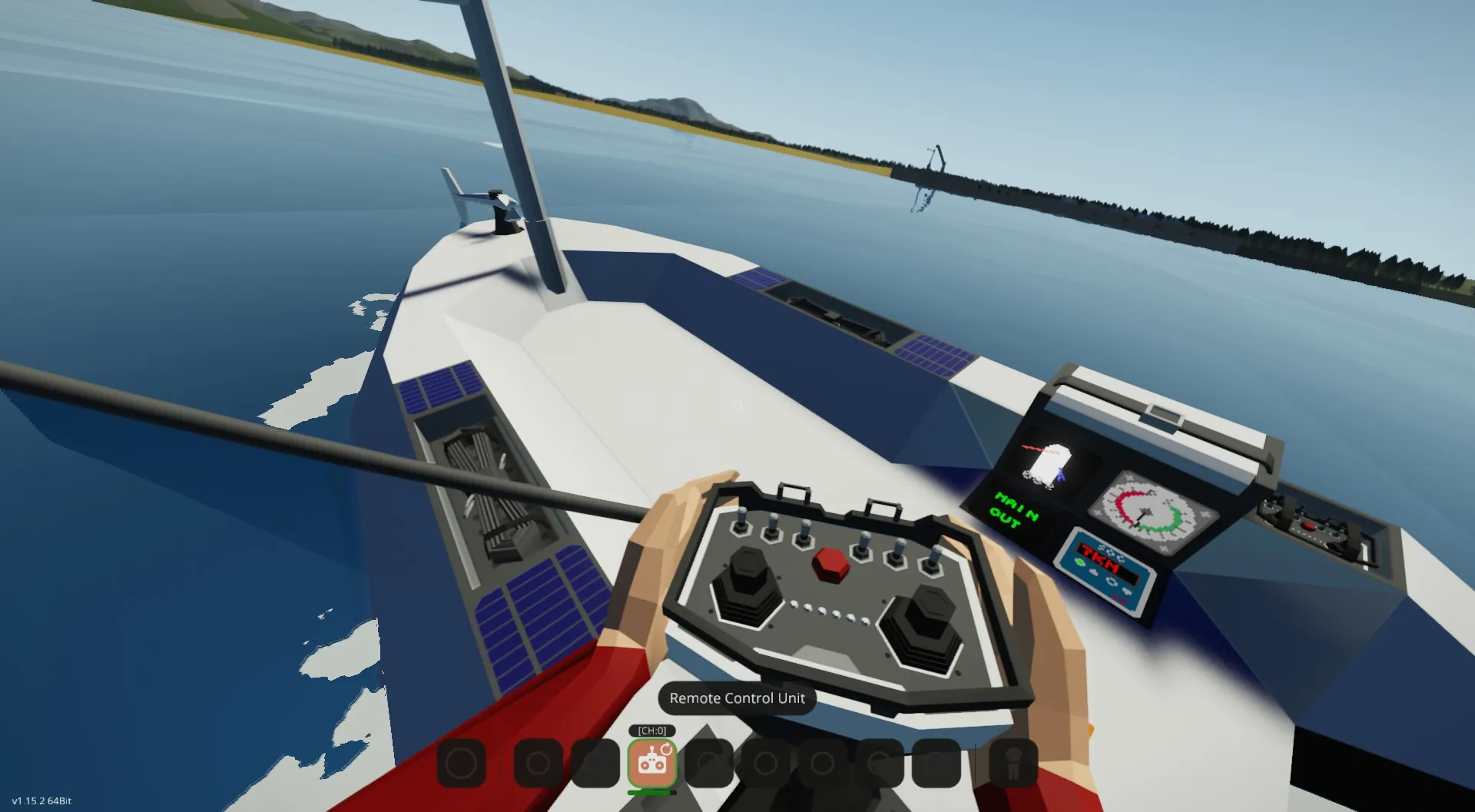
"Puffin" is a small, single-masted training dinghy designed for beginner and casual sailors. Built to be stable, forgiving under sail and easy to manage, "Puffin" is a great entry point for learning how sails interact with the wind without being punished for mistakes or managing the complexity of a larger, multi-sail boat.
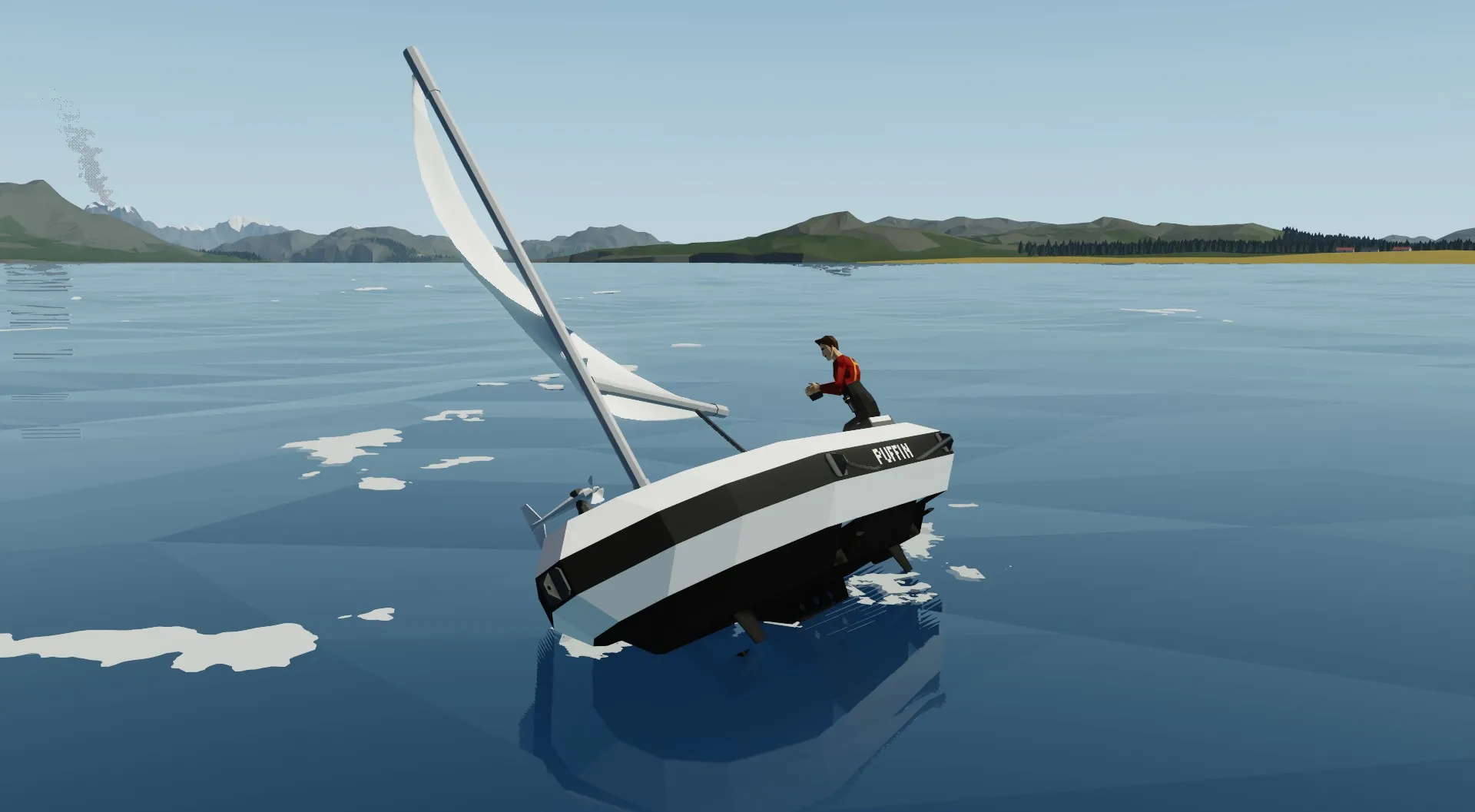
Unlike my larger builds, this boat is designed primarily as a teaching platform and is deliberately simple; just a small mainsail, rudder, and a handful of instruments to help you get a feel for the basics of sailing. It's stable and fully self-righting if capsized so you can focus on proper sailing technique and sail trimming.
[b]Recommended operation no higher than 25% wind[/b]
Features
Fully functional mainsail: trim mainsheet via remote control
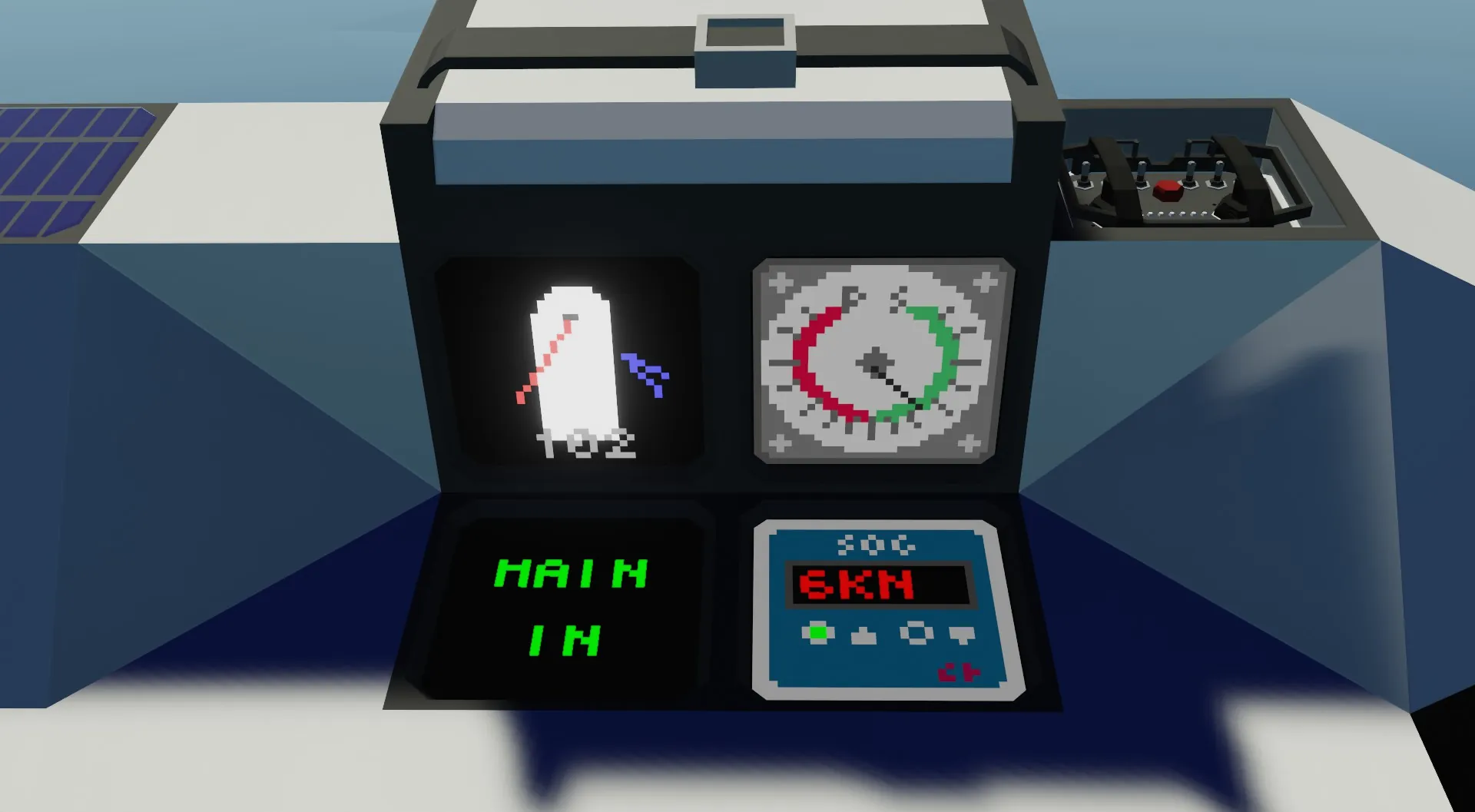
Digital displays for training:
- Speed over ground
- Rudder position indicator
- Mainsheet winch indicator
- Sail training display: wind direction, sail angle, and angle of attack for trimming practice
Very stable and self-righting design for forgiving sailing
Sailing Procedure (for beginners)
[b] I recommend playing in custom mode so you can adjust wind speed and direction[/b]
[b]1. Getting Moving[/b]
- Point the boat roughly across the wind so the wind is blowing from the sides, this is the easiest way to get moving
- Slowly let out the mainsail sheet until the boat begins to pick up speed, be ready to countersteer once the boat picks up speed
[b]2. Learning to trim the sail[/b]
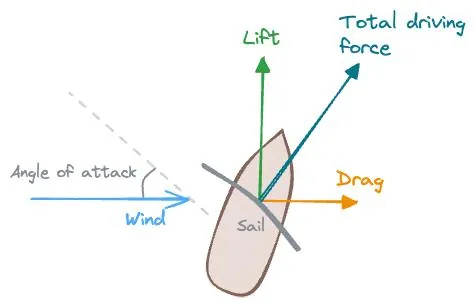
- Watch the sail angle display: the red line is the angle of the sail relative to the boat, the blue arrow is the direction of the wind relative to the boat (apparent wind), and the number on the display is the angle of attack of your sail to the wind.
- Experiment with letting the sail out and pulling it in to adjust the angle of attack and observe how it affects your speed. [b]Adjusting the angle of attack for maximum speed/efficiency is the core of trimming sails.[/b]
[b]3. Steering and balance[/b]
- Use the rudder indicator to steer smoothly, small adjustments work best
- Try sailing in a straight line at different sail trims, then practice gentle turns and get a feel for how the sail needs to be adjusted as you turn
- Pay attention to how the boat leans (heels) when the sail is pulled in, and how it levels out when eased. "Puffin" is self-righting, so don't worry if you overdo it
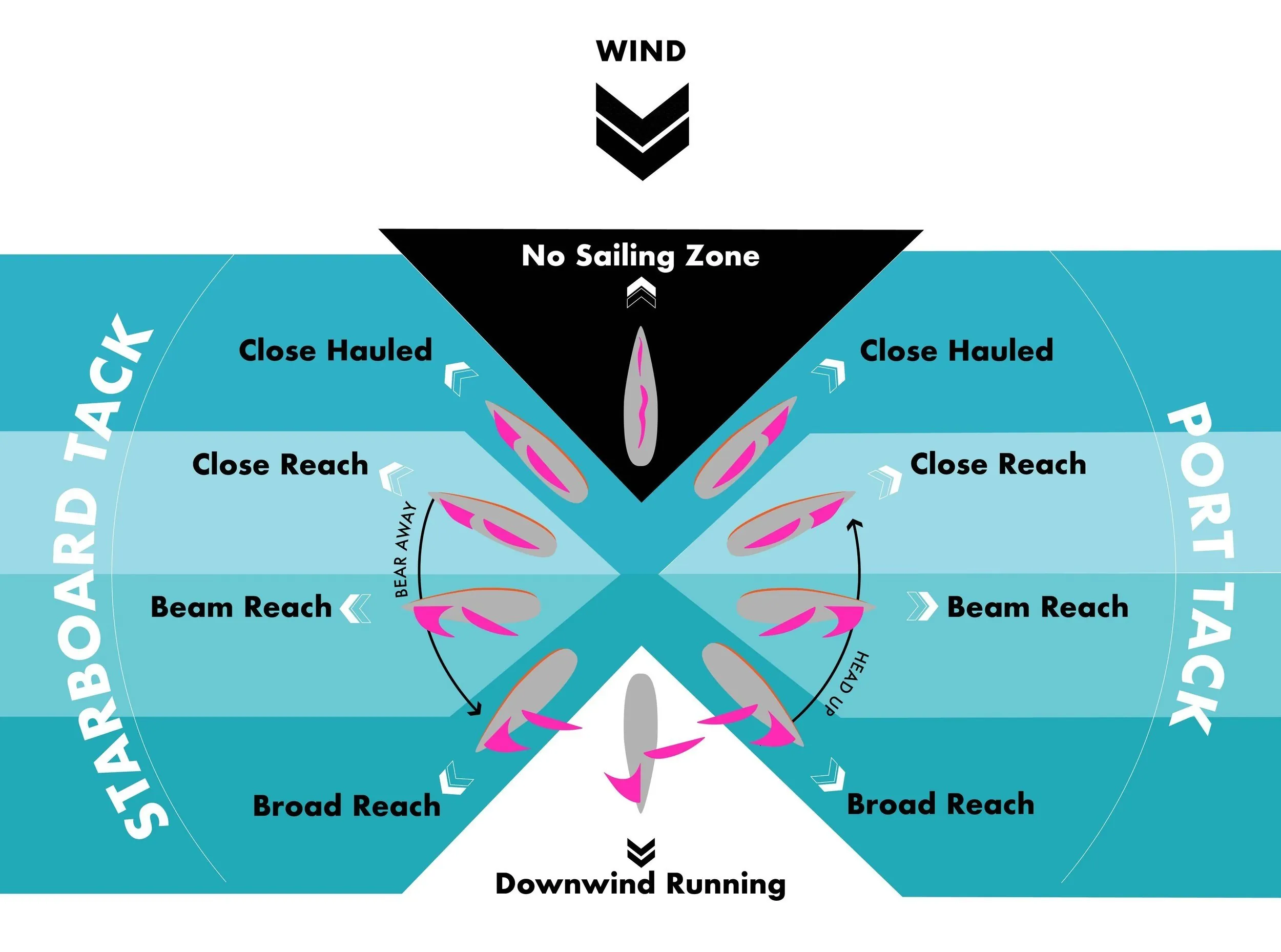
[b]4. Sailing Different angles to the wind[/b]
- Beam Reach (wind from the side): simple and easiest for beginners
- Close-Hauled (sailing towards the wind at an angle): Trim the sail in tight, experiment with how close you can steer towards the wind before the sail luffs (flaps) and loses laminar flow
- Broad Reach (wind from behind at an angle): Let the sail out more and observe how the boat accelerates. See how fast you can go by experimenting with angle of attack
- Running/Dead Running (wind directly behind): Sail out fully, but watch stability
[b]5. Stopping safely[/b]
- To slow or stop, simply bring the mainsheet in and turn into the wind
- The sail will luff and the boat will lose speed
[b]Credits:[/b]
Rudder position indicator + speed indicator: [url=https://steamcommunity.com/workshop/filedetails/?id=3025094276]https://steamcommunity.com/workshop/filedetails/?id=3025094276[/url]
Sail angle display: [url=https://steamcommunity.com/sharedfiles/filedetails/?id=3462535570&searchtext=big+if]https://steamcommunity.com/sharedfiles/filedetails/?id=3462535570&searchtext=big+if[/url]