Brief Description:
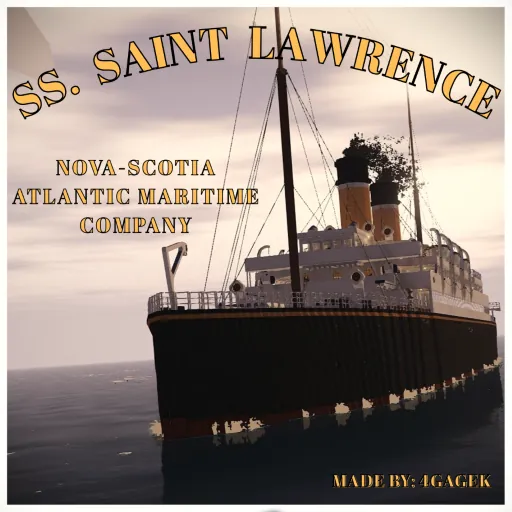
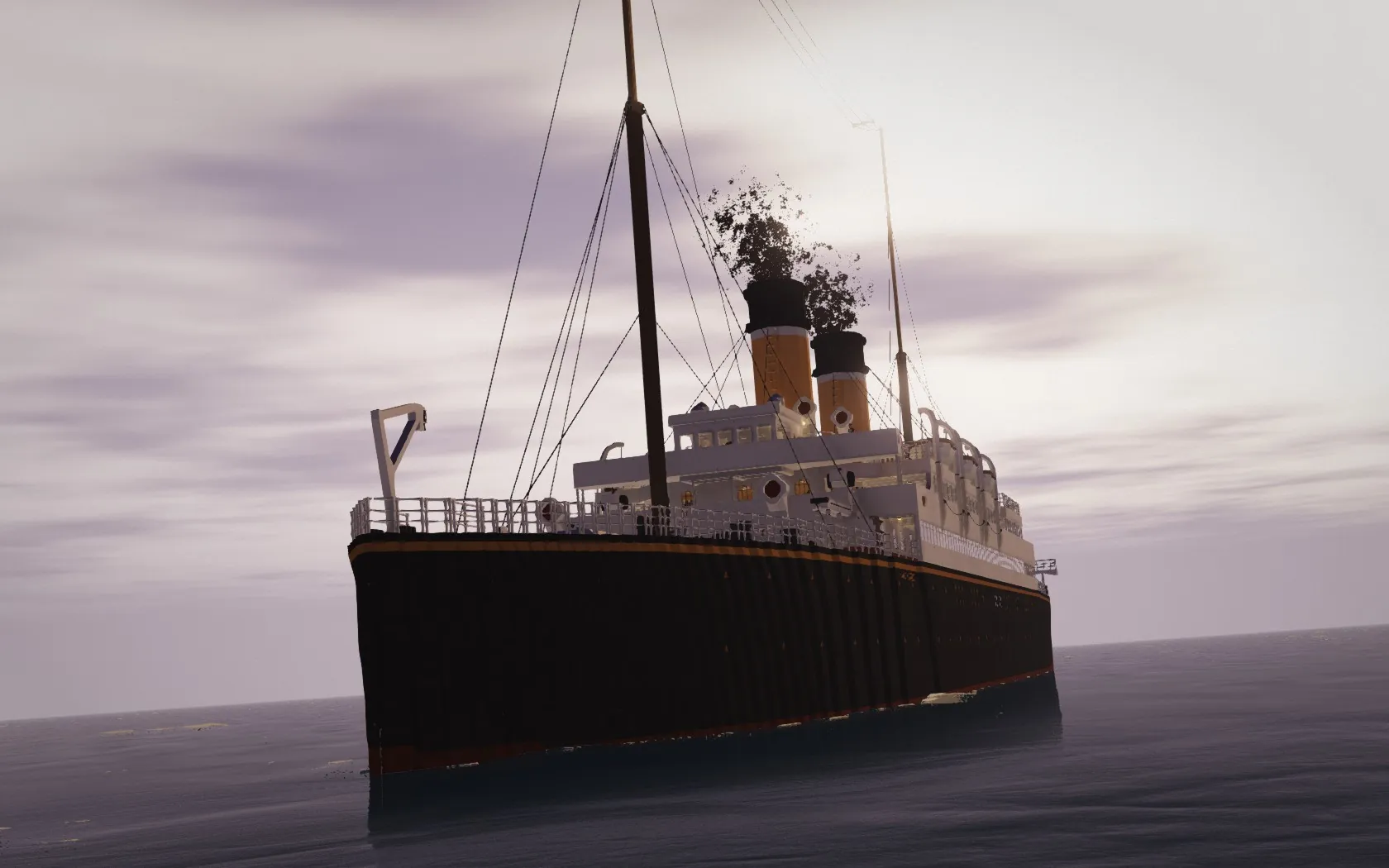
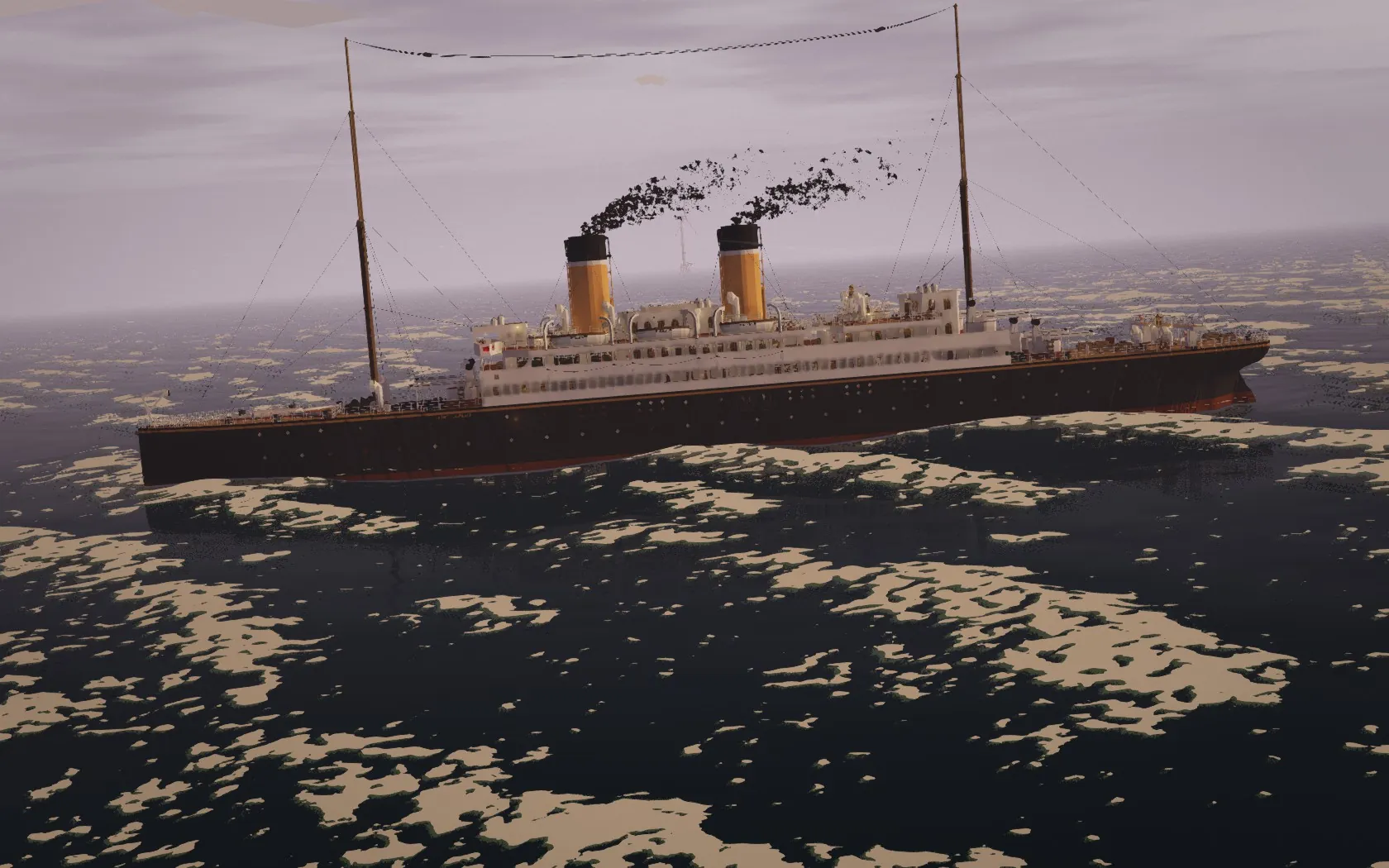
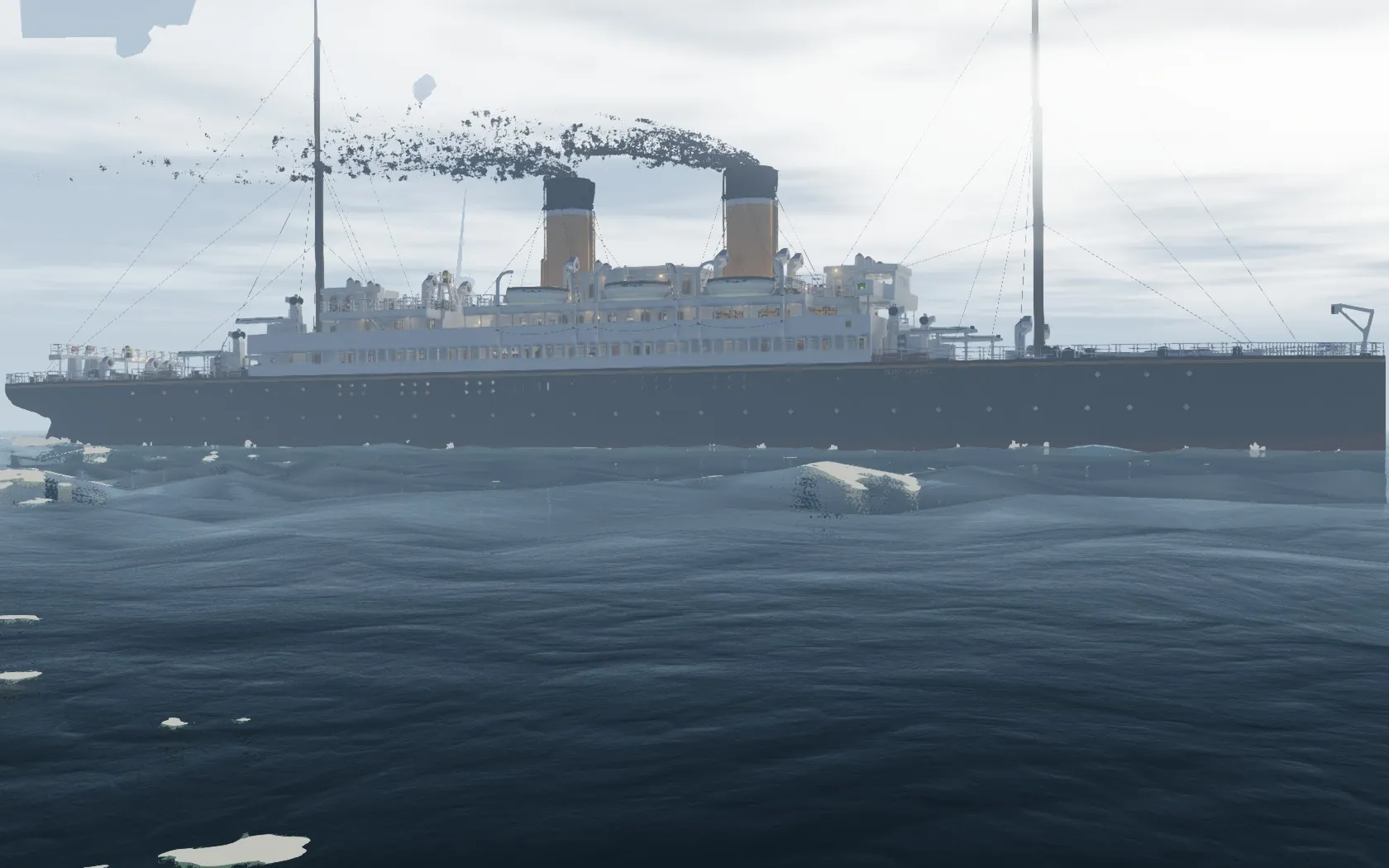
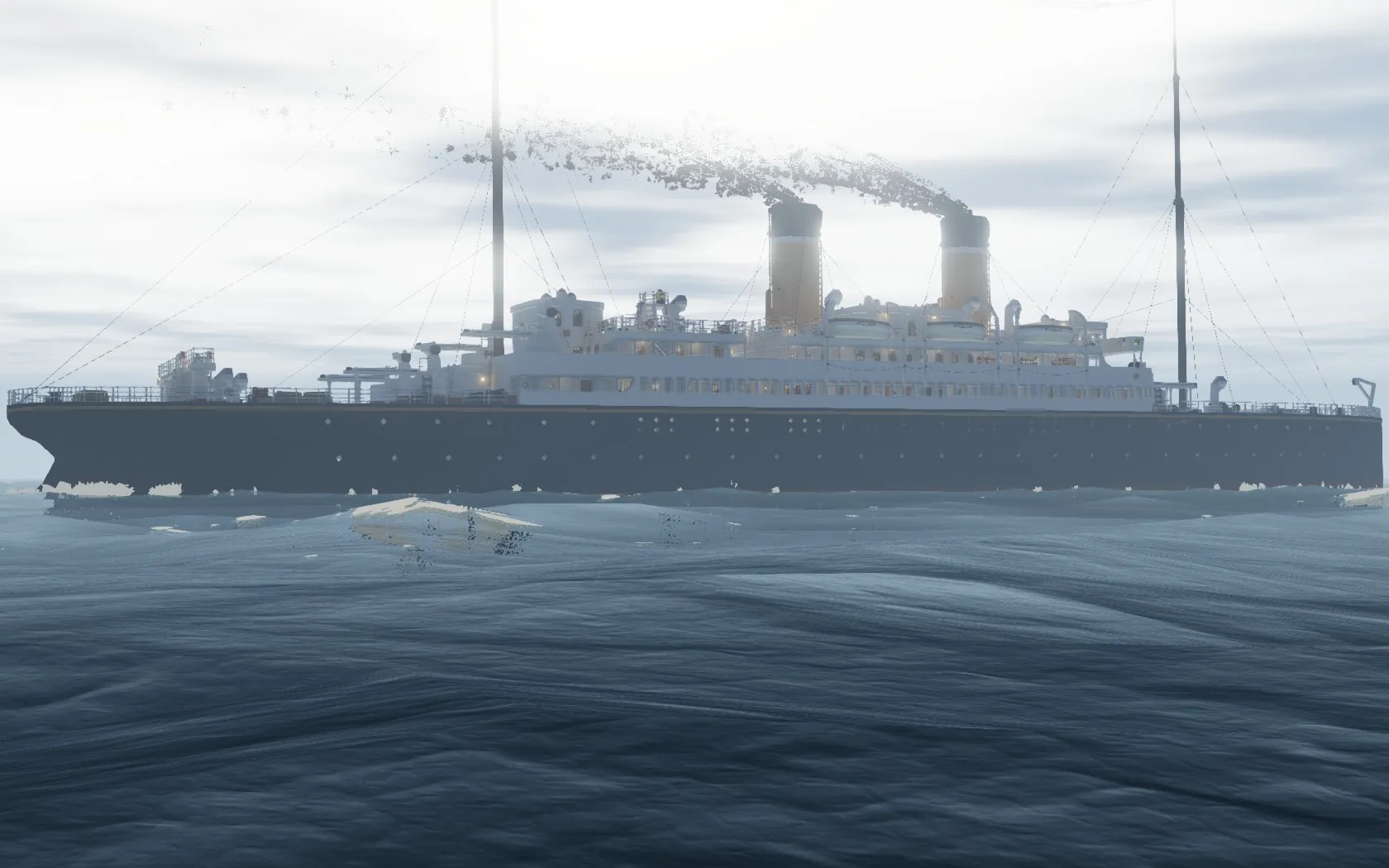
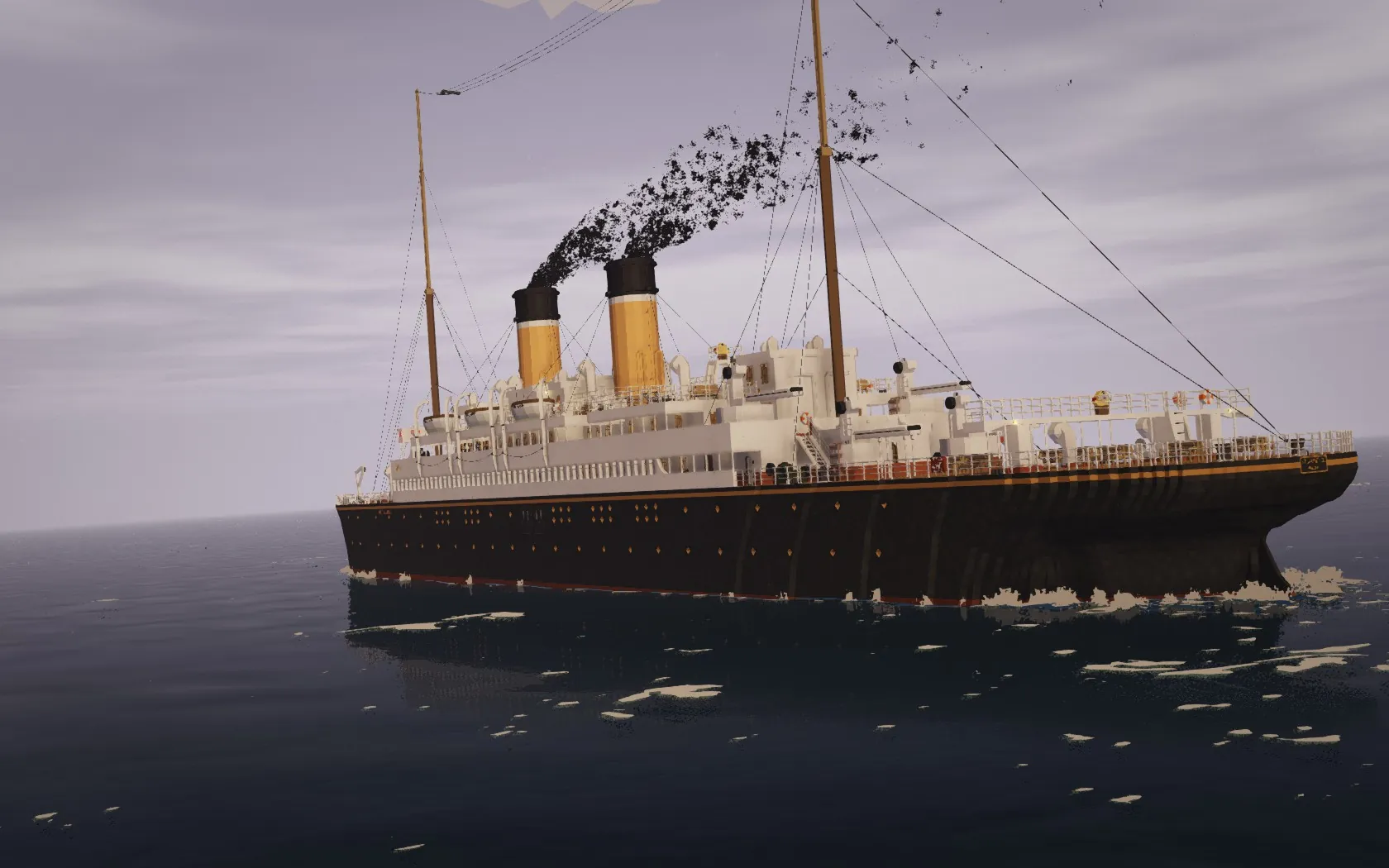
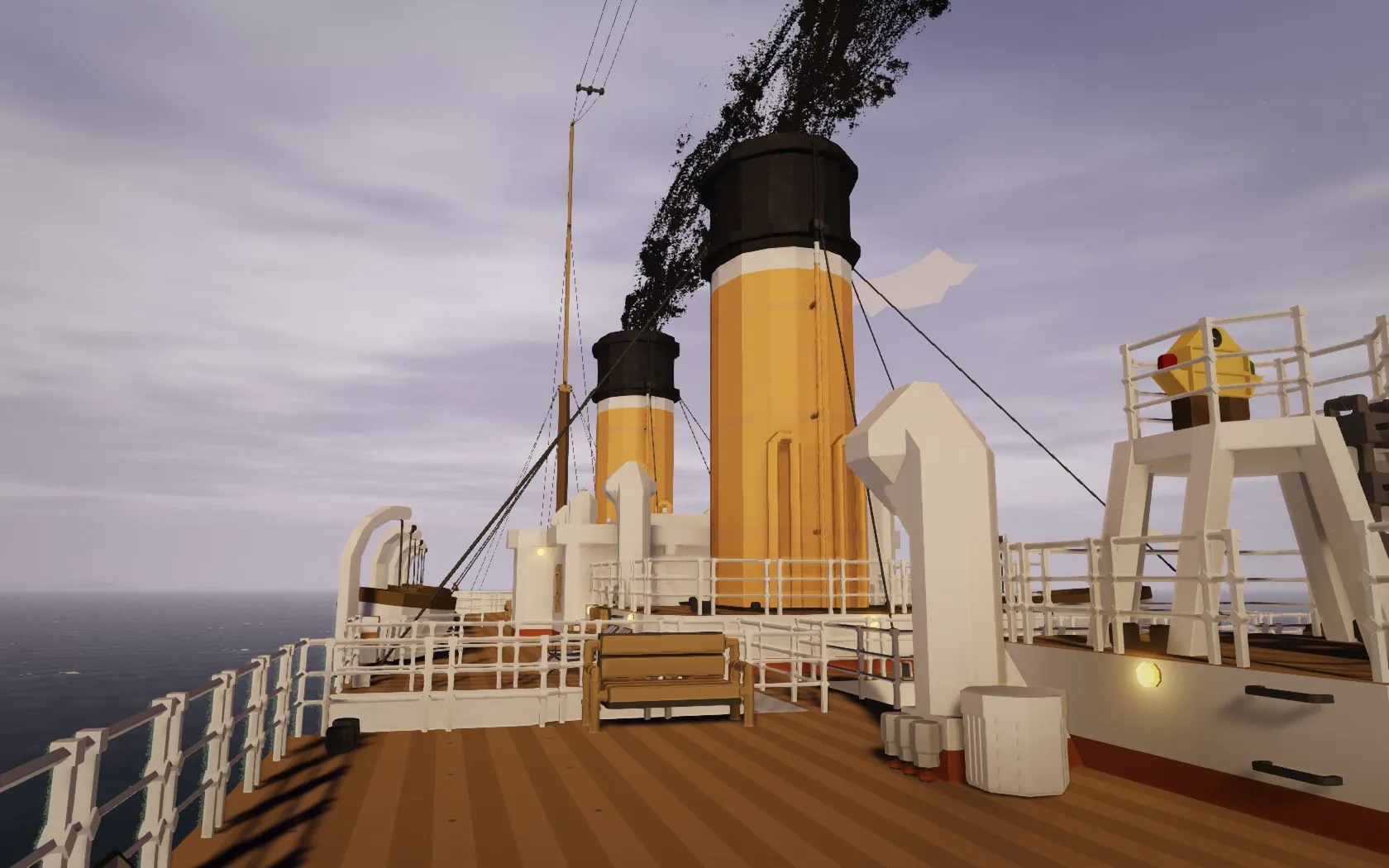
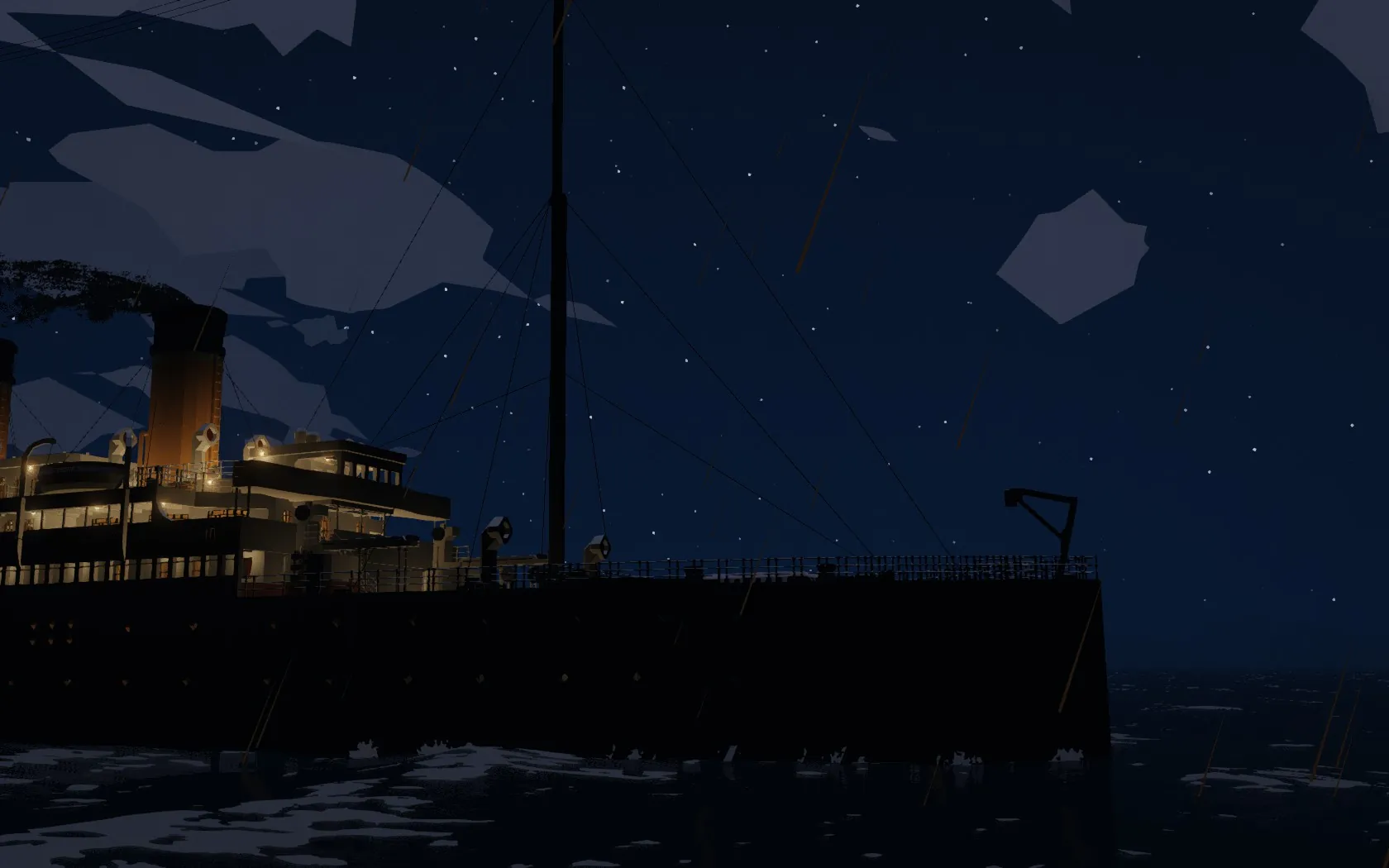
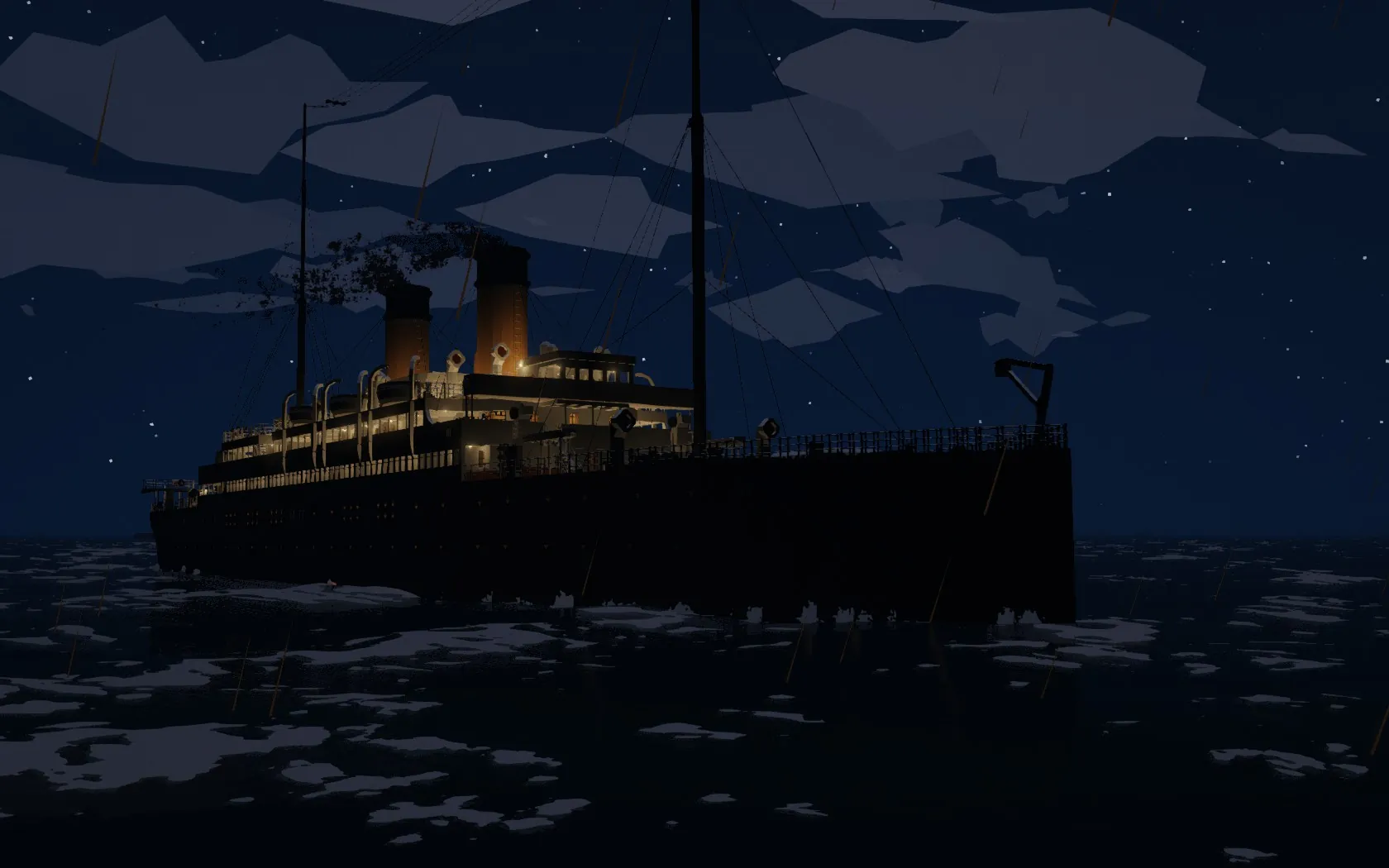
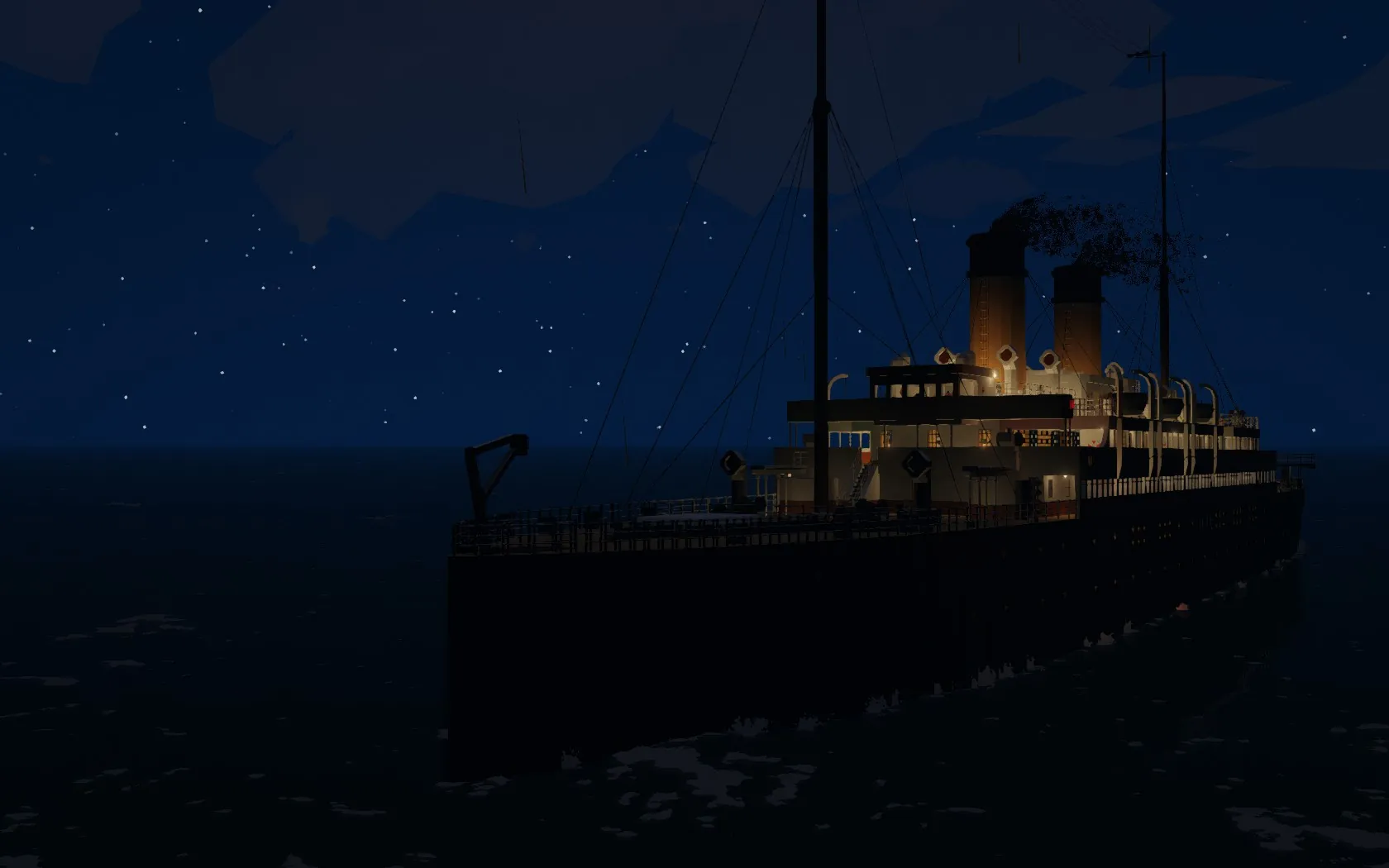
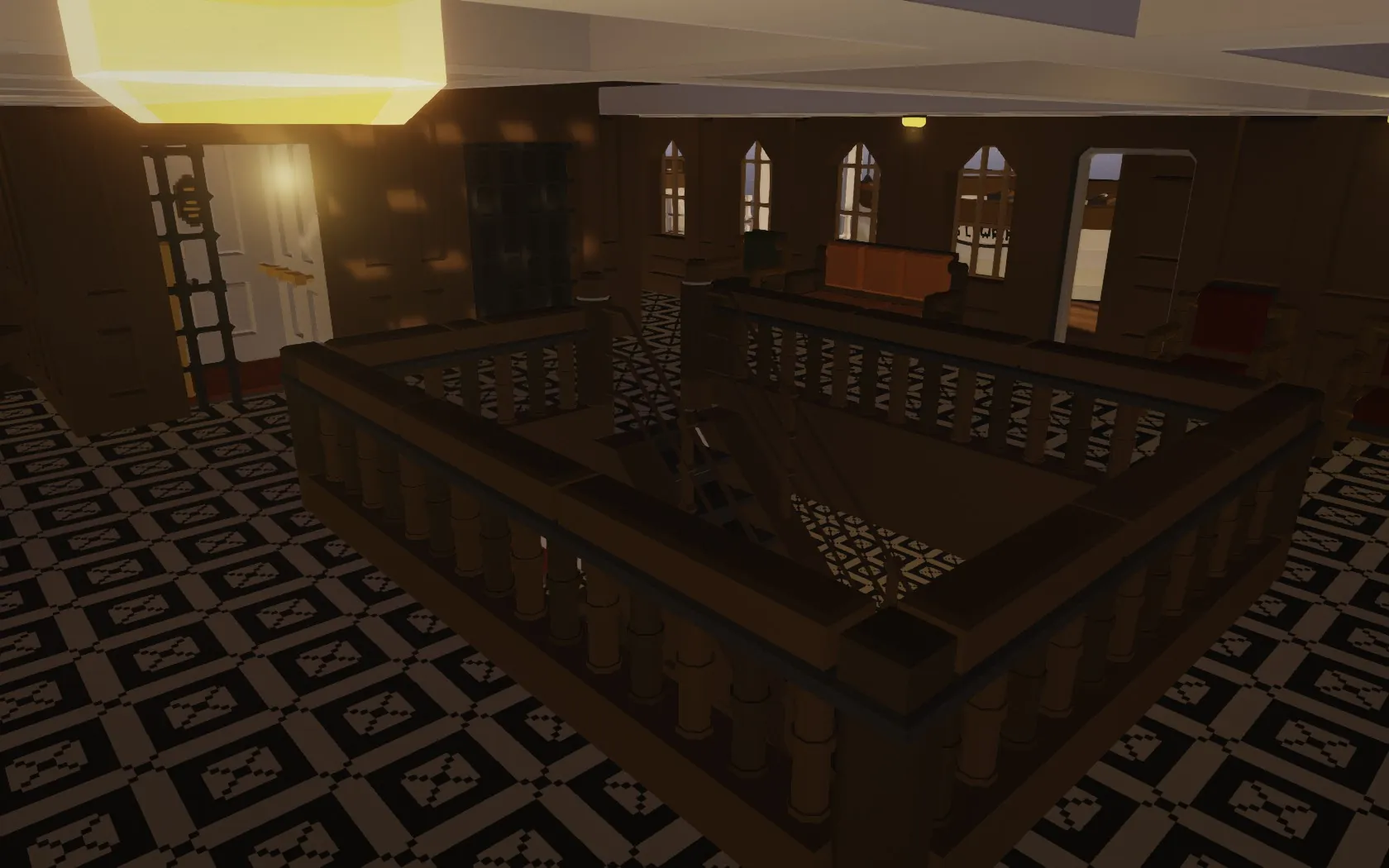
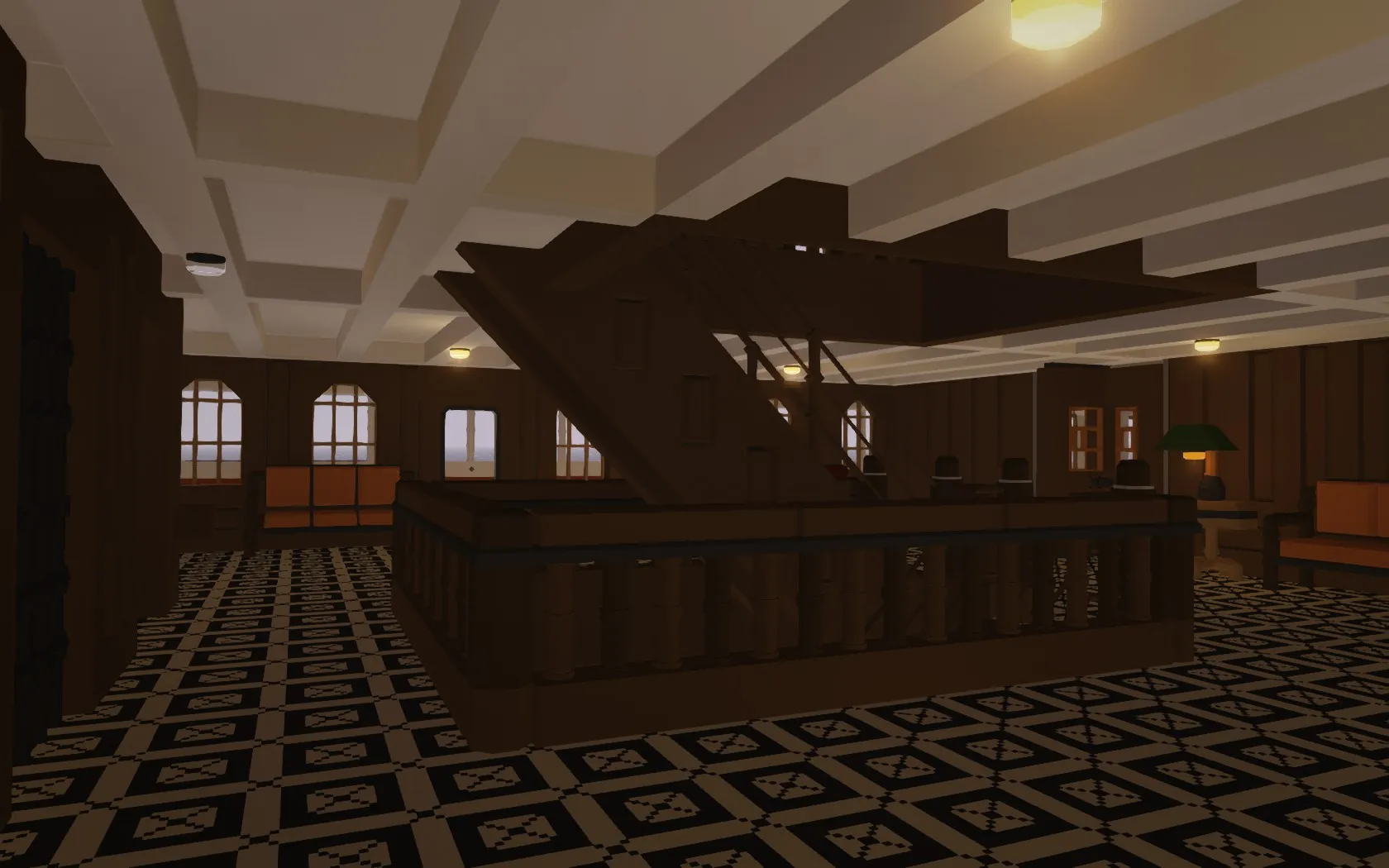
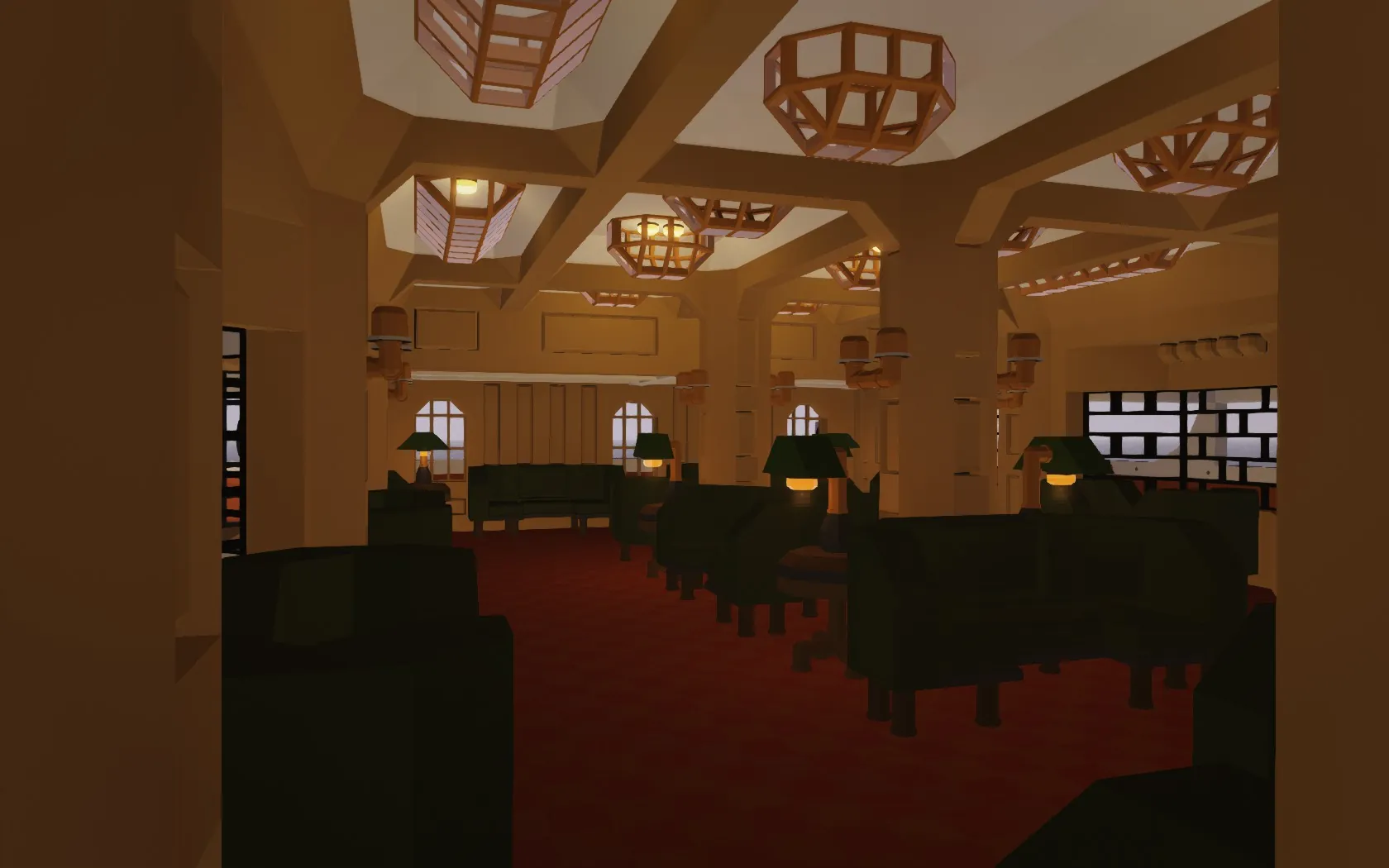
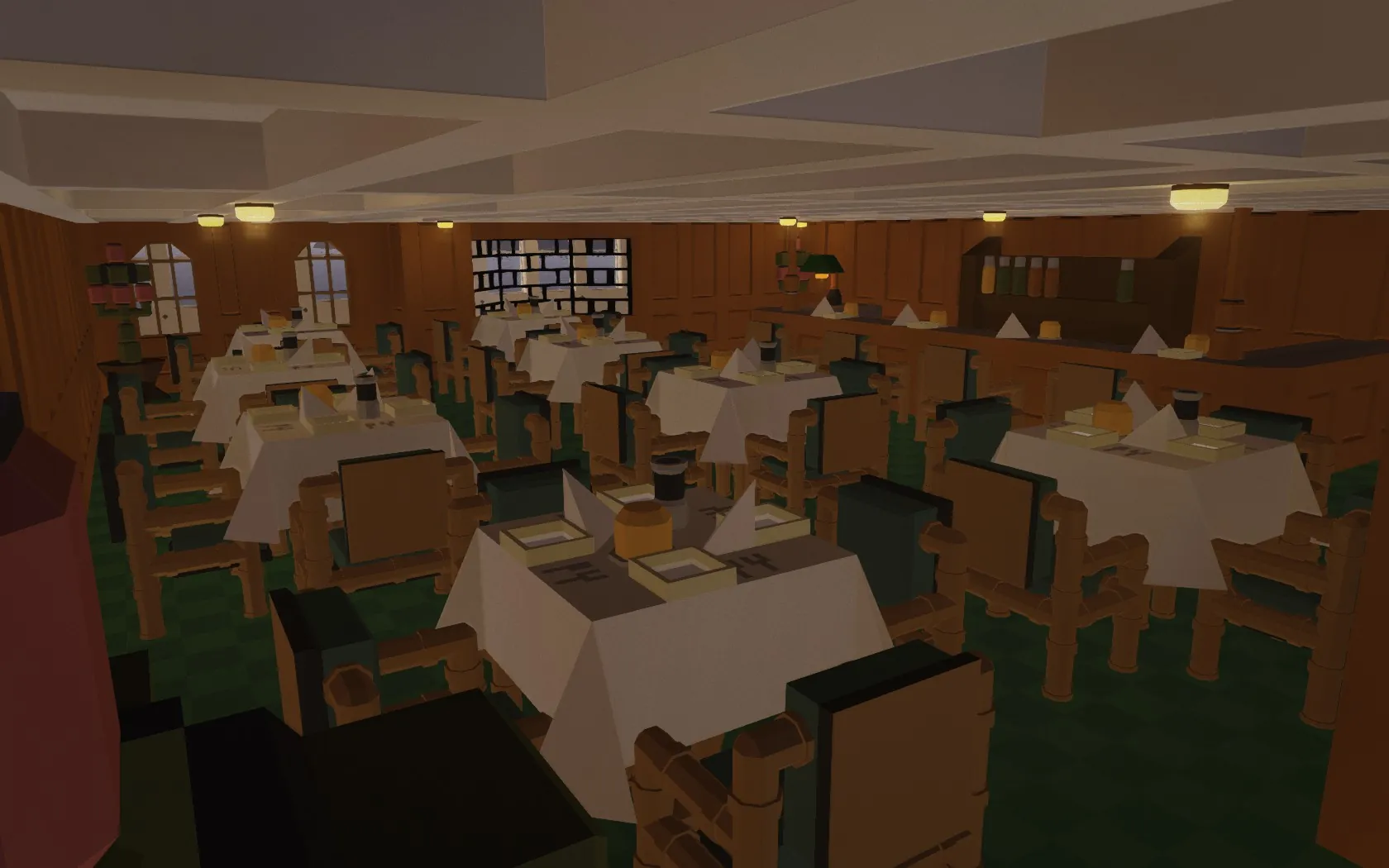
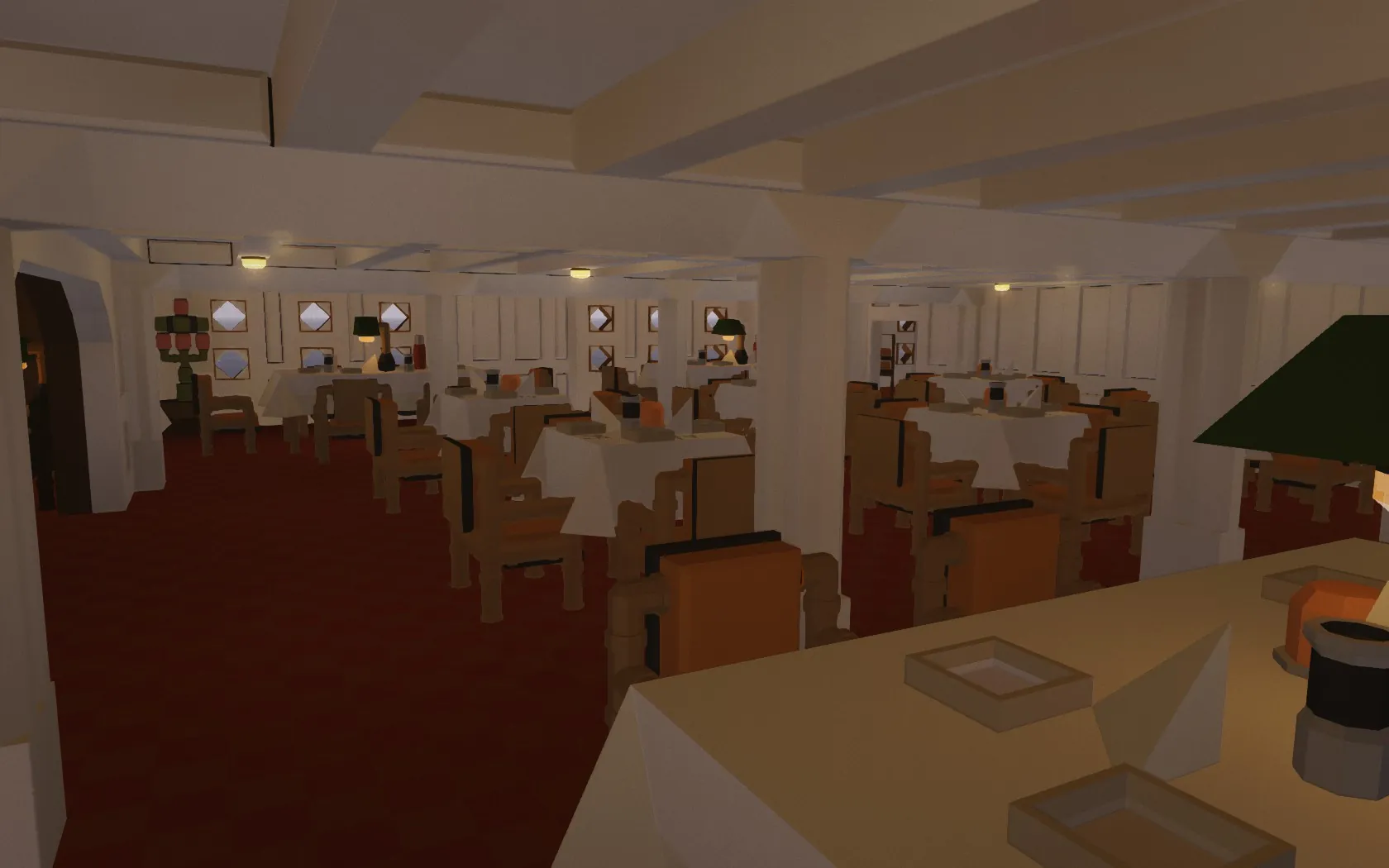
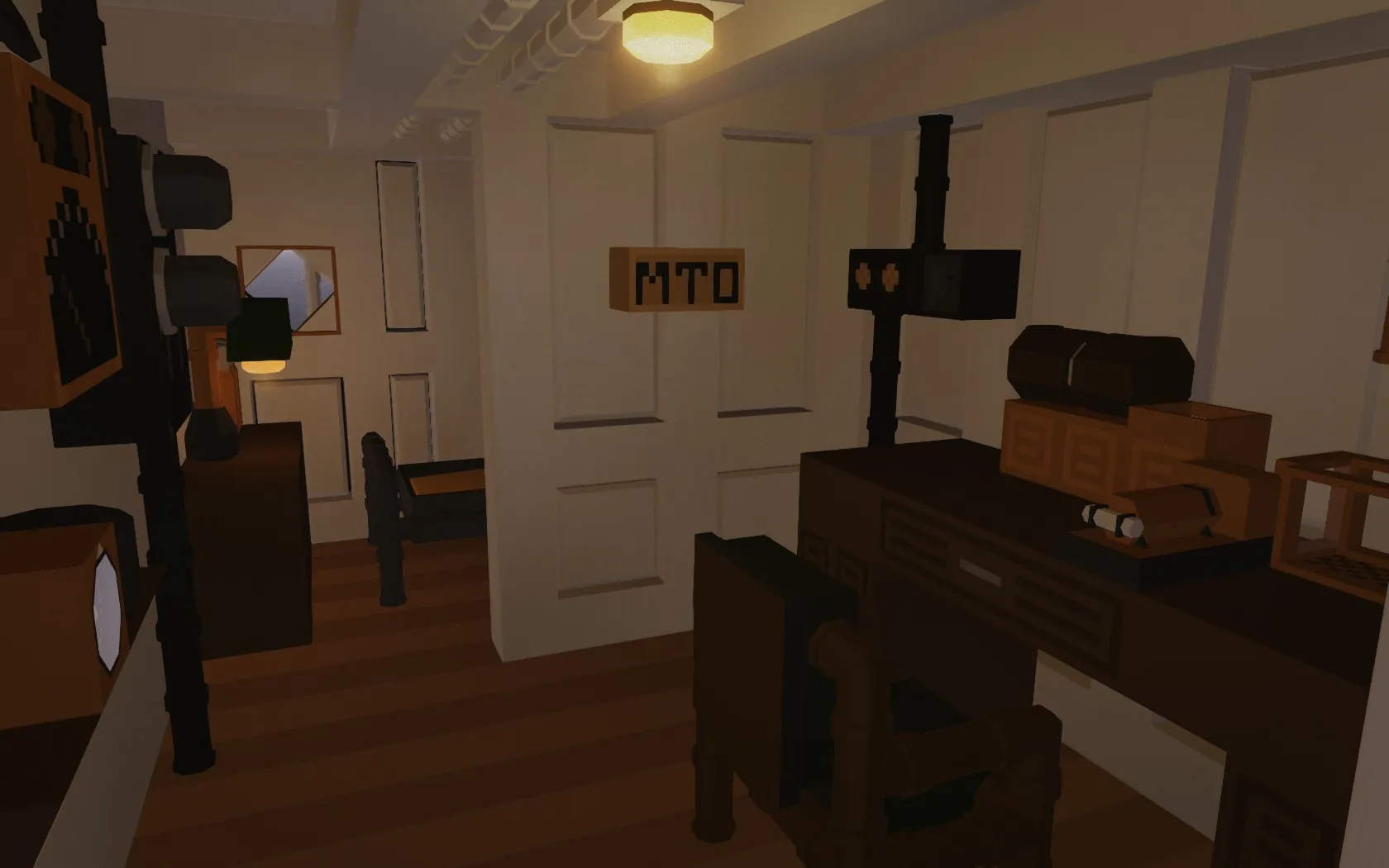
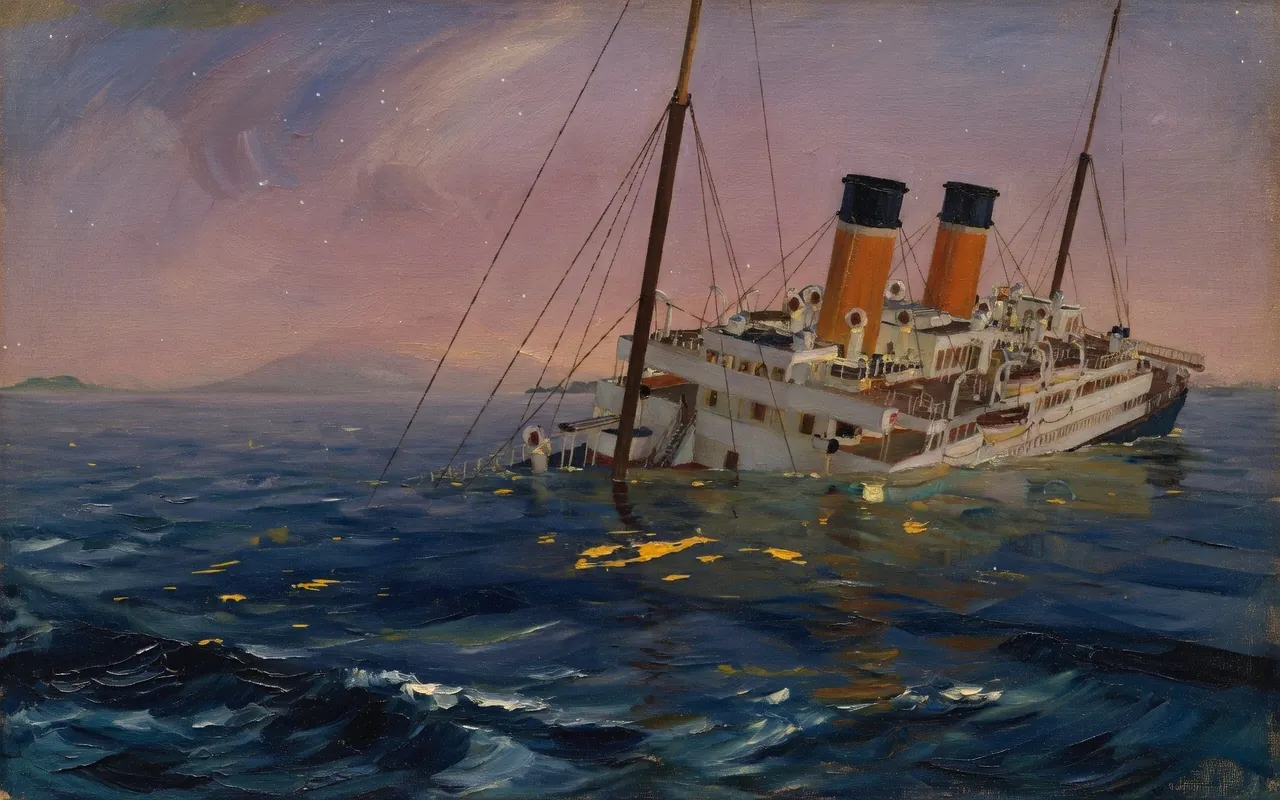
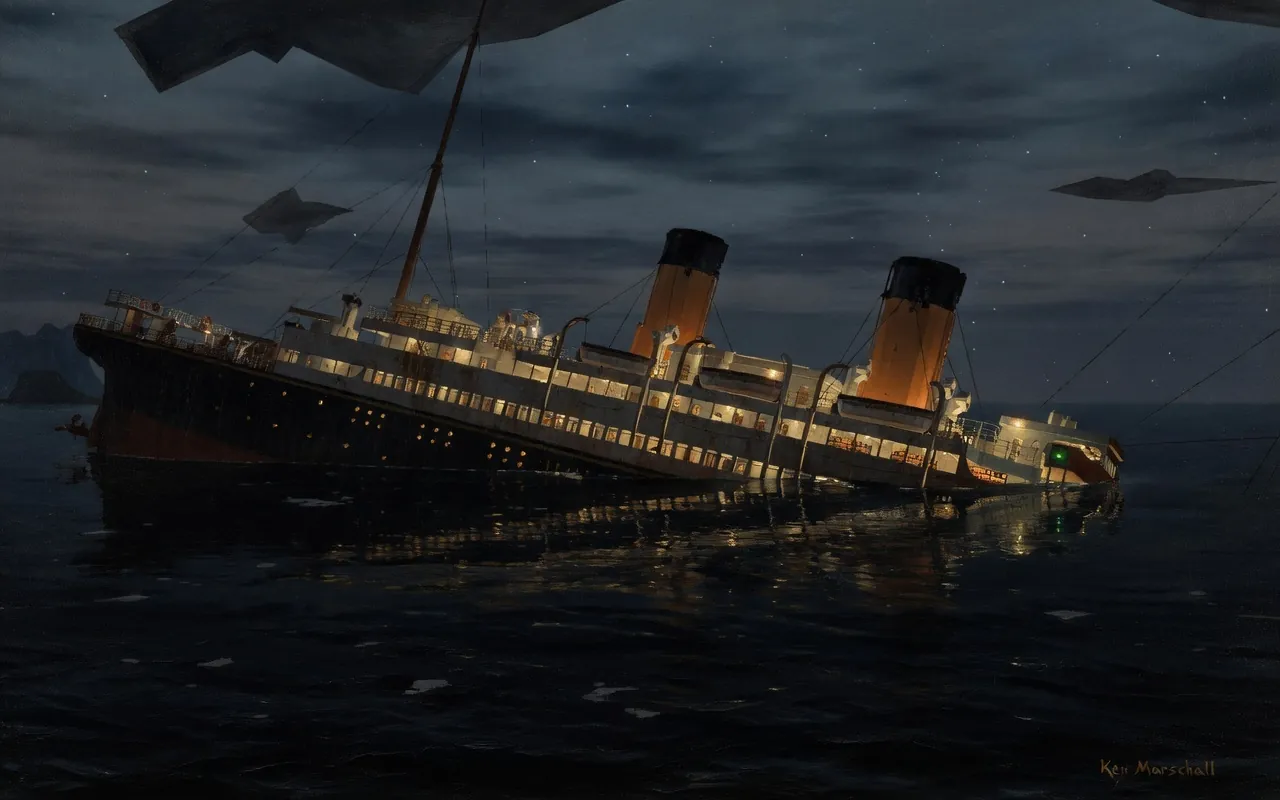
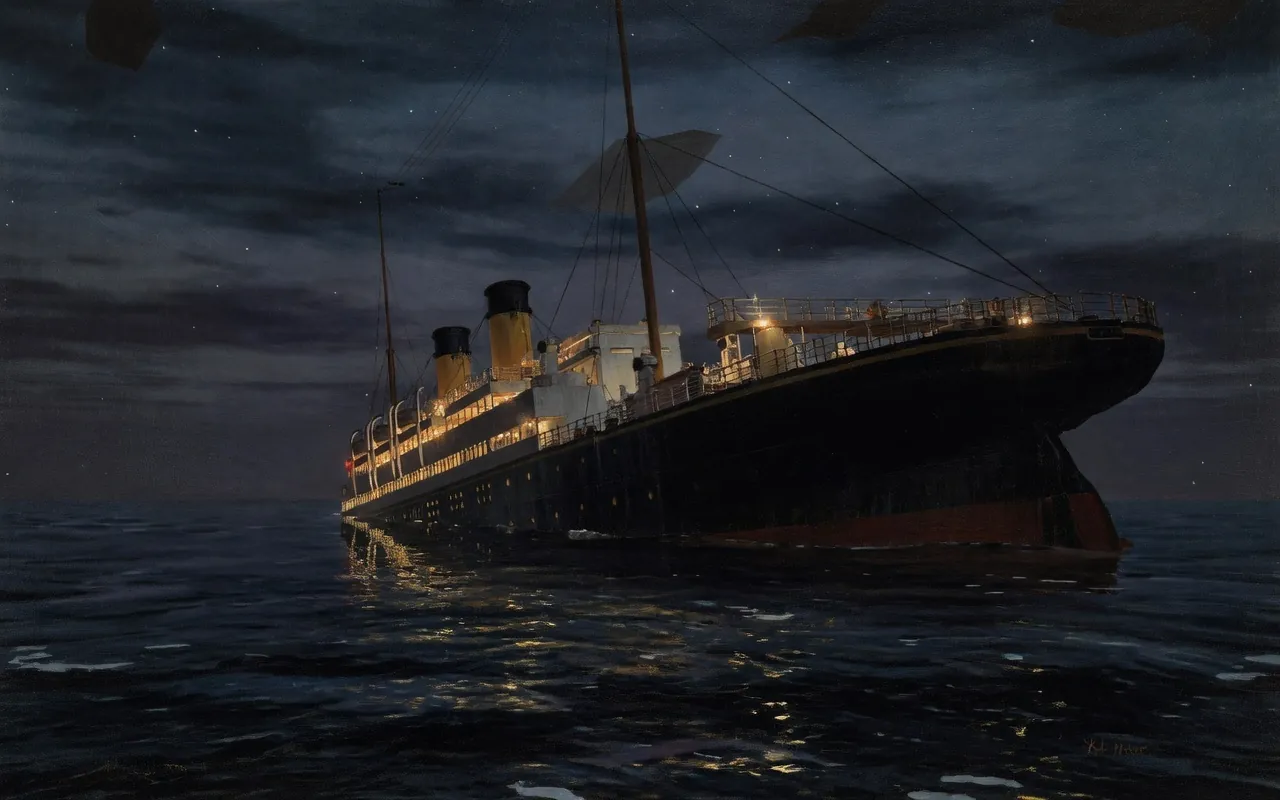
This is an early 1900's Steam Ship, part of the fictional Nova-Scotia Atlantic Maritime Company. This is a large ship, but still playable on low-medium end computers. The Interior is heavily detailed and is spacious! In addition, the ship is also sinkable, as shown in some of the photos, and usually takes between 25-30 minutes depending on PC specs, conditions, or pausing.
Startup:
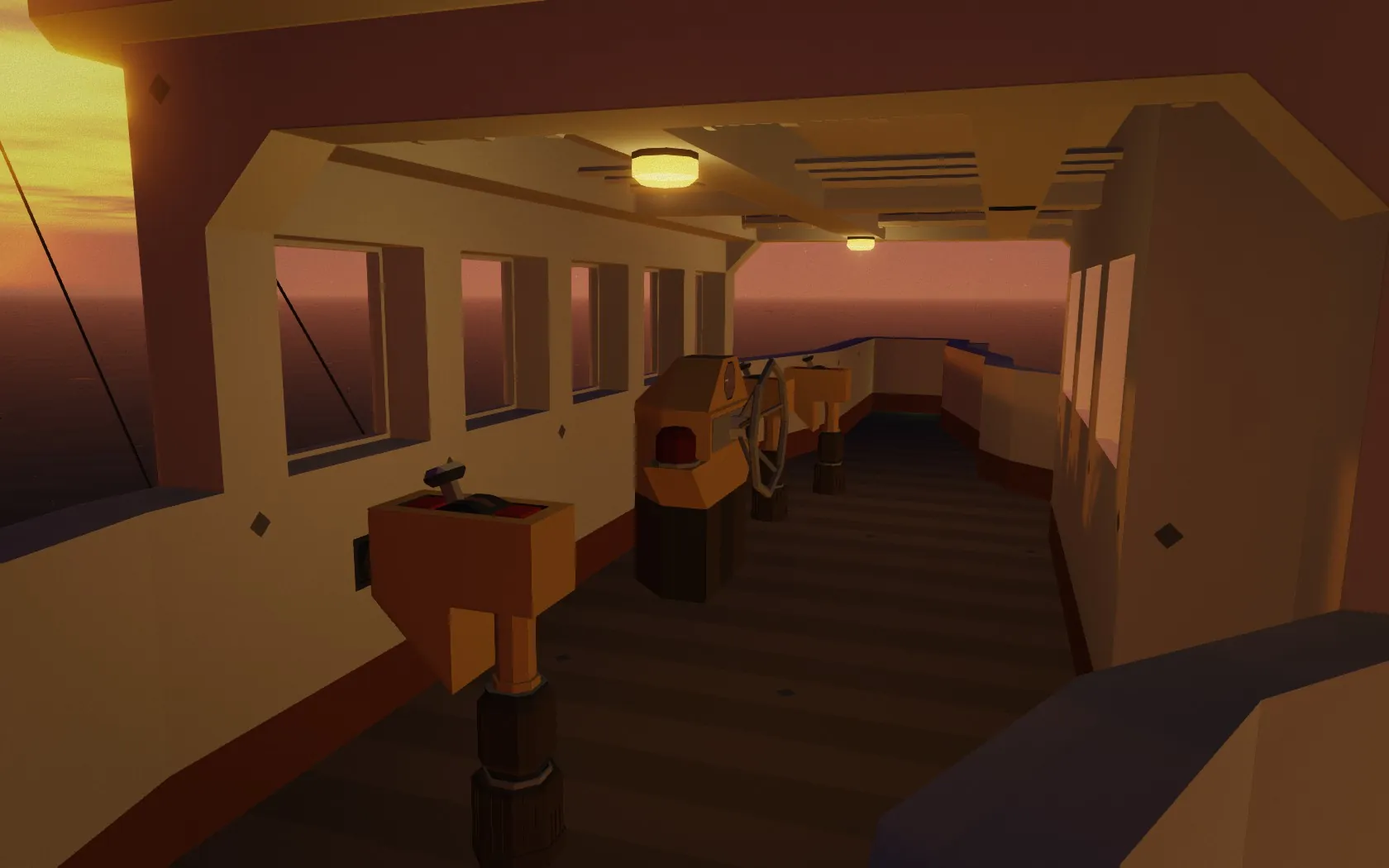
To Startup simply turn on the boiler's air supply, start the boilers, and utilize the throttles on the bridge to determine speed.
Other Remarks:
- The ship does NOT require infinite electricity or fuel, and its preferable to play without them.
- Must be spawned via the addon editor.
- No mods are required or were used in the making.
- To turn ship, use the helm on the bridge, and use the throttles to assist with turning, as it is a slow turner.
Lore: (Do not need to read, only for fun)
Some vessels have ordinary careers. What defines their legacy may be the ships speed, luxury, or size. Others however, are not defined by these standards. Rather, some ships' entire legacy is dependent upon a singular moment in time. These moments often involve dramatic feats of heroism and bravery, among chaos and tragedy. The SS. Saint Lawrence falls into the ladder category, where despite the vessels lengthy, successful, and even pioneering career, mere minutes are all that it is known for in the history books. The Nova Scotia Atlantic Maritime Company was born in 1868 alongside Canadian confederation. Though the company was created in 1868, it declared bankruptcy only a short time later in 1874. Later, it was bought by an entrepreneur from Kingston Ontario, who believed that if given a fresh coat of paint, the company could succeed again. The company was small to say the least, only operating domestically in Canada, around the Saint Lawrence river and maritime provinces. This was until a class of ships called the Mackenzie Class, which became the first ships from the company to offer trans-Atlantic passenger service. This was later improved by the Brock Class, which was really just the SS. Thompson after the sinking of the Brock, and the cancellation of the two other ships planned in the class, due to the cost of the Brocks sinking. The Thompson was successful, but alone, it could not compete on the scale the company had hoped for. This is when the Anticosti Class was first proposed.
The Anticosti Class would be on a scale, completely different from any other vessels in the company, including the Thompson, which had already been a major step for the company. In addition, the manufacturer associated with the Nova Scotia Atlantic Maritime Company, the Halifax Wolves, was still a company in its infancy, and did not have the capabilities to build the Anticosti Class. However, by 1906 the Halifax Wolves had developed their shipyard, so as to allow construction to begin on the SS. Anticosti. With construction beginning in Summer 1906, and its sister ship, the SS. Saint Lawrence, beginning that same autumn. The Anticosti was completed in Spring 1907, and on its maiden voyage sold out. On its maiden voyage the ships designer had meticulously took notes on the passenger areas, and their use on the voyage. The designer found that the B Deck promenade was notoriously underused, especially since their was a larger promenade on A Deck. This, along with the popularity of the large pub and restaurant on B Deck, meant that changes would be made to the second ship, the SS. Saint Lawrence. The changes were made, with the B Deck promenade being enclosed, with a small sitting area on the starboard side being added as well. The vessels maiden voyage was set for July 12, 1907, but left a few days later due to a harsh storm. The ships voyage was from Halifax, to Quebec City, to Liverpool. The ship was given the full PR treatment, and was as successful as its sister ship, completing the journey in less than a week, and a few hours less than the Anticosti. The ship quickly became the favourite out of the twins, and officially became the flagship of the Company. With the Anticosti Class, and the Thompson, which was still relatively new, the company began phasing out its aging Mackenzie class, or at least taking them off the main Atlantic lines. On a particular night in march 1912, The Saint Lawrence was on its first day of travel departing Canada. The seas were eerily calm, with overcast and snow. Ahead of the ship, lay a decently sized iceberg. The second officer, who was on duty at the time knew they did not have sufficient time to turn out of its path, and instead opted to slow down and hit it head on. The second officer closed the watertight doors, and turned on the alarms for the boiler rooms and engine rooms. It was too late. Right as this was done, the ship struck at approximately 19 knots, crumbling its bow in, and causing the mast to collapse within seconds of striking the berg. However, this would be the least of their problems.
The section of the bow that collapsed was filled with hundreds of stokers and passengers, who would have all been instantly killed at impact. Those who didn't die from the collision would have been stuck wrangled in metal and furniture, and with no way of reaching them, would have drowned as the water creeped higher, as the bow sank lower in the water. In addition, firemen in the boiler rooms would have been thrown on the ground, as hot coals would have sparked a fire. In only a few minutes, hundreds have been killed, and a major fire had erupted in two of the three boilers. The clock struck midnight. The power miraculously stayed on. The captain ordered the engines stopped, and the boats to be filled with passengers. In addition, he also ordered the Marconi wireless operator to send a distress call, only one problem, the forward mast had collapsed, greatly reducing the range of the device. Almost as if the seas were taunting the SS. Saint Lawrence, the fog soon lifted, which allowed the rockets to be used effectively to signal for help. At 2:15, a nearby ship arrived on scene, and began ferrying passengers. The fire was still being fought in the boiler rooms, but had gotten mostly under control. The watertight bulkheads had stayed intact, and only the bow had suffered severe damage. All told, 133 people had been killed, with hundreds more being injured. The Saint Lawrence was swiftly towed back to Halifax, where the Halifax Wolves took it in. An initial inspection of the ship found that only the bow, and boiler rooms had been severely damaged, and that majority of the ship was fine. Consequently, after four months in harbor, the ship was launched once more, with an obvious line where the new bow was installed. Only a month after the incident, the Titanic also came in contact with an iceberg, and rather than hitting it head on, decided to navigate around it, fatally wounding the ship. The incident with the Saint Lawrence reinforced the idea that hitting the iceberg head on would have saved the Titanic, and that William Murdoch was at fault for trying to get out of its path. However, on the contrary, the second officer on the Saint Lawrence was overcome with guilt and blame for not getting out of its way, and was soon let go from his position.
Other than this incident, the ship served among thousands of others during World War I, having somewhat of a boring career afterwards, only having a handful of notable moments. In 1929 it was sold to an American company, before being sold once again for scraps during the Great Depression. Its final destination was Long Beach California, where it was laid up, and scrapped. The Nova Scotia Atlantic Maritime Company never fully recovered from the Great Depression, and shut its doors to the public in 1932. The SS. Saint Lawrence was the companies most successful ship, and even still, it is only remembered for its collision in 1912.