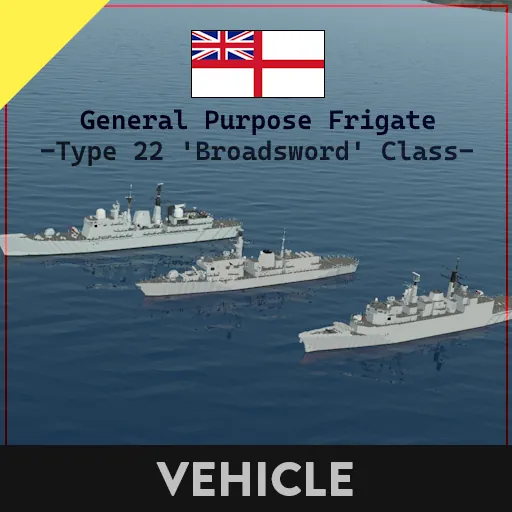
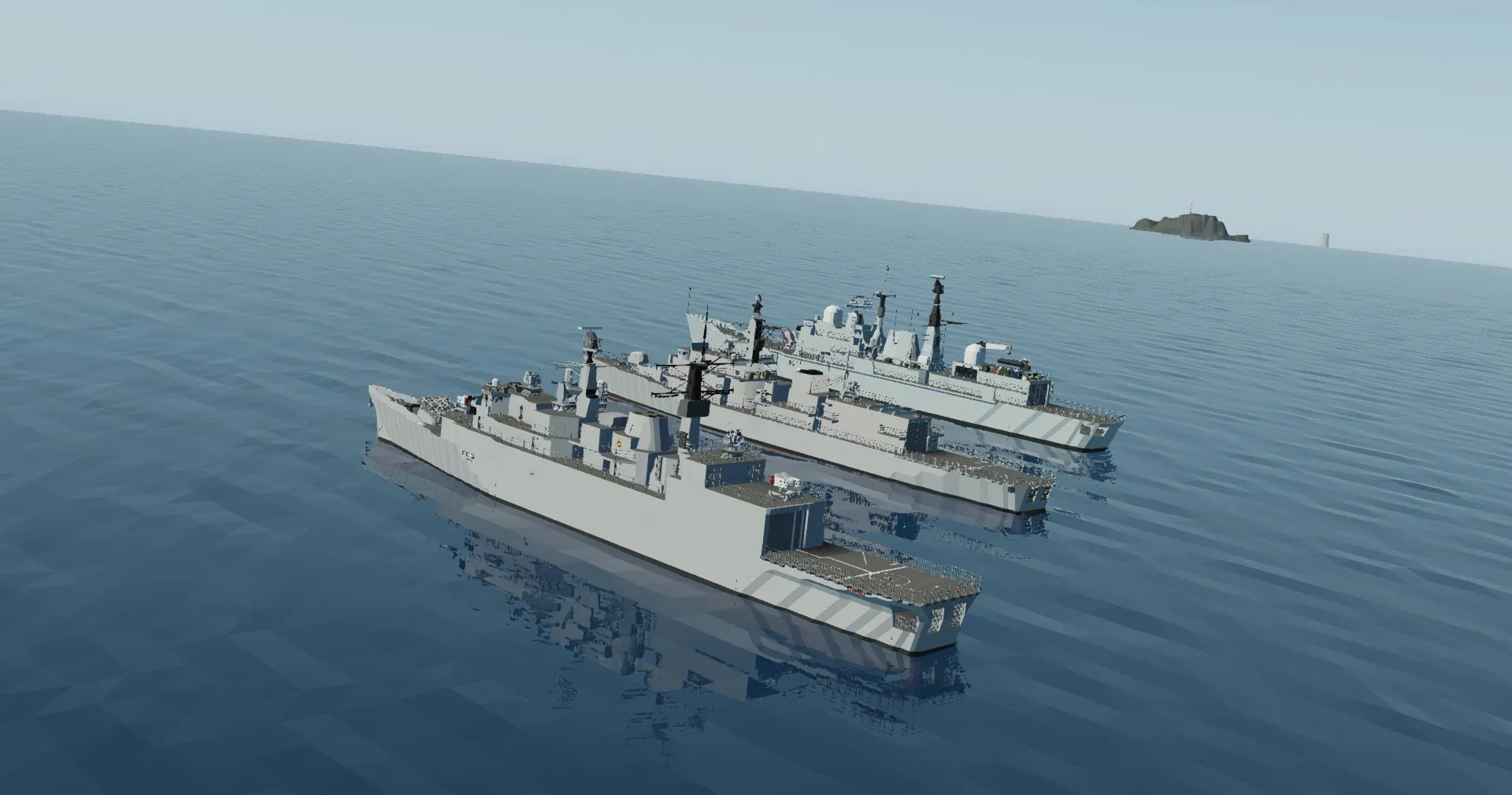
[WIP] HM Royal Navy - Type 22 'Broadsword' Class
The Royal Navy's Type 22 Frigate (Broadsword Class)
Overview
The Type 22 frigate, also known as the Broadsword-class, was a series of guided-missile frigates that served in the Royal Navy from the late 1970s to the early 2010s. Developed to meet a Cold War requirement for a highly capable anti-submarine warfare (ASW) platform, the Type 22 was designed to be quiet and effective in hunting Soviet submarines in the North Atlantic. Over its production run, the class was built in three distinct batches, each with significant design and armament changes that saw the ships evolve from specialized submarine hunters to heavily armed, multi-role frigates.
Design and Specifications
The Type 22 class saw progressive design changes between its three batches. The initial Batch 1 ships were 131.2 meters long with a displacement of 4,400 tonnes. The later Batch 2 and 3 designs were "stretched" to 146.5 and 148.1 meters, respectively, with a corresponding increase in displacement to improve seakeeping and accommodate additional systems.
Propulsion: The frigates were powered by a Combined Gas or Gas (COGOG) propulsion system in Batch 1 and 2, which used Rolls-Royce Olympus gas turbines for high speed and Rolls-Royce Tyne turbines for cruising. The Batch 3 ships featured an upgraded Combined Gas and Gas (COGAG) system with more modern Rolls-Royce Spey turbines, which provided better efficiency and speed.
Complement: The crew size varied by batch, with later ships accommodating more personnel, typically around 250.
Weapons and Sensors
The Type 22's armament and sensor suite saw a major shift between batches, reflecting changing strategic priorities and lessons learned from conflicts such as the Falklands War.
Anti-Air Warfare: All batches were equipped with the GWS-25 Sea Wolf point-defence missile system for protection against incoming air and missile threats. Each ship had two sextuple launchers.
Anti-Ship Warfare: The Batch 1 and 2 frigates were armed with four Exocet MM38 anti-ship missiles. The Batch 3 ships, however, were upgraded to carry eight Harpoon anti-ship missiles, which offered superior performance.
Guns: A notable feature of the Batch 1 and 2 ships was their complete lack of a main gun, a design choice that was reversed for the final batch. The Batch 3 ships were fitted with a 4.5-inch (114mm) Mark 8 naval gun for naval gunfire support and surface engagements. Additionally, the final batch was the first to be fitted with the Goalkeeper CIWS for enhanced close-in defense.
Aviation: The frigates had a large flight deck and hangar, capable of operating two Lynx helicopters or a single Sea King or Merlin helicopter. This provided a crucial long-range ASW capability. The ships also carried Sting Ray lightweight torpedoes for anti-submarine missions.