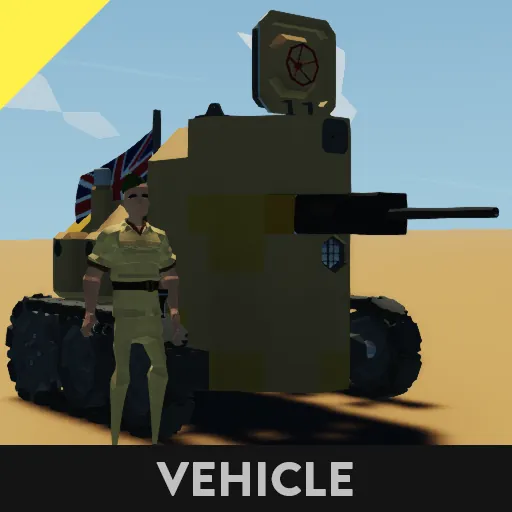
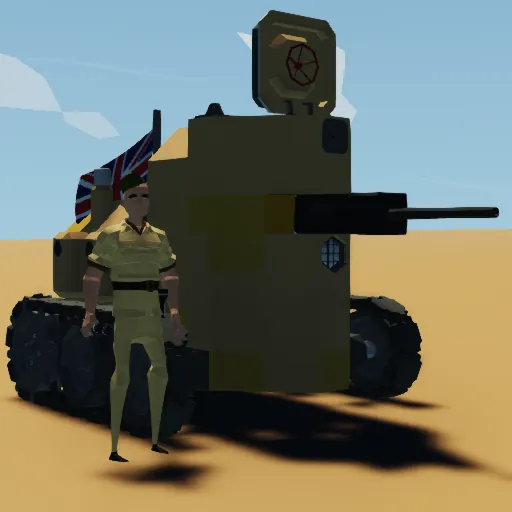
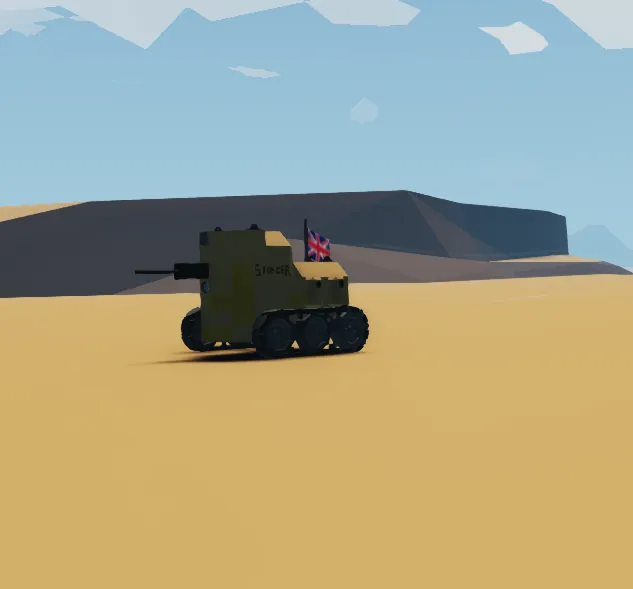
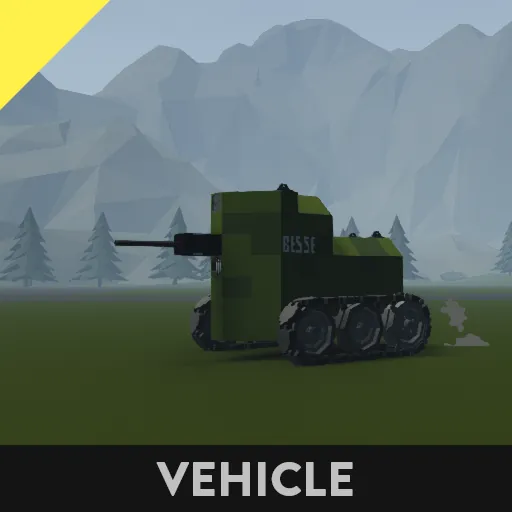
Vickers-Wolfe Light Tank Mk I Wasp North African
When the British Eighth Army deployed to North Africa in 1941, every available armored vehicle was pressed into service — from heavy cruisers to the humble Vickers-Wolfe Light Tank Mk I, nicknamed the “Wasp.”
Originally conceived as a reconnaissance tankette, the Wasp’s compact frame and dependable mechanics proved surprisingly suited to the harsh desert environment. Lacking the complex cooling systems of larger tanks, it could be repaired in the field with little more than a wrench, a water can, and a sense of humour.
The first batch of Wasps arrived in Egypt with elements of the 7th Armoured Division, the famed “Desert Rats.” Crews quickly adapted the machines for the sand and heat — adding improvised canvas sunshades, sand filters, and racks of water and fuel cans along the hull. Painted in the pale tones of the Caunter camouflage scheme, the once-green Wasps became dusty ghosts darting across the dunes.
Used primarily for forward reconnaissance, dispatch running, and convoy escort, the one-man vehicles earned respect for their reliability and speed, if not for their comfort. Drivers joked that “you didn’t drive a Wasp — you wore it.” Despite its light armour and limited firepower, the tankette’s small profile made it difficult for Axis gunners to spot, allowing many crews to survive close brushes with enemy patrols.
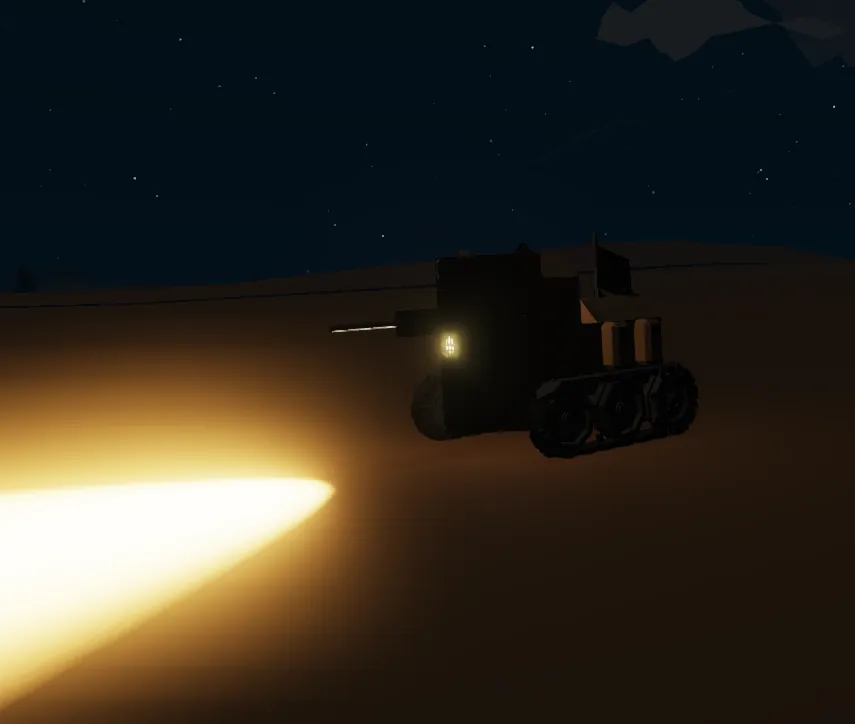
By the time of El Alamein in 1942, the Wasp had become a familiar sight around British forward positions, its distinctive exhaust chatter echoing across the desert night. Though gradually replaced by larger scout cars later in the campaign, the little machine left a lasting impression on those who served in it.
After the North African victory, surviving Wasps continued in secondary roles — airfield defence, training, and base transport — until the end of the war. Few returned home, but among veterans, the Wasp remains remembered as “the tiny tank that never gave up.”
BTW: To steer you have to use the halt buttons
NEEDS INF ELEC AND INF FUEL AND ENGINE OVERHEATING OFF