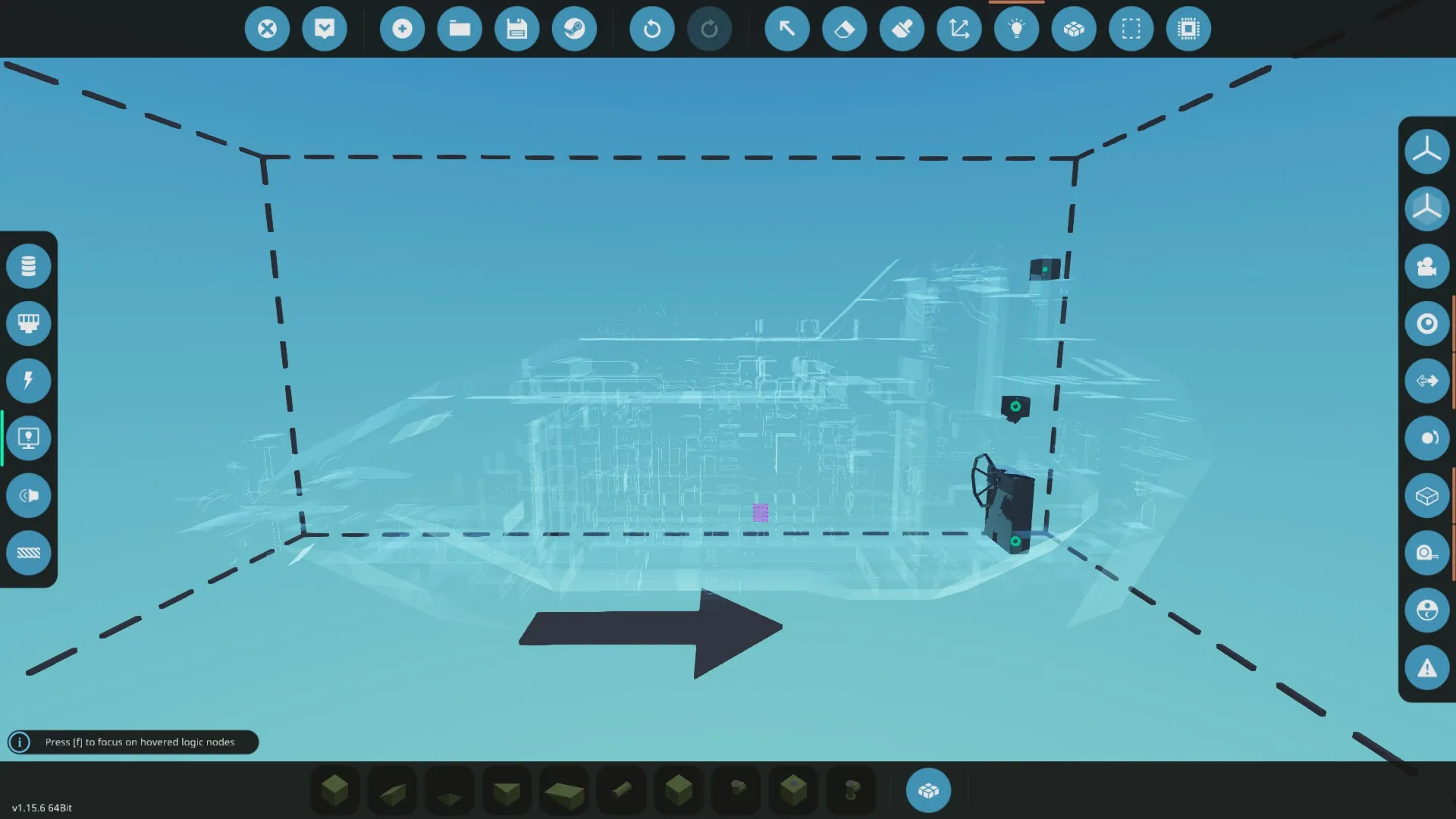
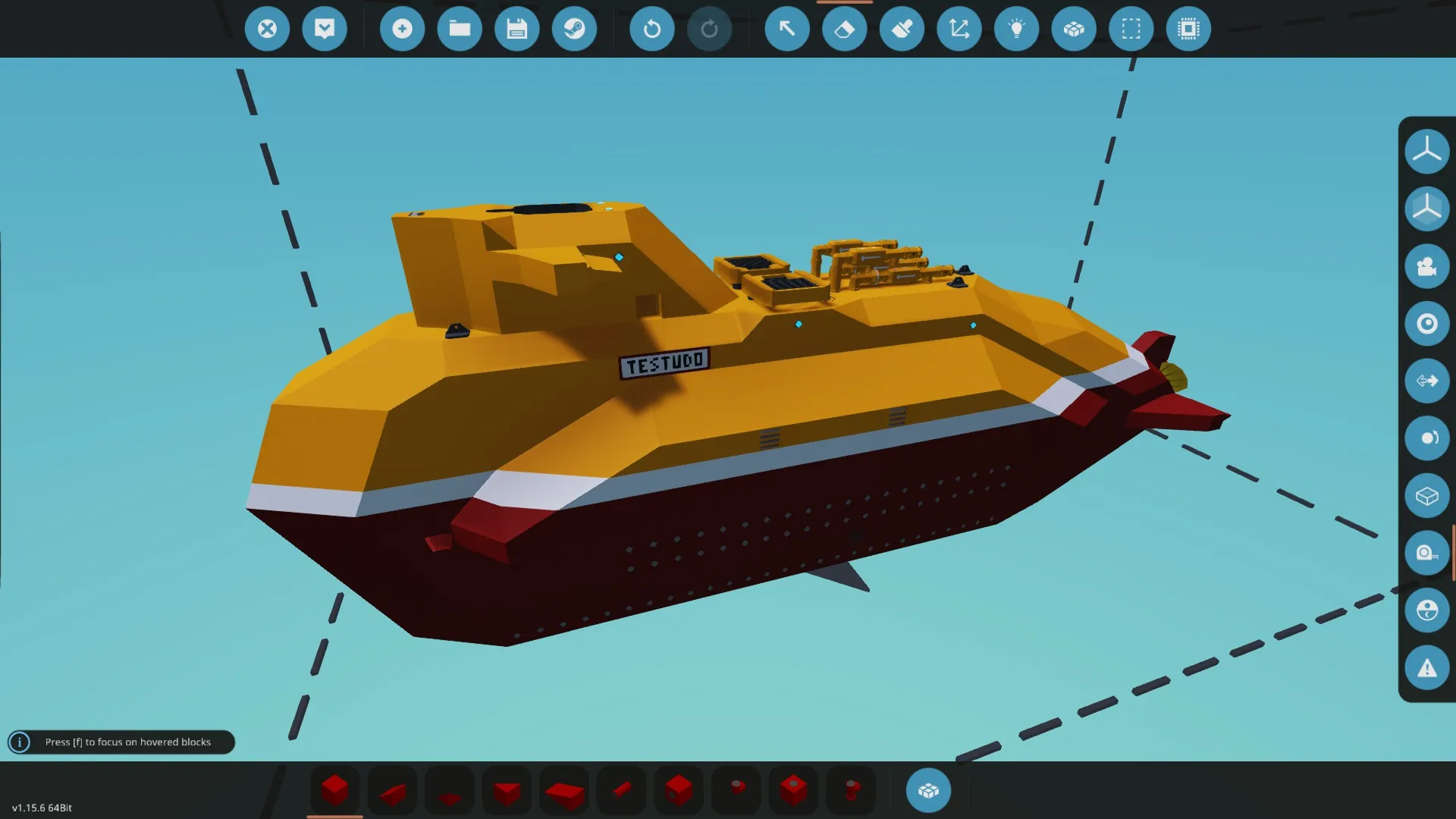
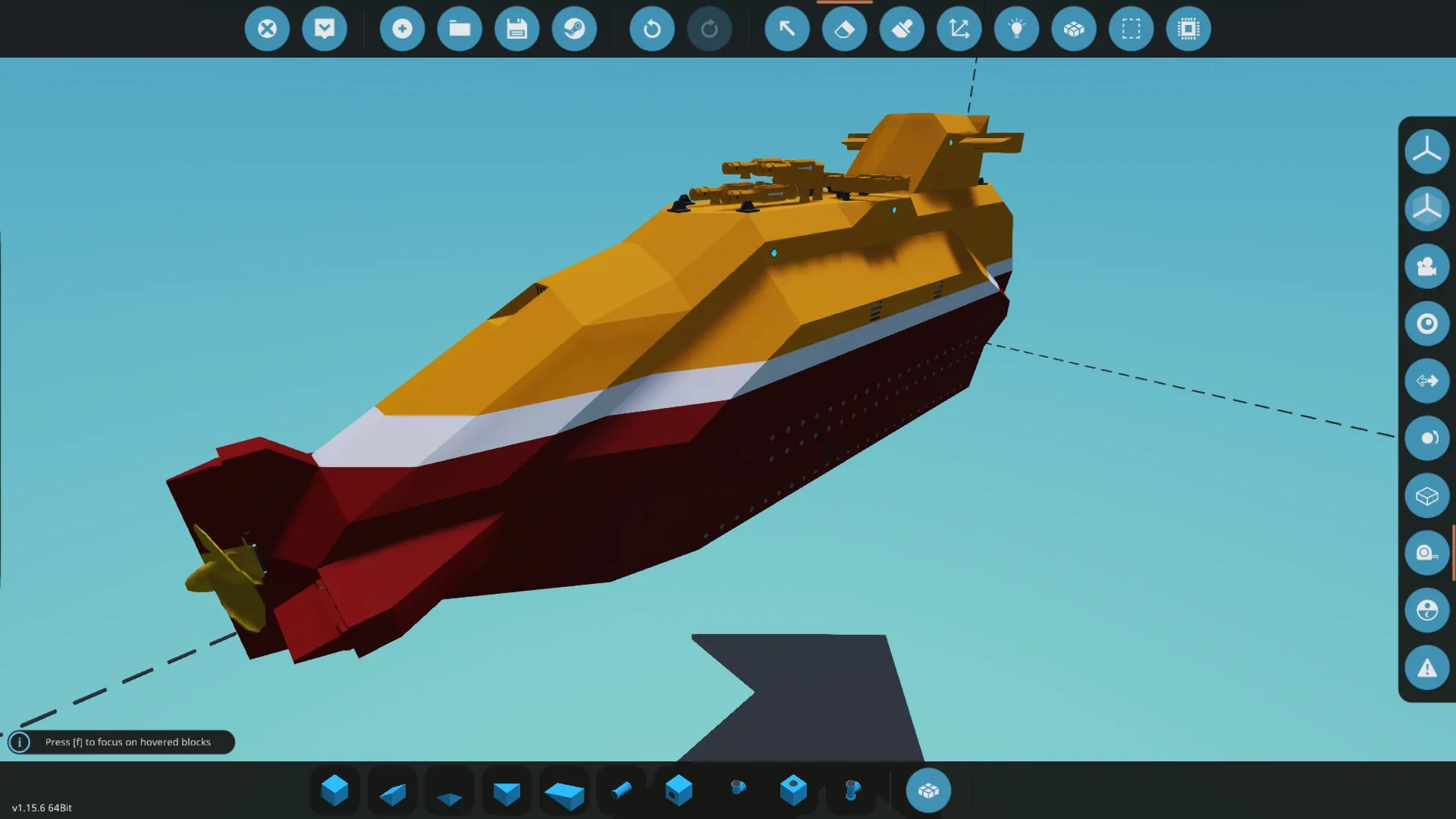
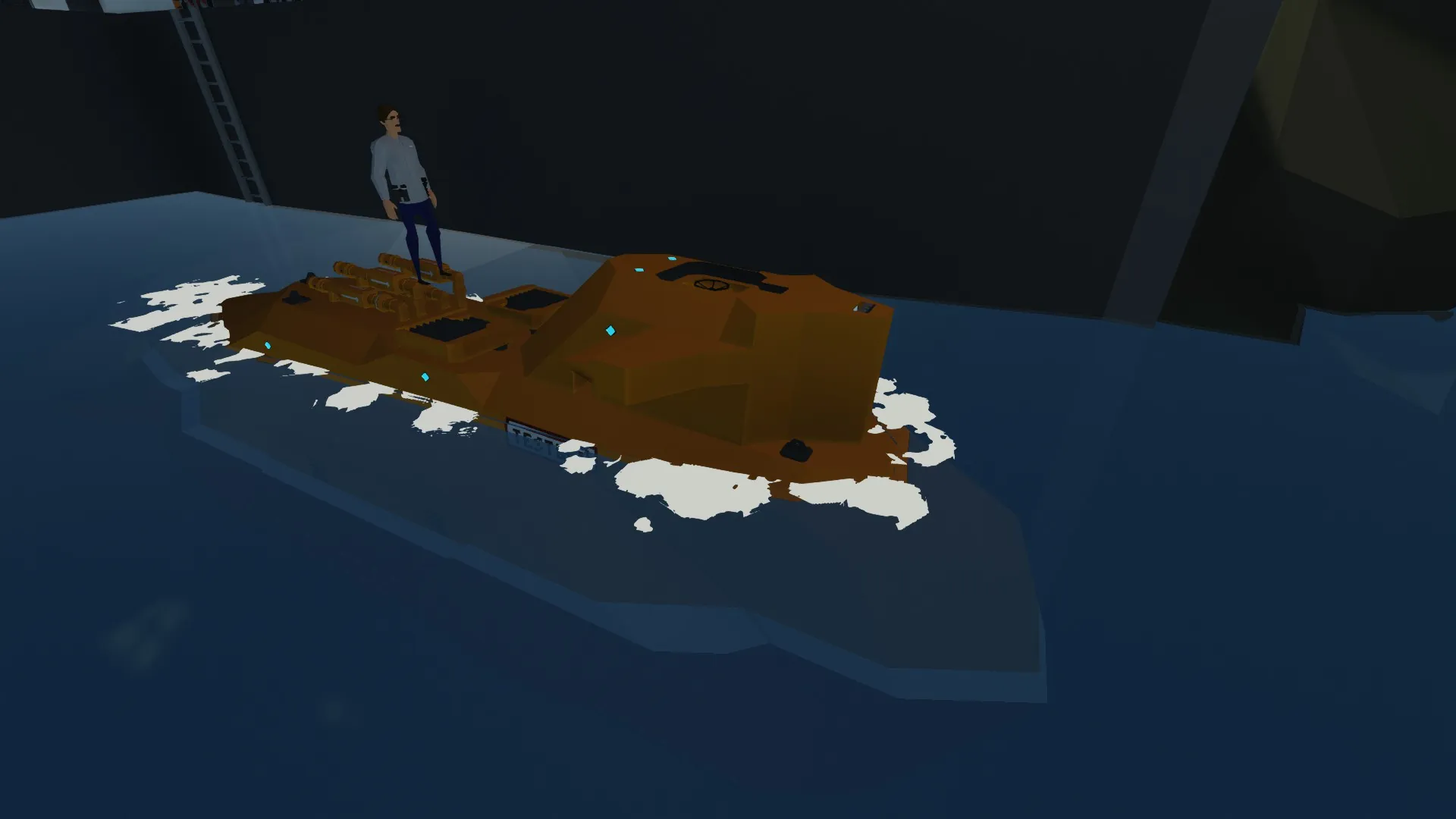
LABORATORIO AERONAVALE del MONTE di BRIANZA
Overview
Lore
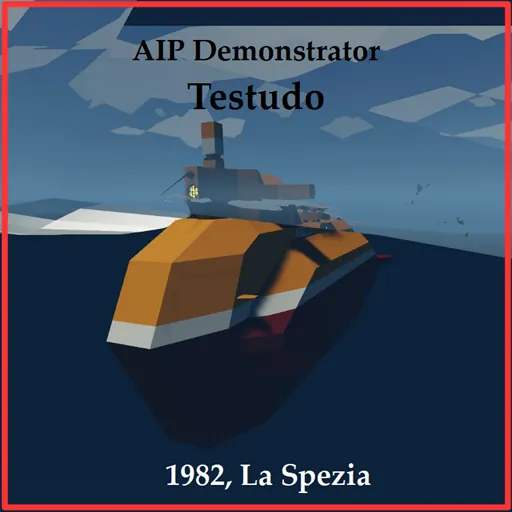
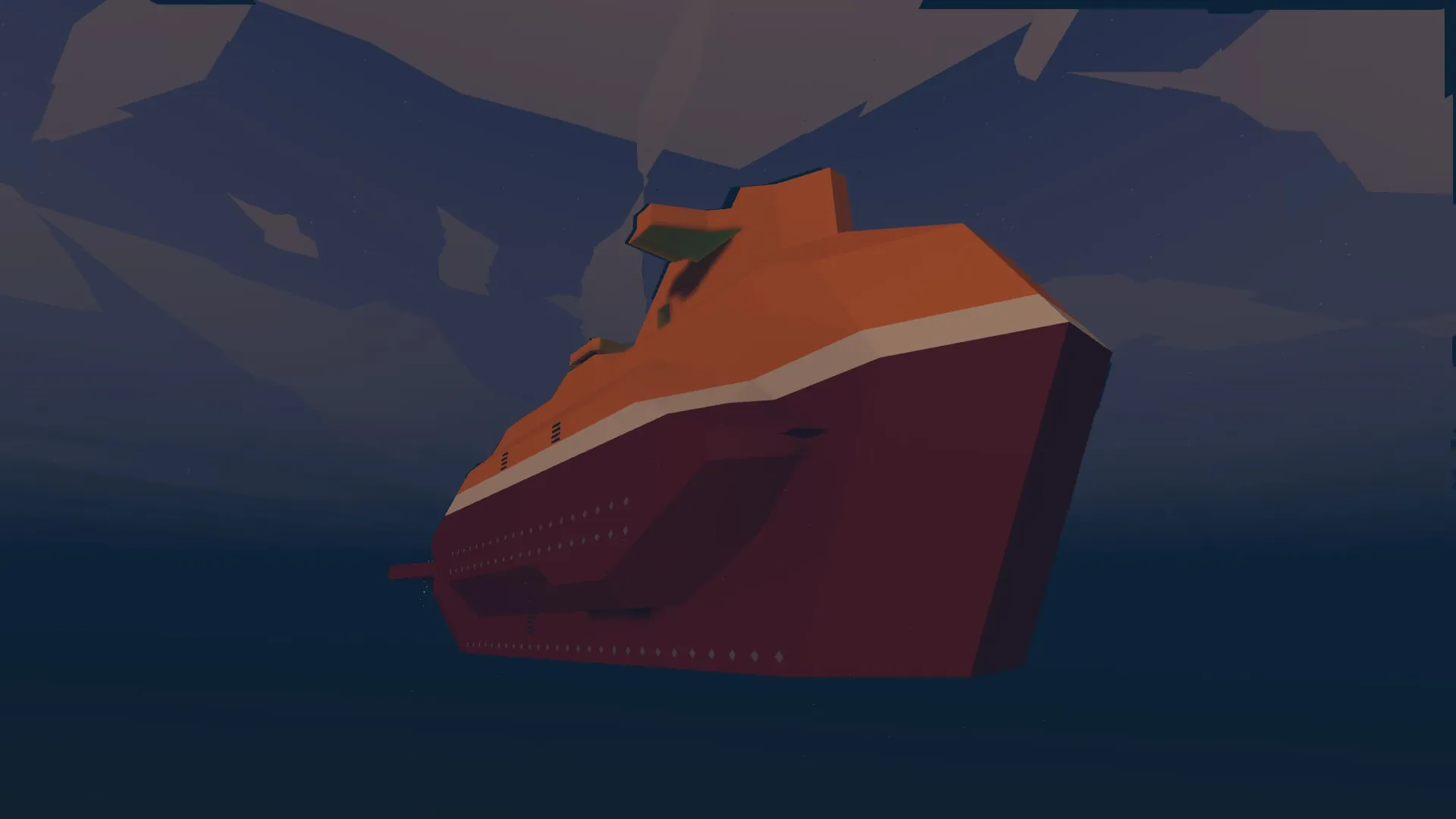
Before the advent of practical naval nuclear propulsion, submariners all around the world struggled to unchain themselves from the tyranny of batteries. Those threadful, smelly, cumbersome stacks of toxic metals in an acid bath that took over more than half of the lower hull of any submarine. And so, in 1946, in a shed by the rocky coast of Liguria, a team of ragtag naval architects started putting some steel plates together, giving them a sort of mackerel-shape.
The project halted and re-starter many times, since the popularity of Nuclear subs fluctuated through the cold war, until it was made clear that Diesel boats still had a place in confined water and defensive role.
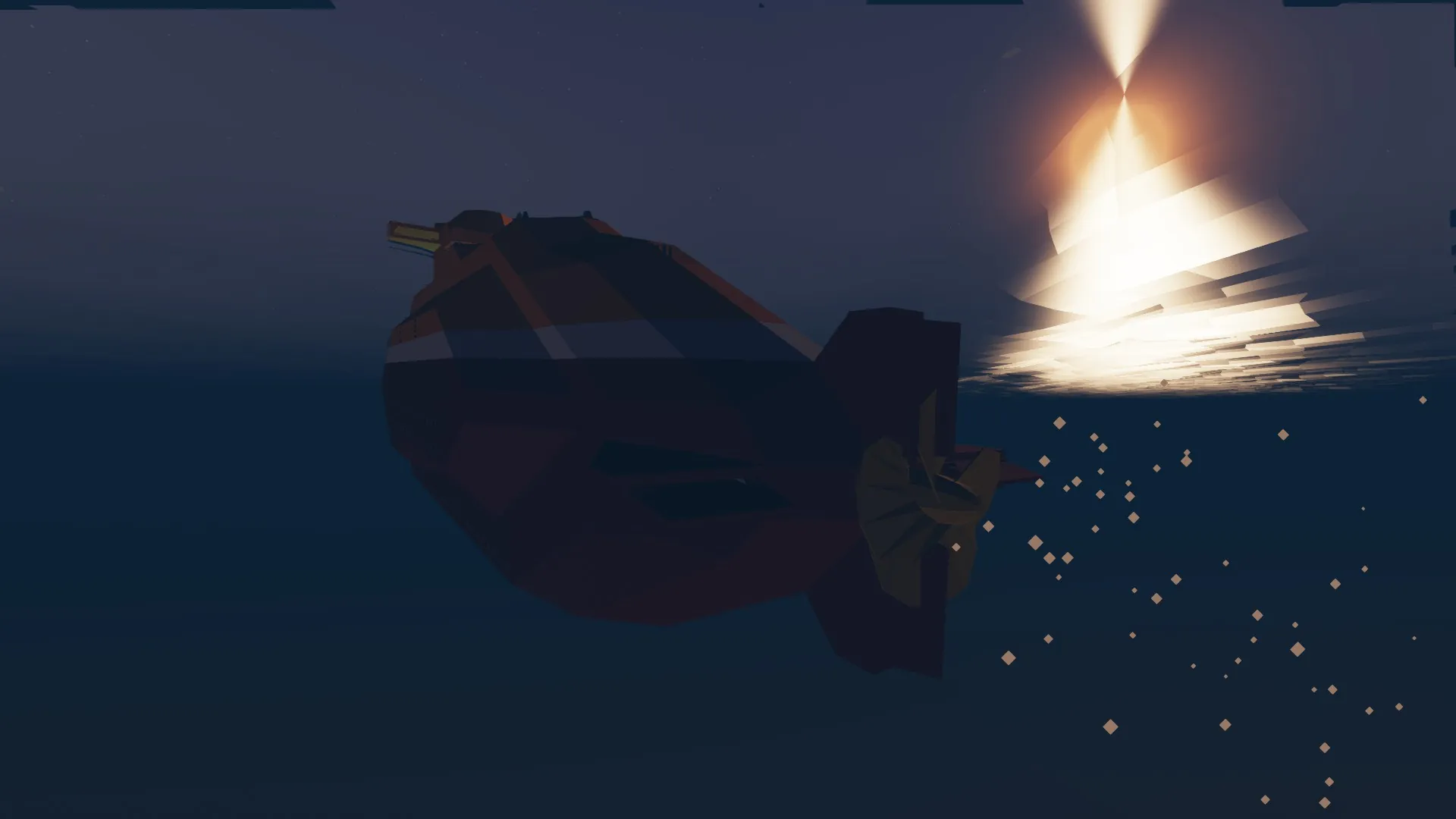
In 1982, Testudo was the first submarine from LAMB to sail underwater with its own diesels while using compressed air stored in tanks.
In game
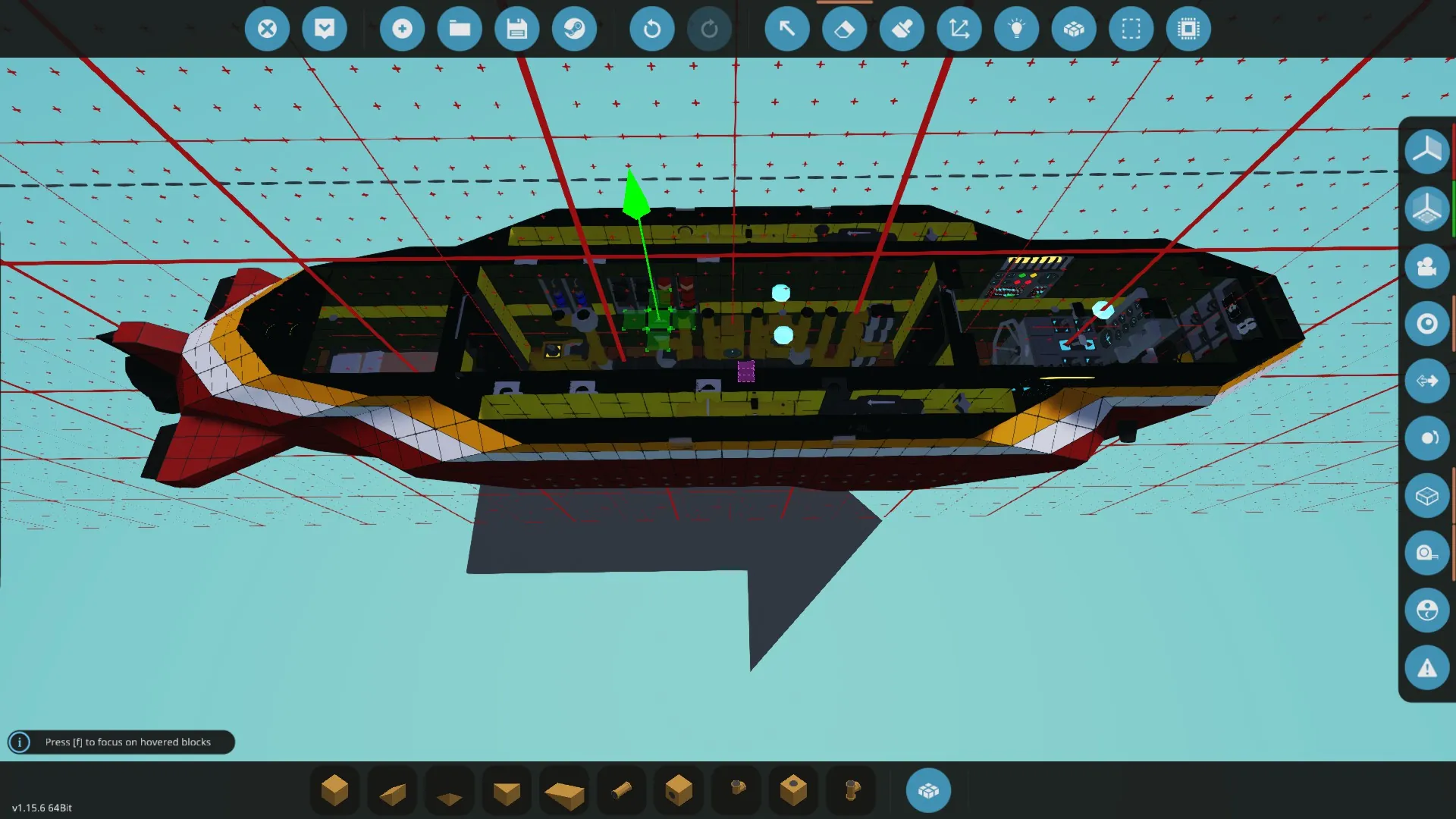
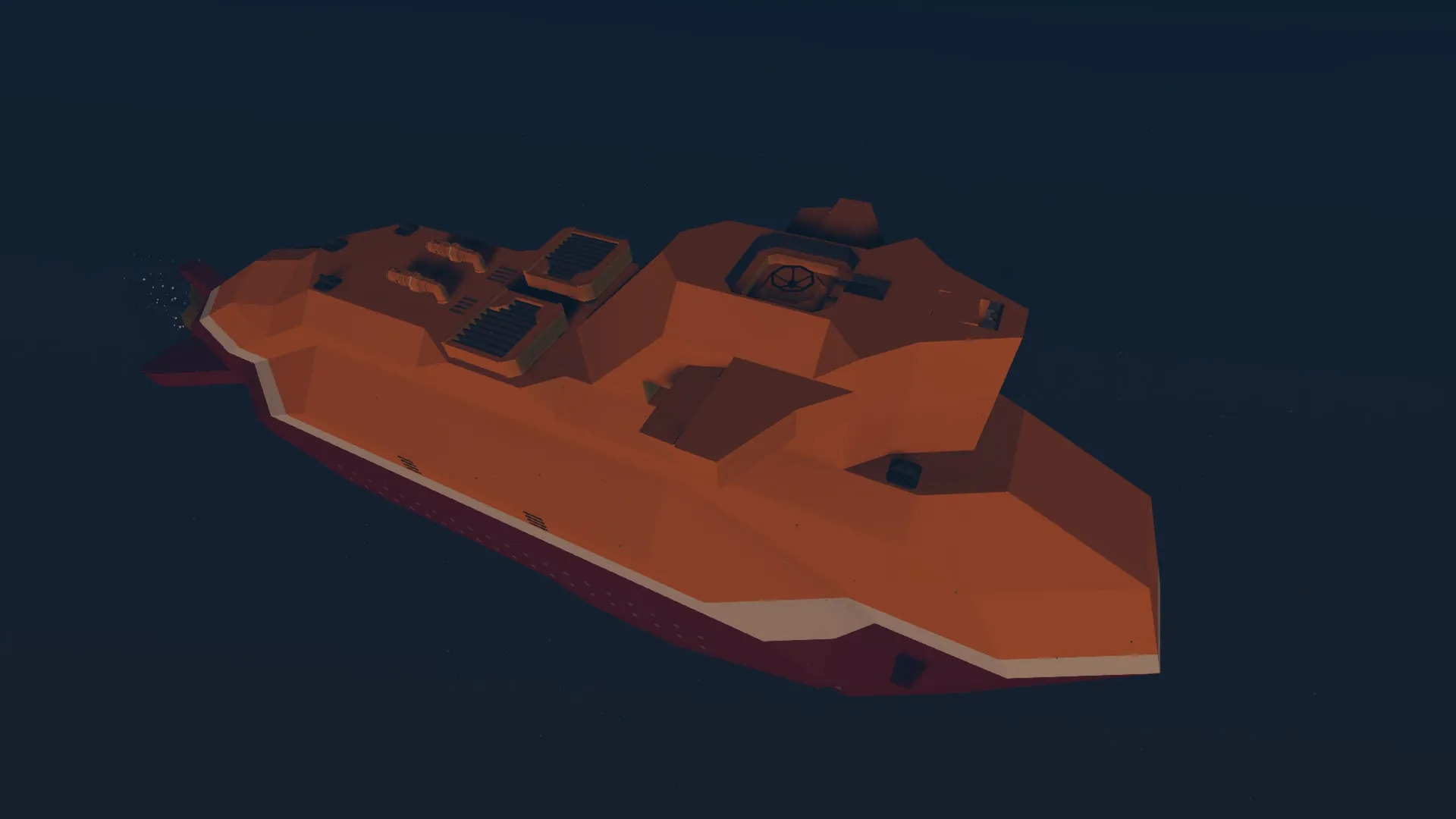
Testudo is a proof-of-concept, does not Excel in any category; however, since I coloured it nicely, I'm going to release it anyway.
Speed aficionados beware! This is definitely not for you.
The advantages:
1 - can operate underwater on diesels for prolonged period of time (chances are the fuel will deplete before the air)
2 - can be spawned from any starter base
3 - Has only 4 small batteries
4 - It is the smallest and cheapest submarine (that can operate without a mothership) I've ever made (36k$)
Now for the shortcomings:
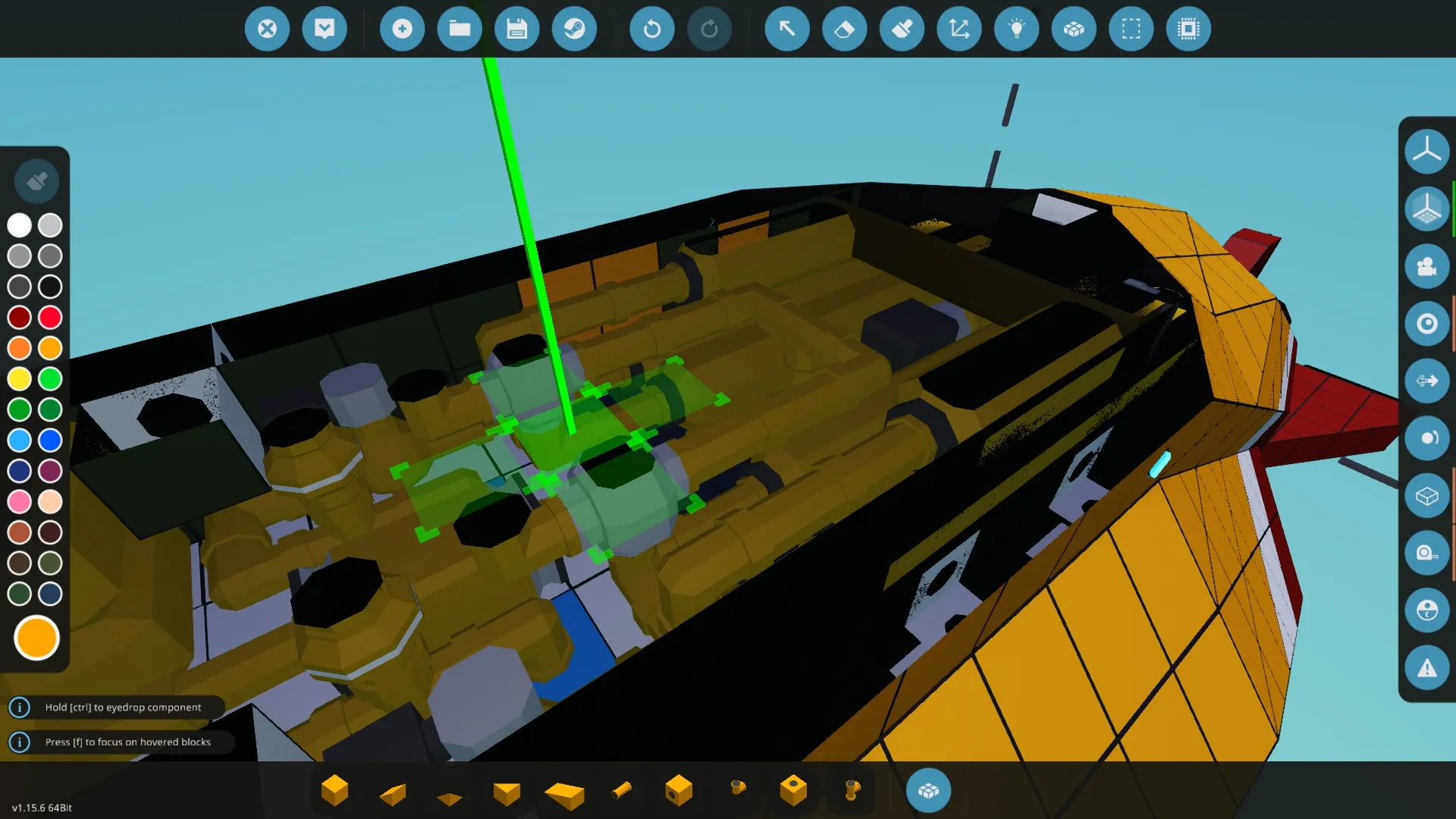
1 - It's slow. 7-8 knots flat out underwater. The engine geometry is suboptimal, dictated by space rather than performance
2 - All utilities share the same diesel engine: if you are pumping ballast, your speed will be cut in half
3 - All utilities share the same diesel engine: if it gets damaged, or you are out of fuel, you will not be able to operate the pumps
4 - It's a technical demonstrator for the AIP system. You can hop in and sail it around and not much more
Instructions
Starting the Boat
- enter from sail
- reach engine room
- flip breaker, turn ignition
- reach the helm
Piloting the Boat
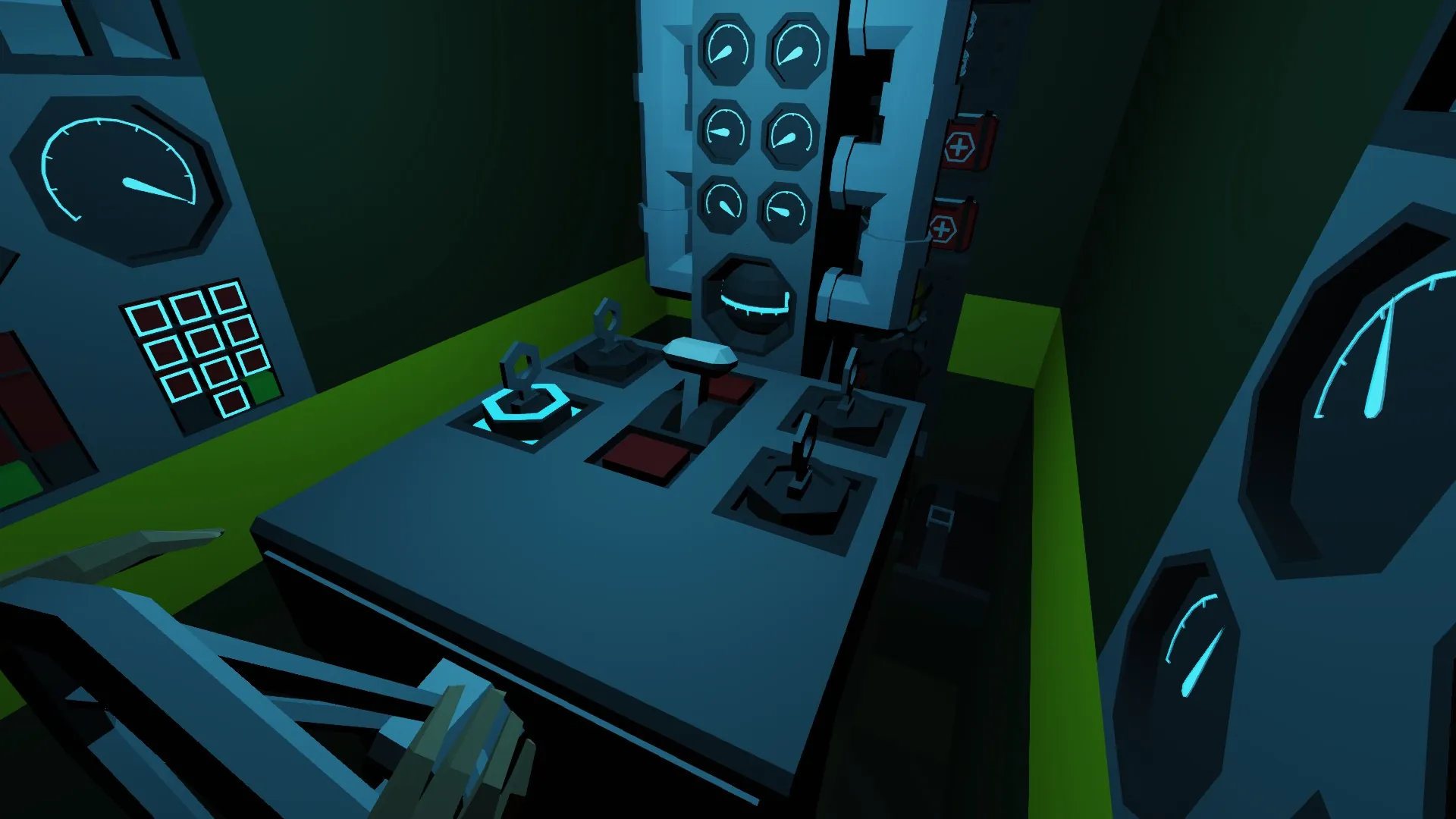
- A/D for rudder (roll stabilisation is automatic)
- W/S for dive planes
- Up/Dn arrows for throttle lever
- 1 key toggles periscope, L/R arrows for looking around
- 2 activates waypoint autopilot (WPAP)
- 3 activates depth hold
- 4 puts it in reverse
- 5 or bottom left key button activates AIP
- 6 or bottom right key button "chokes" the exhaust and redirects it into fuel tank and ballast tank for aid in emptying them
- top left key button activates pumps to refill air tanks while on the surface
- top right key button locks the hatch and swithces off external lights
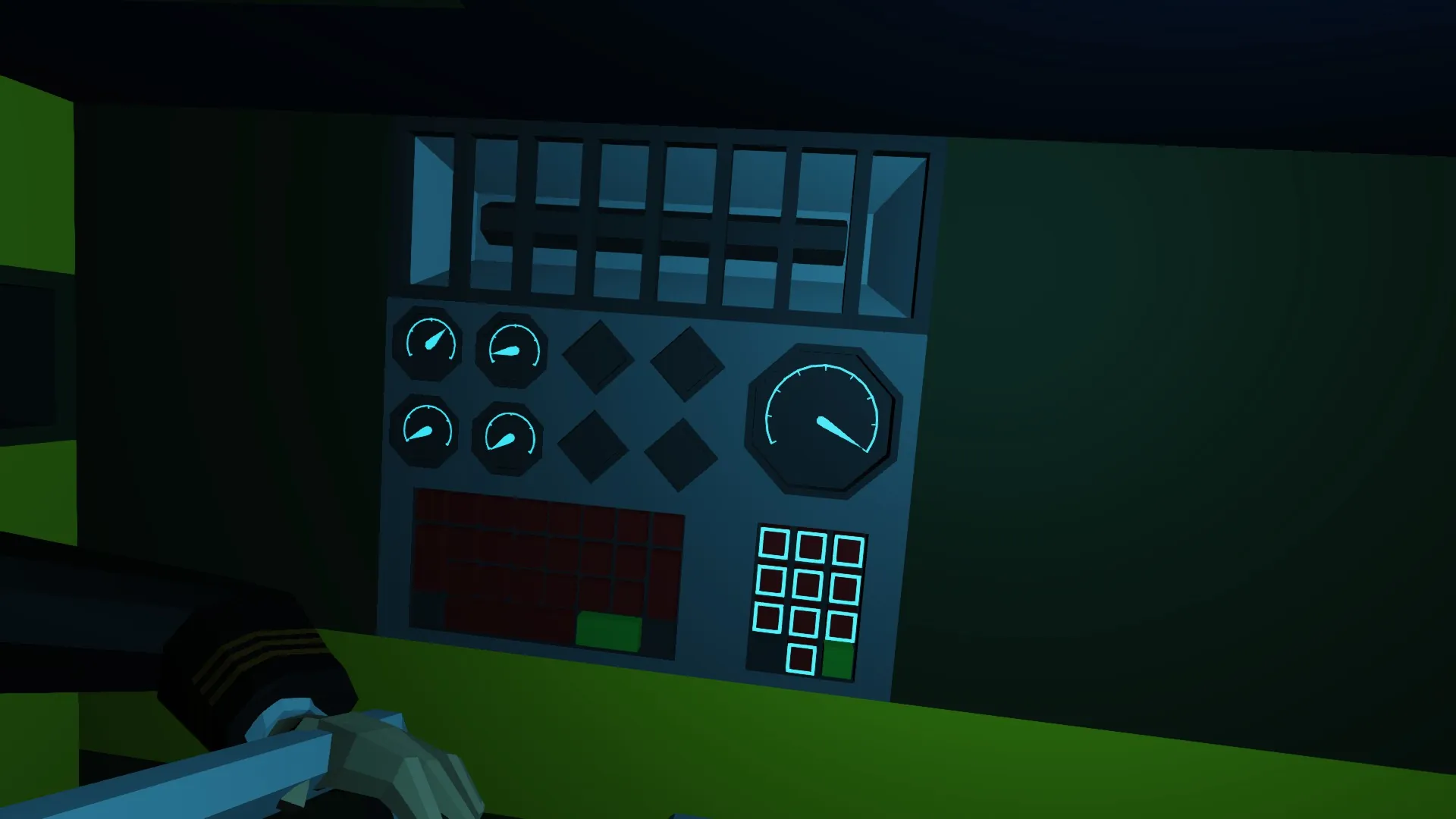
- keypads to the left are for waypoint and depth (positive values mean increased depth)
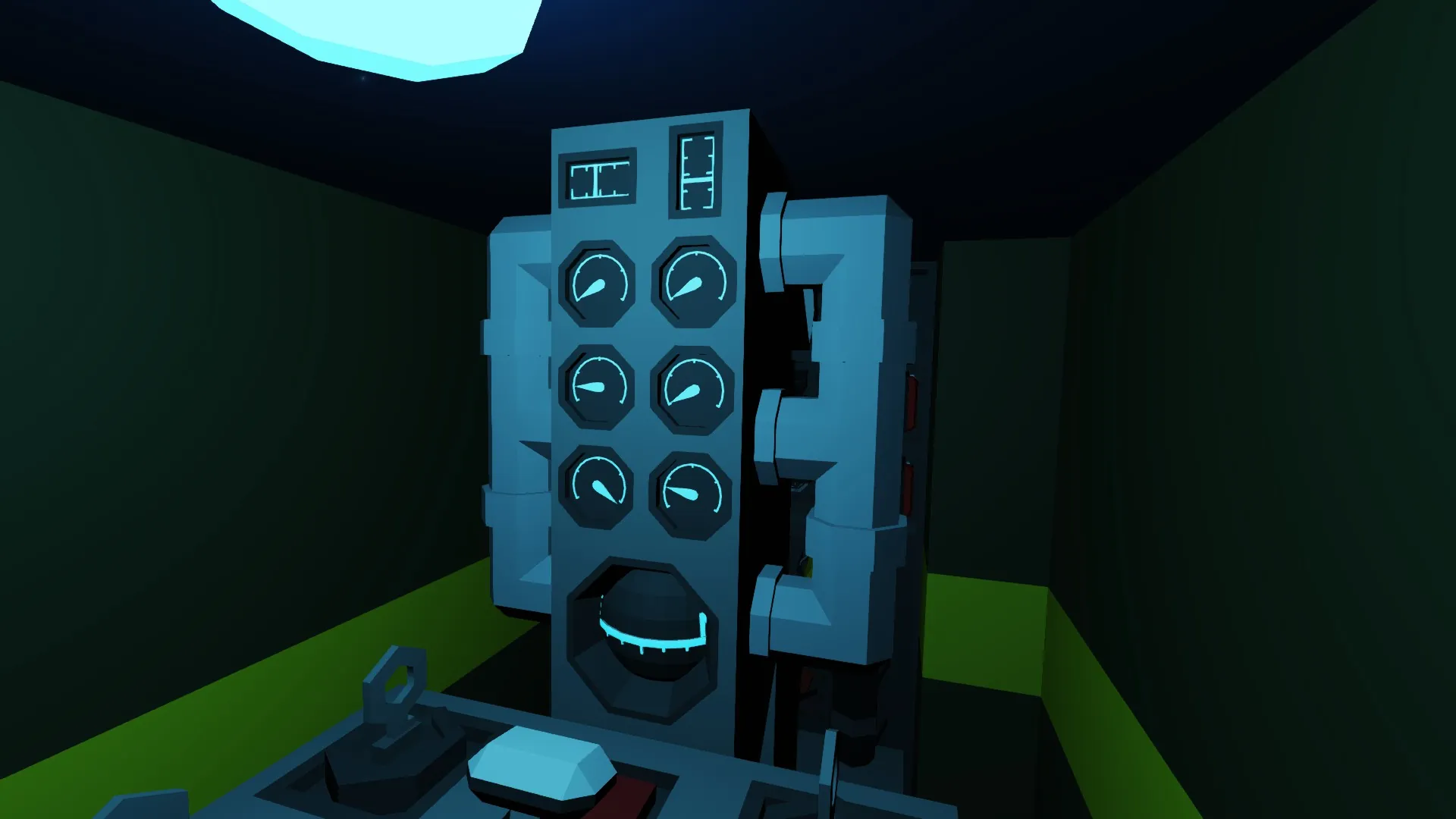
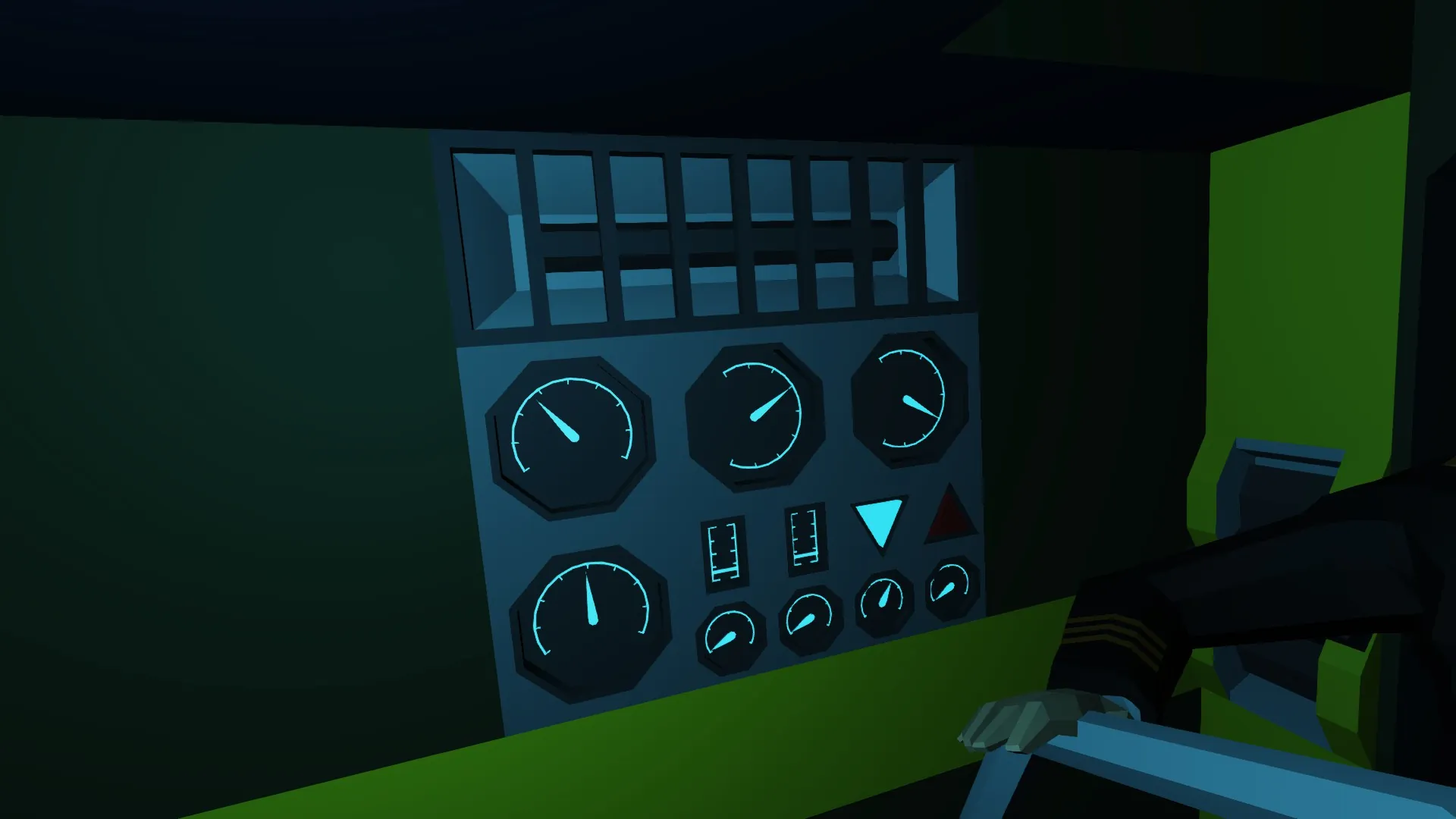
- instruments on the right monitor ballast tanks and diving planes
Other
- Thermostatic heating is activated by flipping a breaker near the door
- In case the sub is stuck on the bottom, don the diving suit, take as much Emergency equoipment as you can (stores are in the bow), unlock and open the hatch, and leave
Features
General
- 36,221$ price
- max speed a little short of 8 knots
- 1150 L of diesel
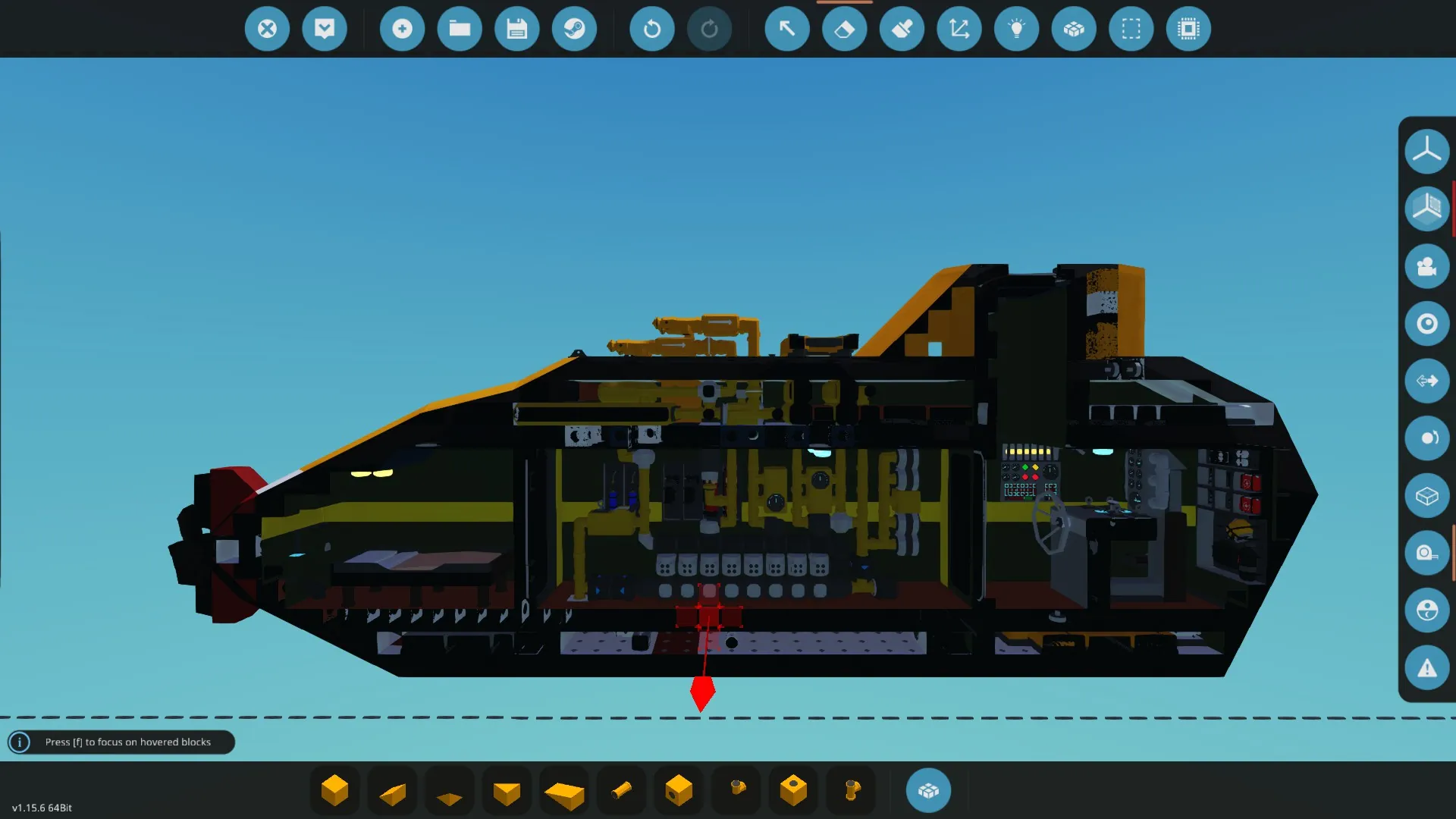
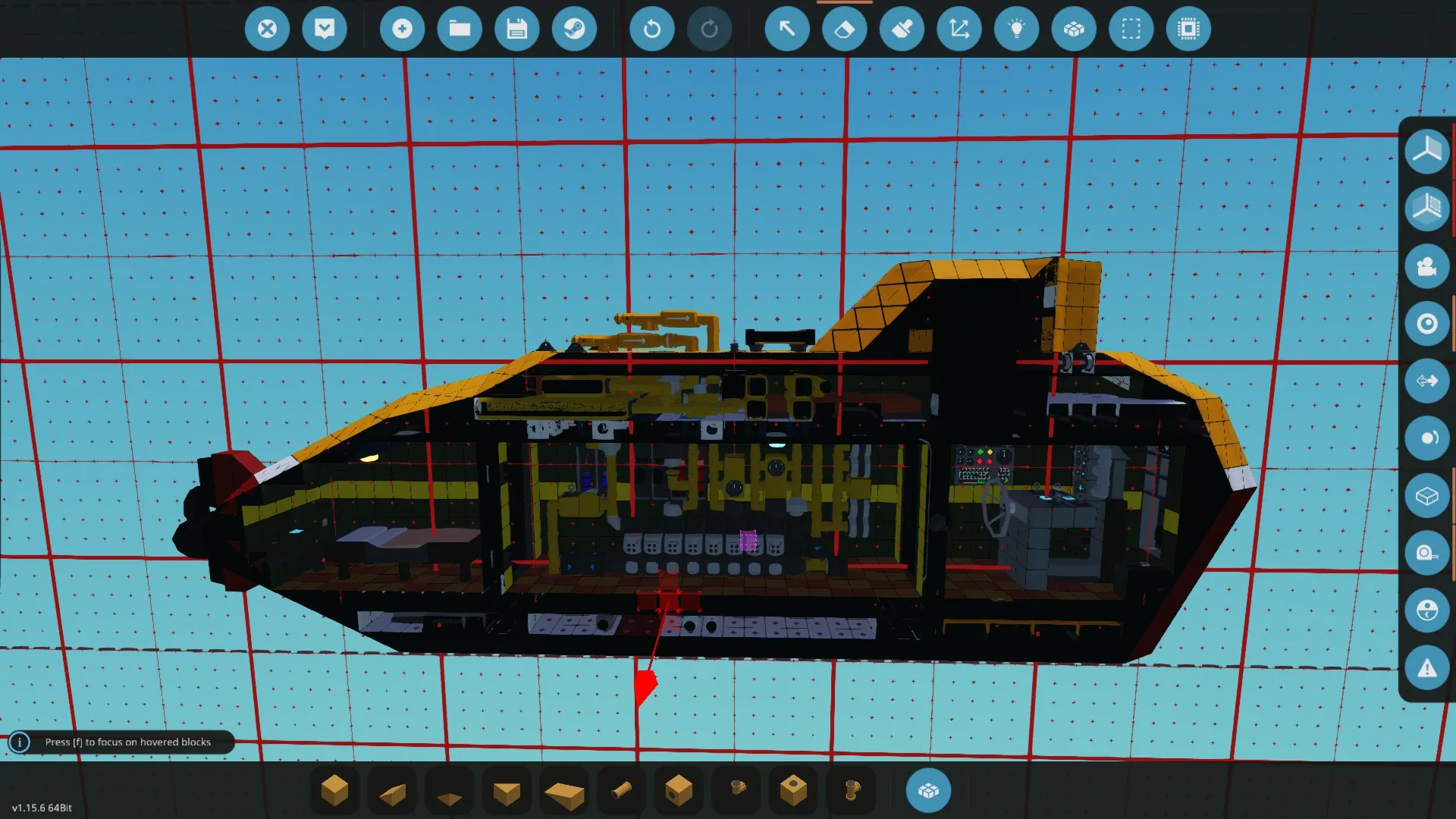
- 4 x medium, 2 x small gas tanks with air for the engine
- Instrument panels for:
- X, Y position on map, distance & time to target waypoint (if WPAP is active)
- speed, depth, fuel qty, fuel tank pressure
- battery %
- Seafloor clearance, bow and stern (not corrected for sub attitude)
- Quantity and pressure of water in ballast tanks
- flow rate of ballast pumps
- Seats (2 in the bow compartment)
- Air quality control panel (important)
- 2 x heaters near the helm
- 1 x bed
- automatic lights (semi-automatic in bedroom)
- periscope
Equipment and devices
- Diving suit
- flashlight
- compass
- 2 x 1st aid kits
- 2 x oxygen masks
- defibrillator
- 4 x fire extinguishers
- 4 x underwater welder
- 4 x flame welder
- 2 x arctic suits