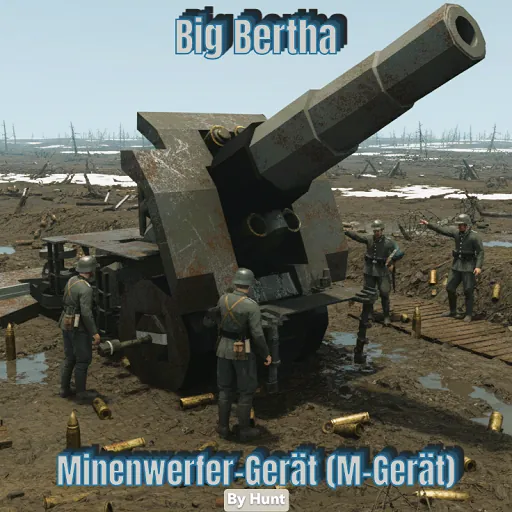
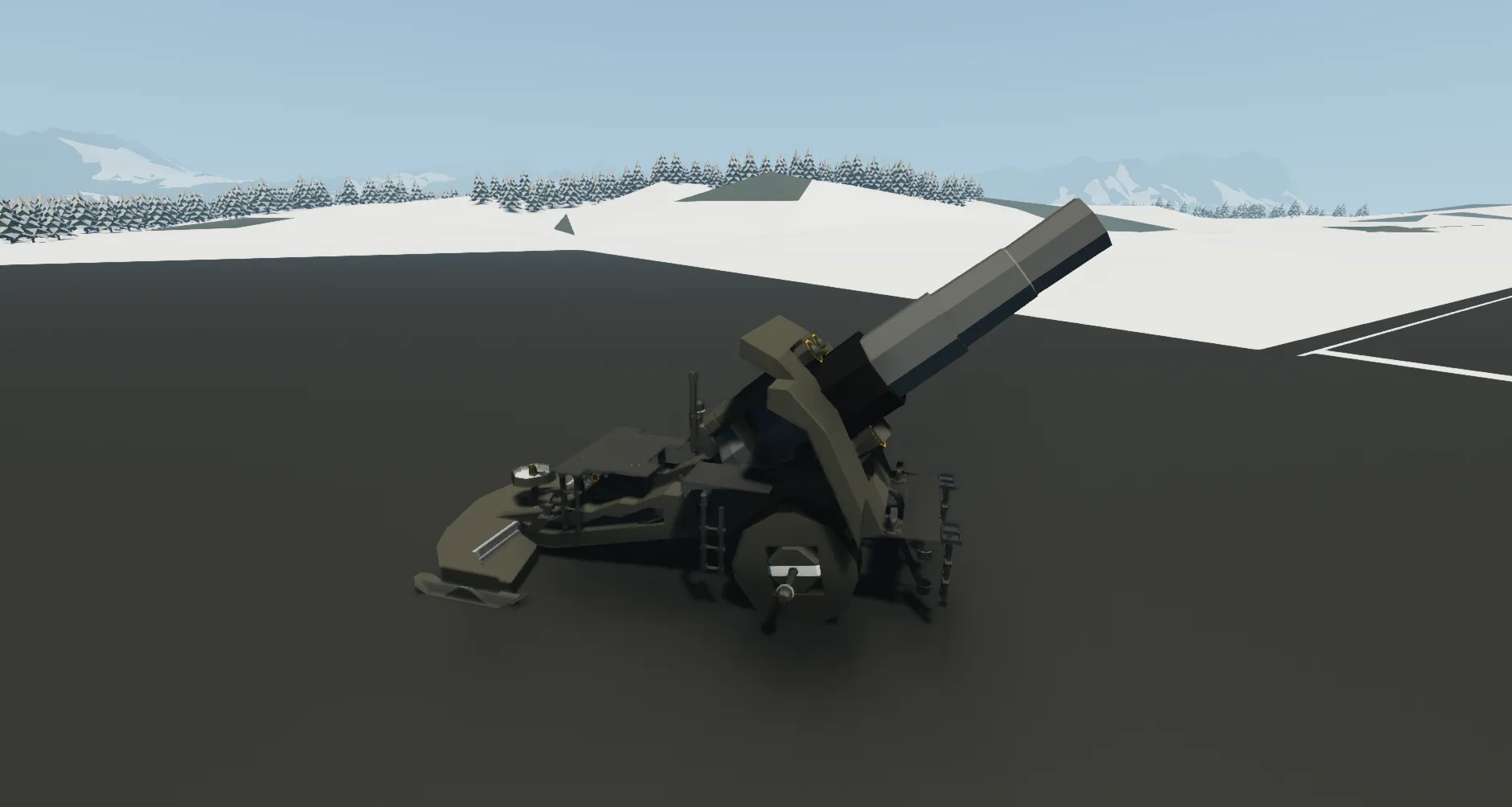
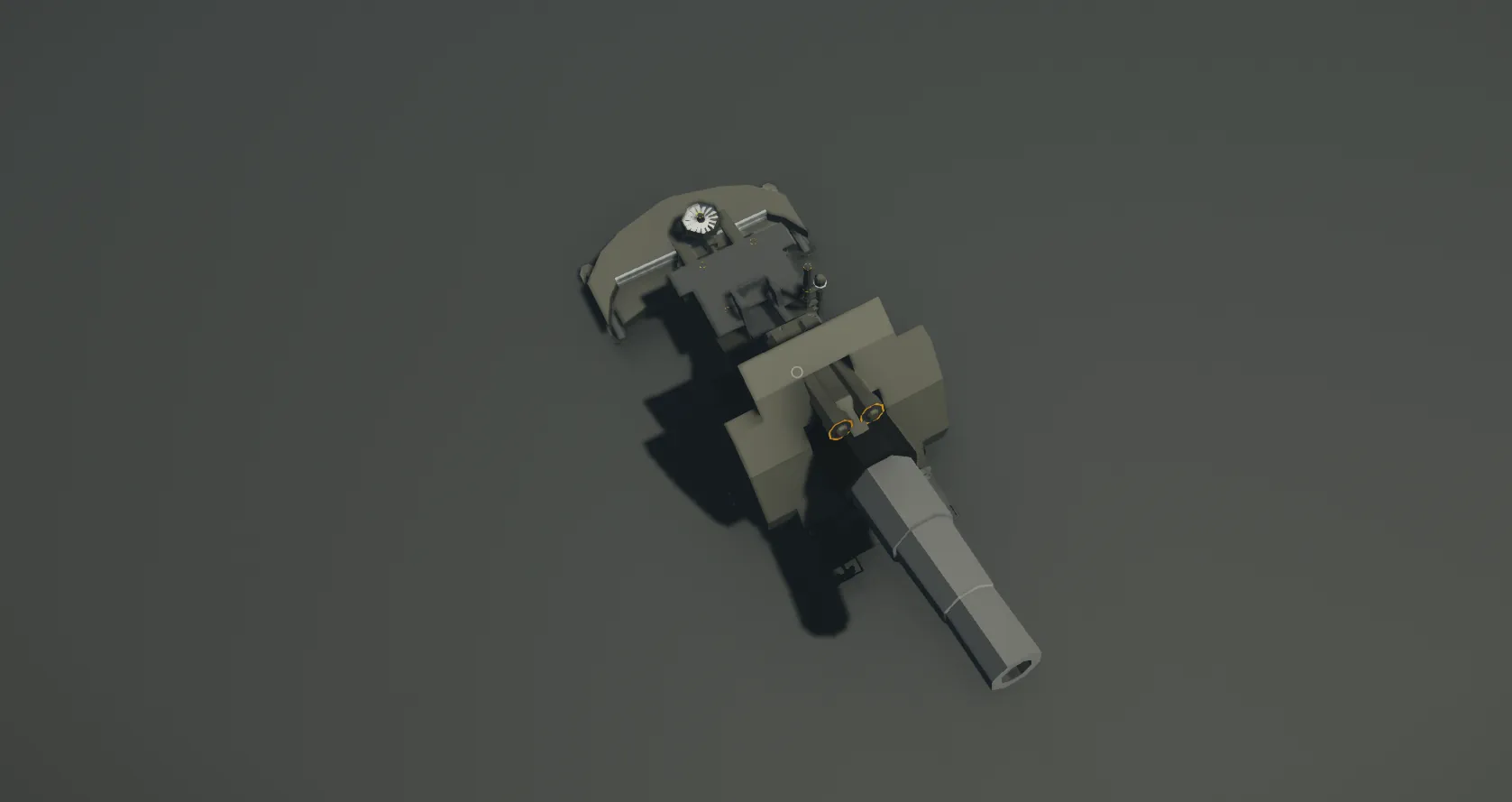
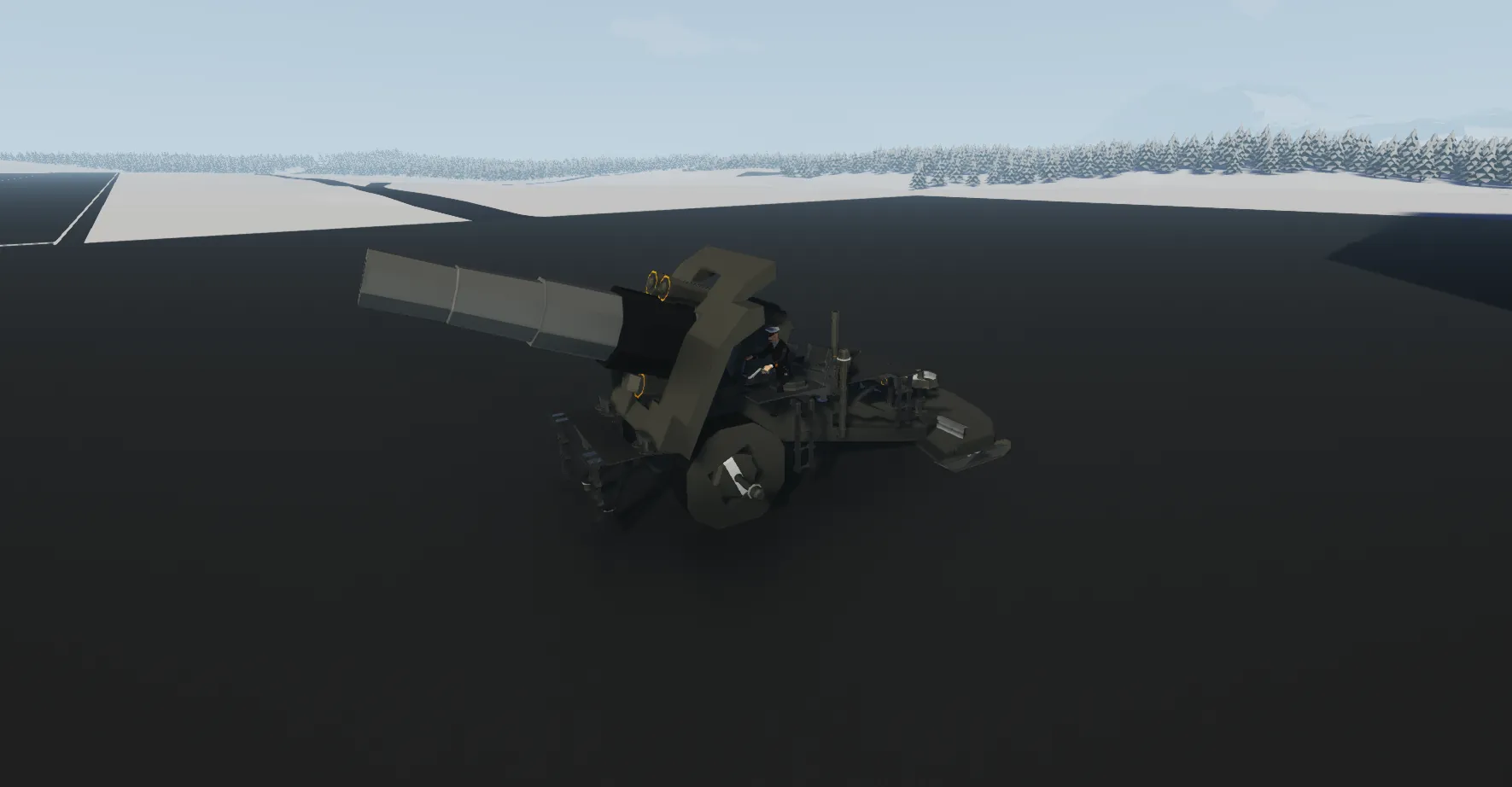
🧨 1-1 Scale M-Gerät – 42cm kurze Marinekanone (WWI Siege Gun)
🛠️ Big Bertha Specs
- Type: Heavy siege artillery piece
- Origin: Krupp AG, German Empire
- Purpose: Demolition of fortified positions during early WWI campaigns
- Caliber: 42 cm (420 mm)
- Mounting: Road-mobile wheeled carriage with recoil spade and outriggers
- Camouflage: Polygonal field pattern (green/brown tones)
- Elevation Range: -5° to +65°
- Traverse: Limited horizontal aiming via saddle seat controls
History
Big Bertha was a German siege howitzer built by Krupp AG in Essen, Germany and fielded by the Imperial German Army from 1914 to 1918. The M-Gerät had a 42 cm (17 in) calibre barrel, making it one of the largest artillery pieces ever fielded.
The M-Gerät designed in 1911 as an iteration of earlier super-heavy German siege guns intended to break modern fortresses in France and Belgium and entered production in 1912. Test firing began in early 1914 and the gun was estimated to be finished by October 1914. When the First World War broke out, the two M-Gerät guns, still prototypes, were sent to Liège, Belgium, and destroyed Forts Pontisse and Loncin. German soldiers bestowed the gun with the nickname "Big Bertha", which then spread through German newspapers to the Allies, who used it as a nickname for all super-heavy German artillery. The Paris Gun, a railway gun used to bomb Paris in 1918, has historically been confused for the M-Gerät.
🎮 Controls & Features
Control Element
Function
[a]/[d]
Traverse cannon left/right
[w]/
Adjust elevation up/down
[left]/[right]
Steer mobile carriage
[up]/[down]
Move artillery platform
[space]
Fire shell or open breech
[5]
Switch between fire modes
[h]
Toggle control display