@@MDPLACEHOLDER_0@@ @@MDPLACEHOLDER_1@@
Proud member of the Foundry Discord, for (almost) all your planetary discussion needs
#Features
A lighter and more playability-focused version of Enable All Planet Mods.
This modpack notably excludes the Lignumis and Muluna planet mods, which greatly warped the early base game and early space age progression respectively.
It also excludes endgame/shattered planet replacement mods such as CPU_Blackheart's Shattered Planet and Nexus Extended, due to potential mod conflicts with trying to replace the same content (as well as preserving the option to keep the vanilla endgame)
Lastly, it also excludes several unmaintained, work-in-progress/alpha, or unbalanced mods. All of these exclusions are available under the optional mods section, as a quick shortcut for users who wish to enable one or more of these planet mods.
#Currently Implemented Compatibility Patches
- [Cosmetic] Lignumis/Astroponics: If Lignumis is detected, and the Lignumis progressive ammo setting is disabled, removes Astroponics from the critical tech path, so it is no longer required between space science and the various planet discovery technologies.
Specifically, in vanilla, the chain goes from Space Science Pack -> Space Platform Thruster -> Planet Discovery
If Muluna is enabled, the chain goes from Space Science Pack -> Asteroid Collector -> Planet Discovery
If Lignumis progressive ammo is enabled (which it is by default), then no changes are made, since wood becomes a requirement for ammo.
#Current Inclusions
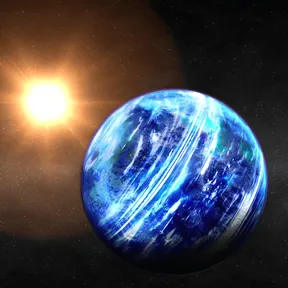
- Maraxsis: Adds an oceanic planet which requires equipment and/or submarines to fully explore to the depths of the lowest trenches, where lava is located. Requires dome technology to craft and build to the fullest potential. Unlocks advanced beacon with quality module compatibility, advanced chemical plant optimal for use in space or deep sea, salting of fish and science (for long-term preservation), and stone centrifuging (allows uranium production on any space location with stone)
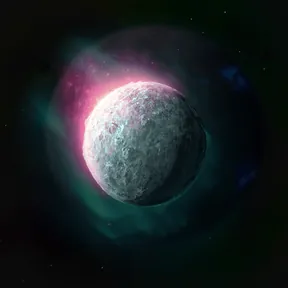
- Cerys, Moon of Fulgora. Adds a nuclear scrap recycling loop for production of plutonium and nitrogen chemistry, used for the planetary rewards of the venting/flare towers. Other planetary rewards include: plutonium weaponry, reactors and equipment, overclock module (twice as fast as speed-3, with additional productivity penalty), radioactive module (more powerful than productivity-3, decays over time, requiring plutonium refuel), and infinite holmium plate productivity tech. Best completed in the early/mid-game, with bonuses useful on Aquilo, as well as for both Gleba and Fulgora.
- Corrundum: Sulfur-focused chemistry planet with platinum ore for advanced chemical plant, advanced lab that requires higher quality science packs for optimal usage, and advanced thruster for increased maximum thrust.
- Rubia: Wind-based planet featuring a unique blend of scrap and bacteria processed via unique biorecycling machine, and unlocks several alternative recipes for other planetary materials. Also features several unique technologies when played alongside other modded planets, such as Moshine, Cubium, Cerys, Corrundum, and Maraxsis.
- Cubium: The sequel to the 1.0 Ultracube mod, which relied on the eponymous Ultracube to craft everything. By contrast, the planetary resources are plentiful, potentially infinite, but spoilable. They combine into various standard materials, providing alternative (possibly more efficient) recipe paths for various resources.
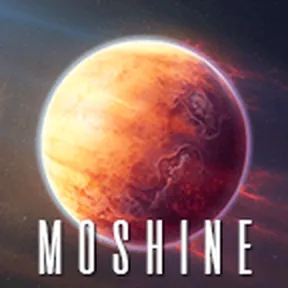
- Moshine: A post-Vulcanus, neodymium and silicon processing planet, used for advanced/futuristic electronic techs, including space trains, and massive yet hyperefficient accumulators/solar panels.
- Secretas/Frozeta: A post-Aquilo gas giant planet you cannot land on, but can harvest plentiful asteroids from; along with its planet-sized moon, which you can land on, with a mix of Aquilo's cold mechanics and Fulgora's scrap recycling mechanics. Adds a uranium powered inserter that does not require heat, a steam recycler with more module slots, and an additional tier of module slots requiring its planetary resource.
- Igrys: New exclusive fluid resource used for crafting higher tier machines, featuring stone/glass production chains for alternative (and more productive) crafting chains.
- Paracelsin: A frozen zinc processing planet, with mechanical and electrochemical plants applying productivity to different sets of recipes. Also features advanced repair packs, overhead pipes, and alternative casting recipes with zinc as planetary rewards.
- Vesta: Post-Aquilo gaseous planet with floating asteroid landmasses to build and expand on, using the various gases in the atmosphere as the only available raw resources, utilizing chemical plants and electrolysis for more complex materials. Planetary rewards include Fusion-powered bots and plasma pipes.
- Pelagos: "Insular planet rich in tropical coconut palms, methane deposits, and mysterious lifeforms. Harvest coconuts, process them into oil, sealant, and biofuels, experiment with fermentation, and use high-temperature calciners to improve smelting processes in your factory". Features bonus compatibility with Maraxsis, Cerys, and Arig.
- Planetaris: Arig: The first in a series of planet mods, post-Vulcanus desert planet "with vast deserts where only valuable resources can be found underground or in the sand."
- Planetaris: Hyarion: The second in a series of planet mods under the Planetaris umbrella, as "a planet made from crystals and lava, light refraction rays fall from the sky and destroys the surface"
- Planetaris: Tellus: "A planet full of life, mycelia and chlorophyll, infected by dangerous parasites and clouds of pollen corrode materials. Create and plant living machinery and try to keep it alive"
#Optional Inclusions
- Lignumis: Starting moon. "It concentrates on wood and steam technologies, giving you some early game production chains for those resources."
- Lignumis: Director's Cut: Features "additional wood mods and most settings enforced. It changes the experience outside of Lignumis by adding the requirement for wood and the Lignumis science packs".
- Muluna: First space location, required to visit to craft space science pack, adds rocket part productivity tech, with 4 stages researchable with just space science, and 2 additional stages being unlocked per subsequent vanilla planet, each requiring their planetary science pack.
- Panglia: Extension/Companion mod for Moshine. Post-gleba, "a strange alien planet that contains Branbalite, a phosphorescent plant, and panglite, a strange metal. Some zones are experiencing much faster time, which will allow you to experiment with cloning, then keep clones in simulations and upload them. You'll need to fill the huge electric needs with dangerous roots that expand and attack your base."
- Shchierbin: Post-Gleba planet, intended as a stepping stone between Aquilo and the inner planets. Planetary rewards include health/movement speed bonus, better accumulators, improved crushers, and the ability to transport gases.
- Rabbasca: "Moon of Gleba emits strange energy signatures which interfere with conventional energy sources. Use the limited power it provides to explore ancient vaults of a long gone civilization. Discover new ways to construct your machines and conquer space with your very own tool-assisted legs."
- Linox: "Linox is an extraordinarily destructive world, even closer to the sun than Vulcanus. Solar coronal ejections and flares reach all the way down to the surface, obliterating everything in their path, while the sun’s immense gravitational forces relentlessly twist and deform the entire planet, creating an extreme and hostile environment. Is there really anything left on such a world that could still be worth extracting?"
- Muria: Post-Gleba/Vulcanus, pre-Aquilo planet; "In this corrosive world you'll fight your own pollution while you process chlorine and lead for your military needs."
- Carna: Post-Gleba, pre-Aquilo planet, currently in open beta. "Carna is a difficult planet, not only does it have enemies, the weather actively impedes you. Items have spoilage as well." Planetary rewards include: "the abilit