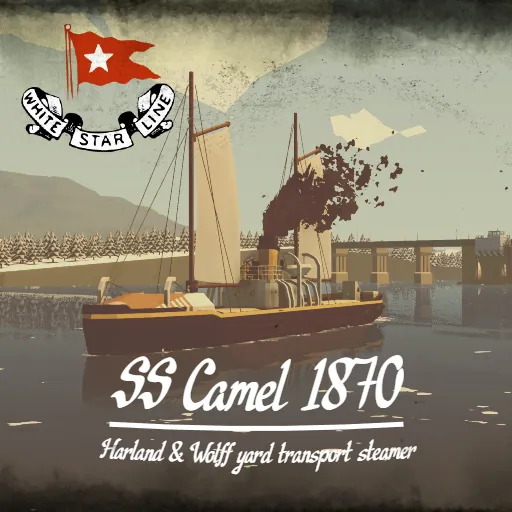
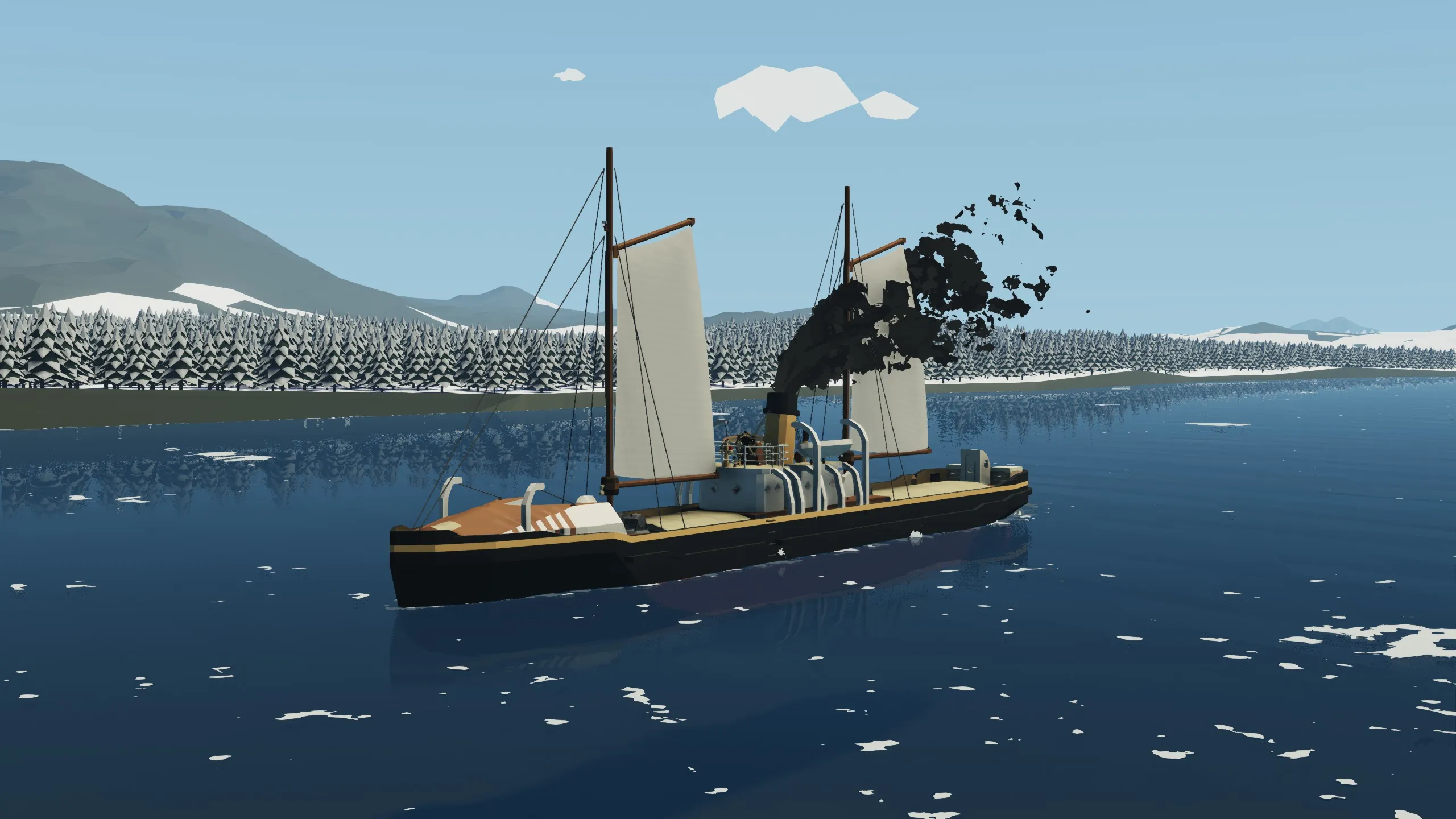
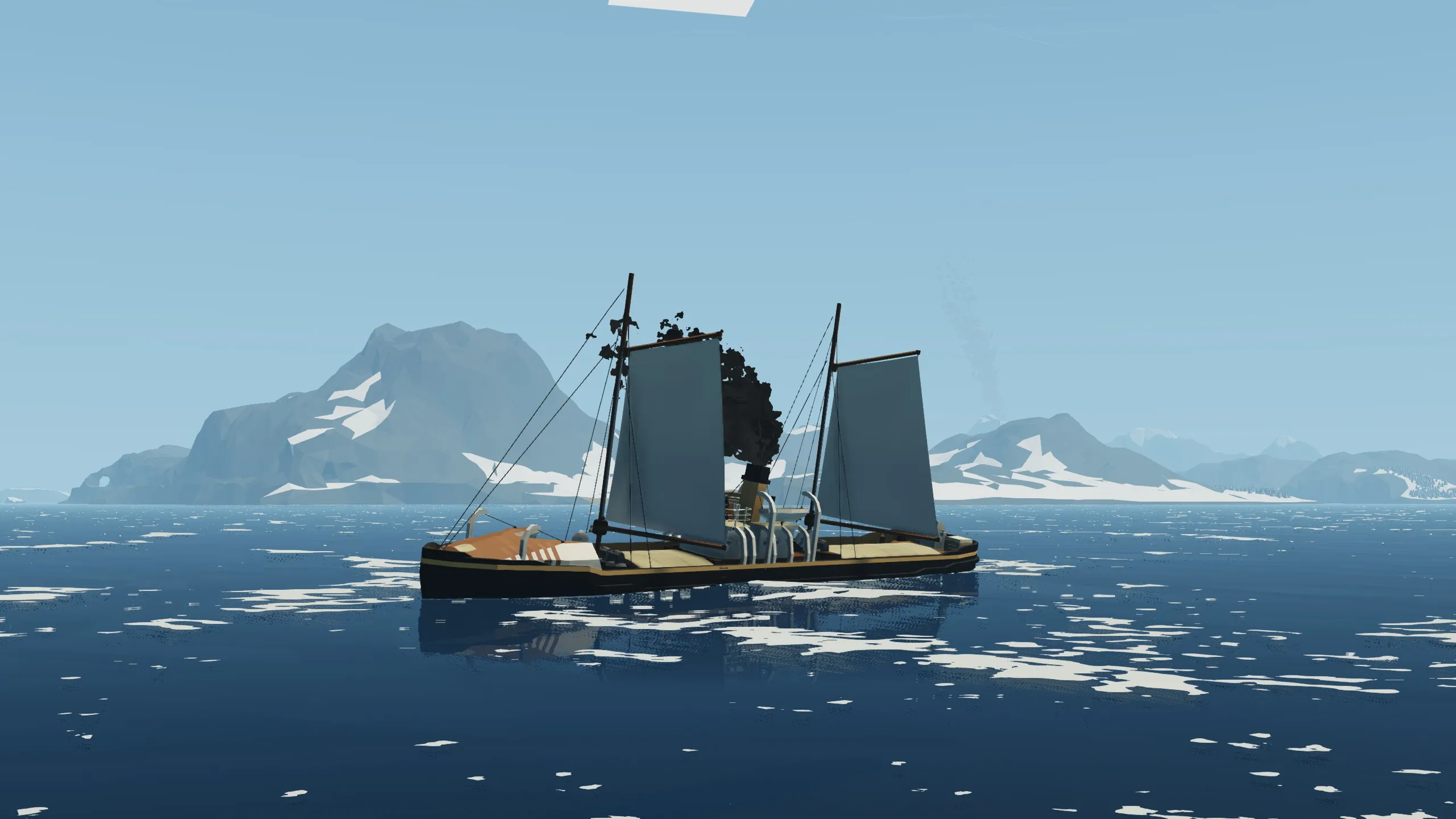
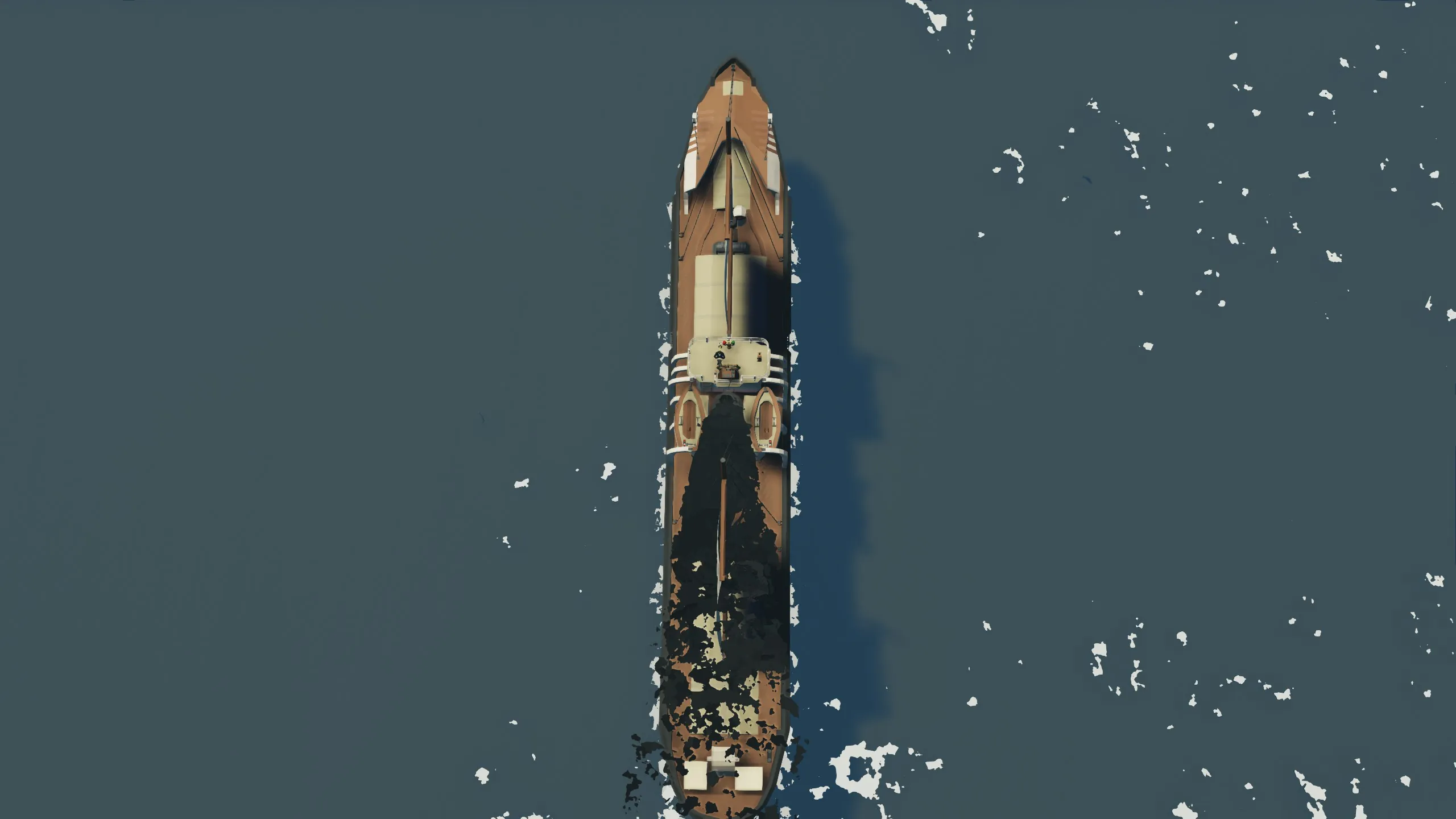
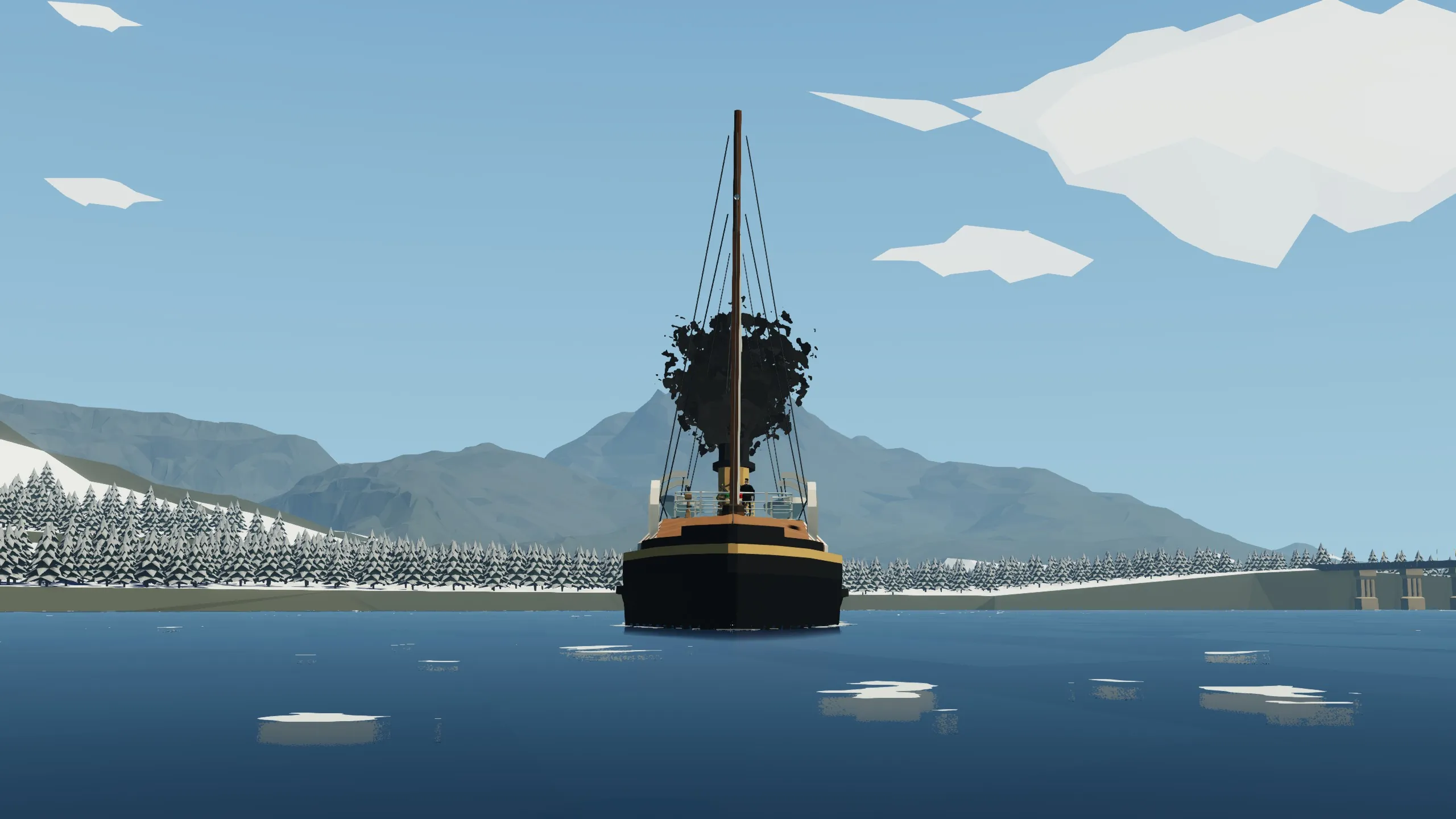
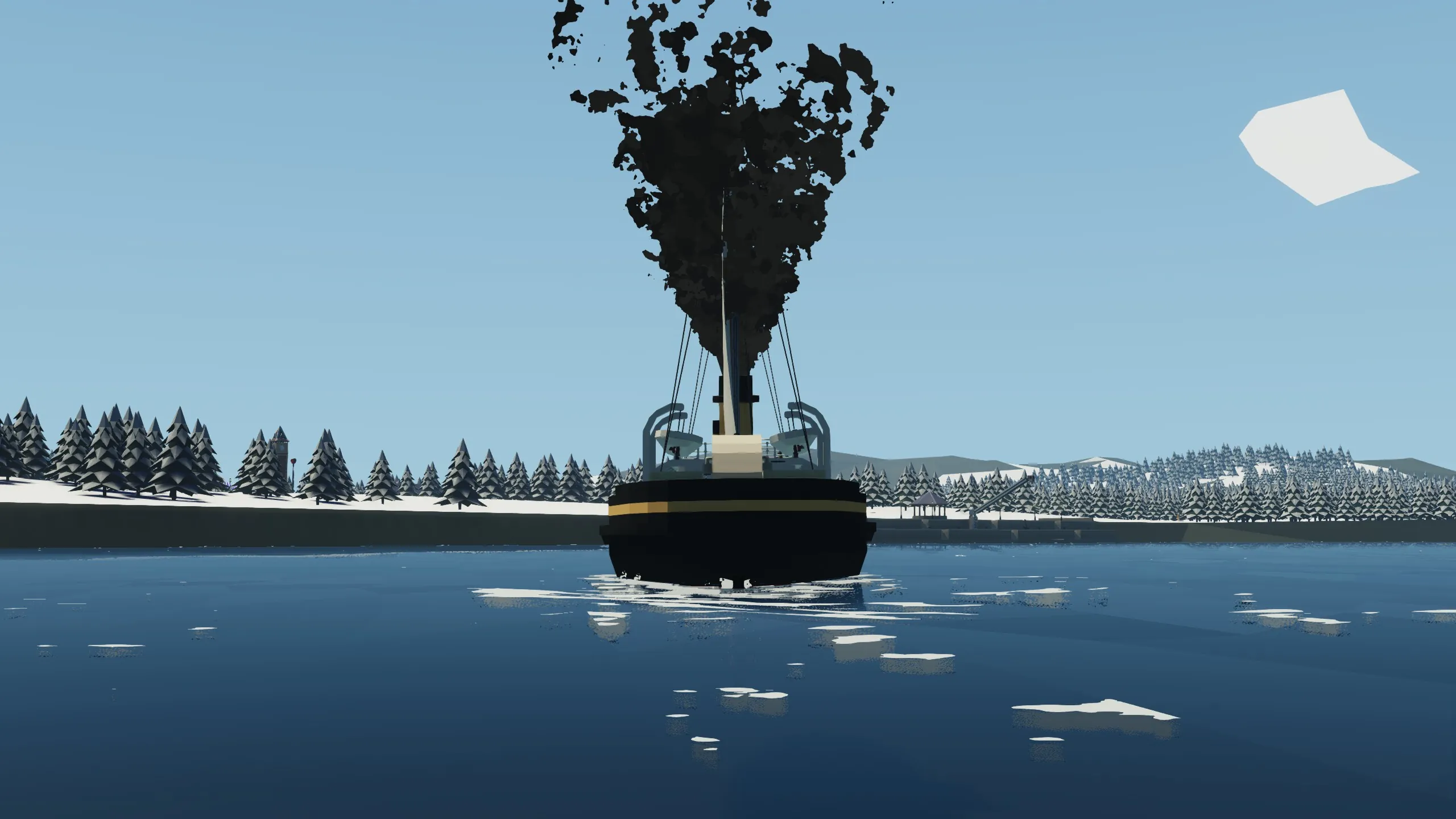
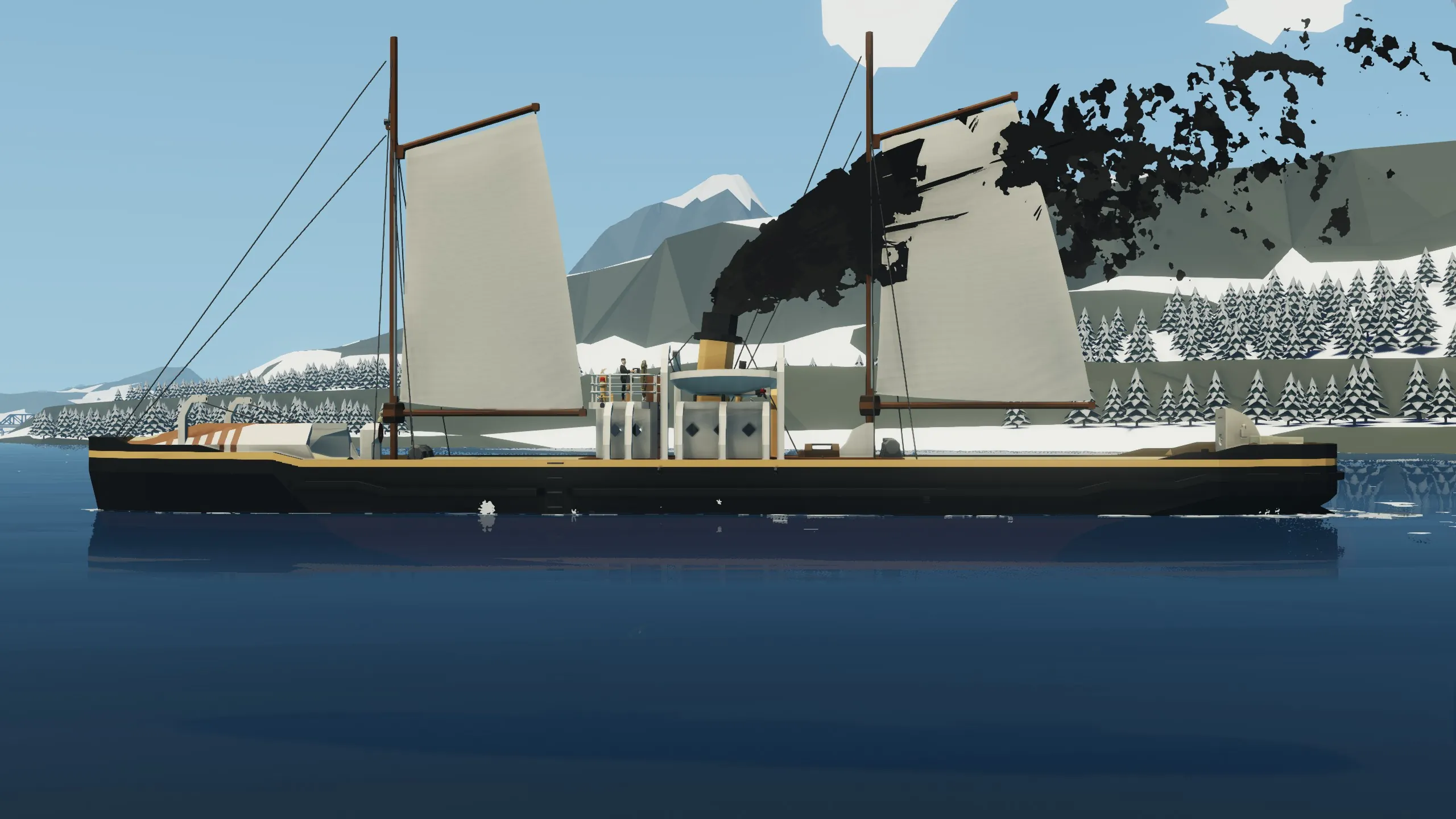
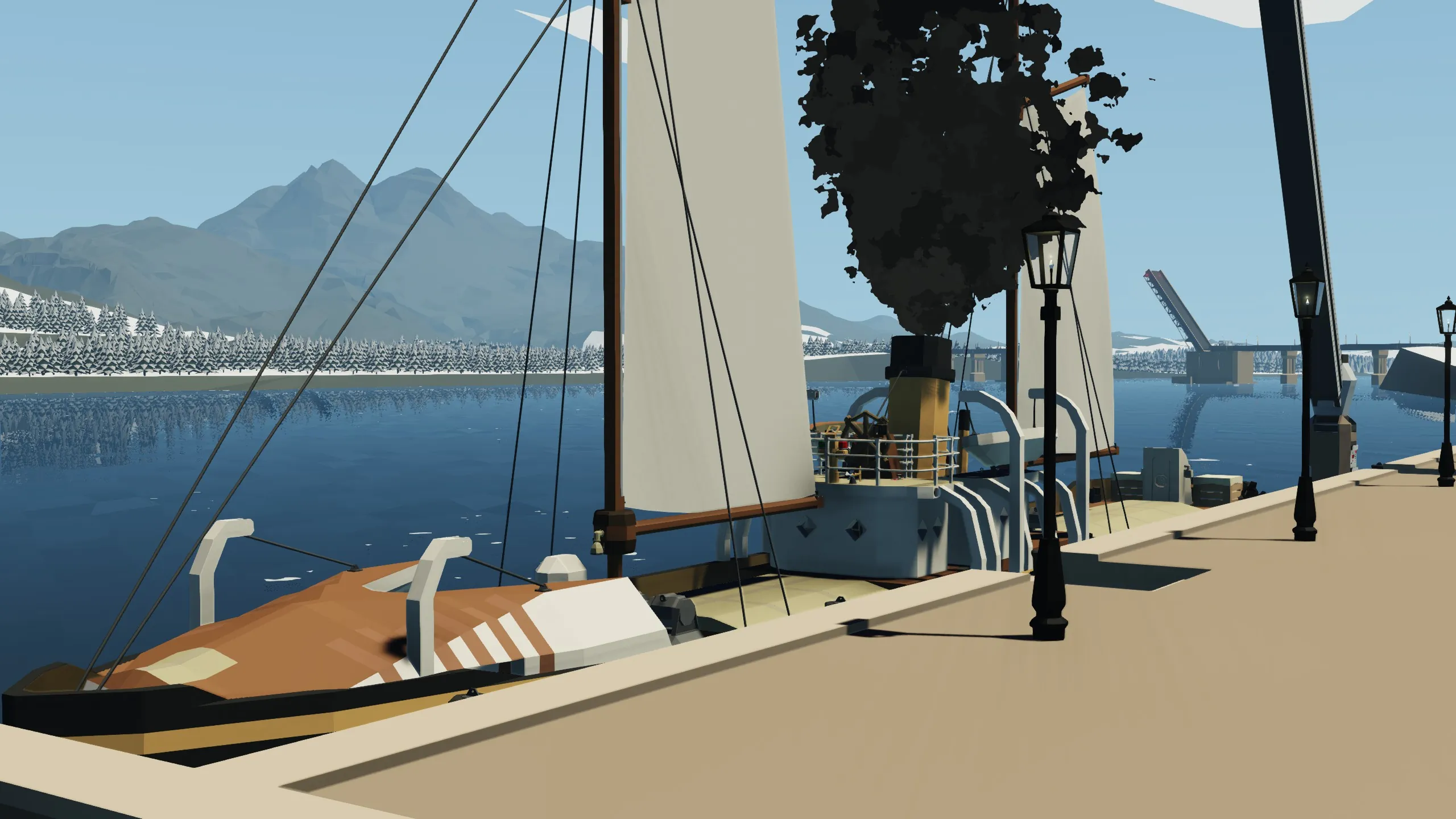
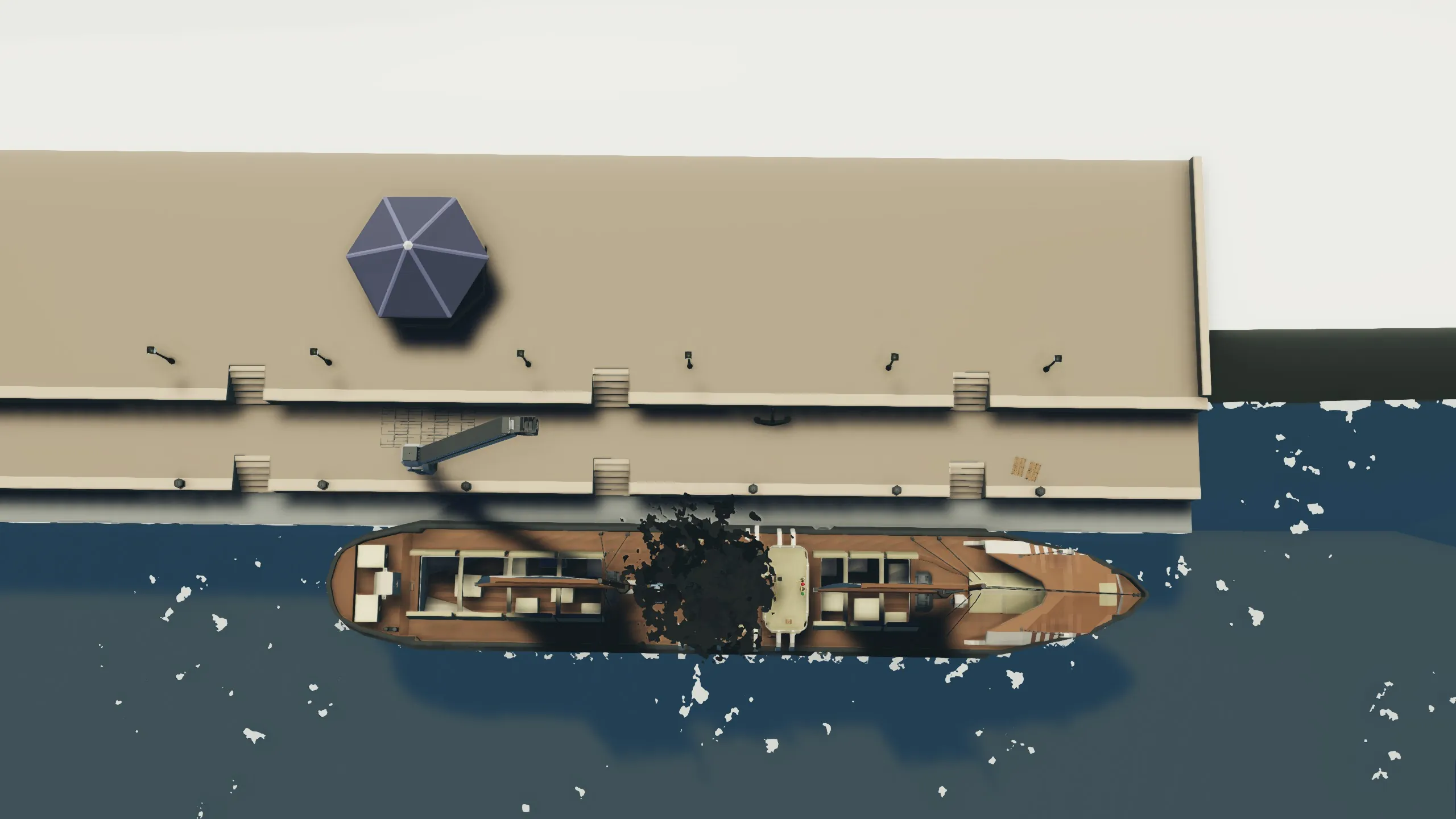
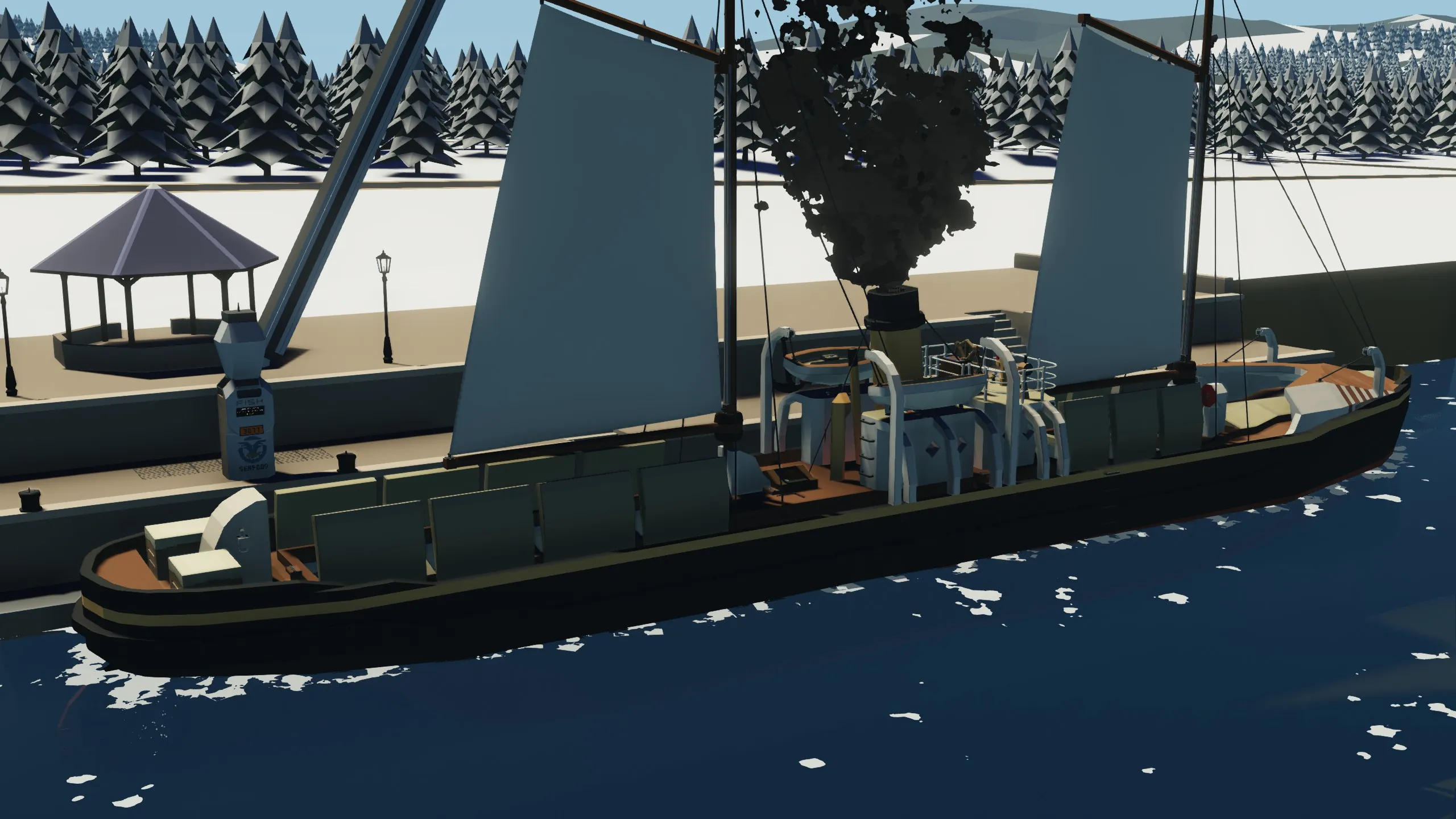
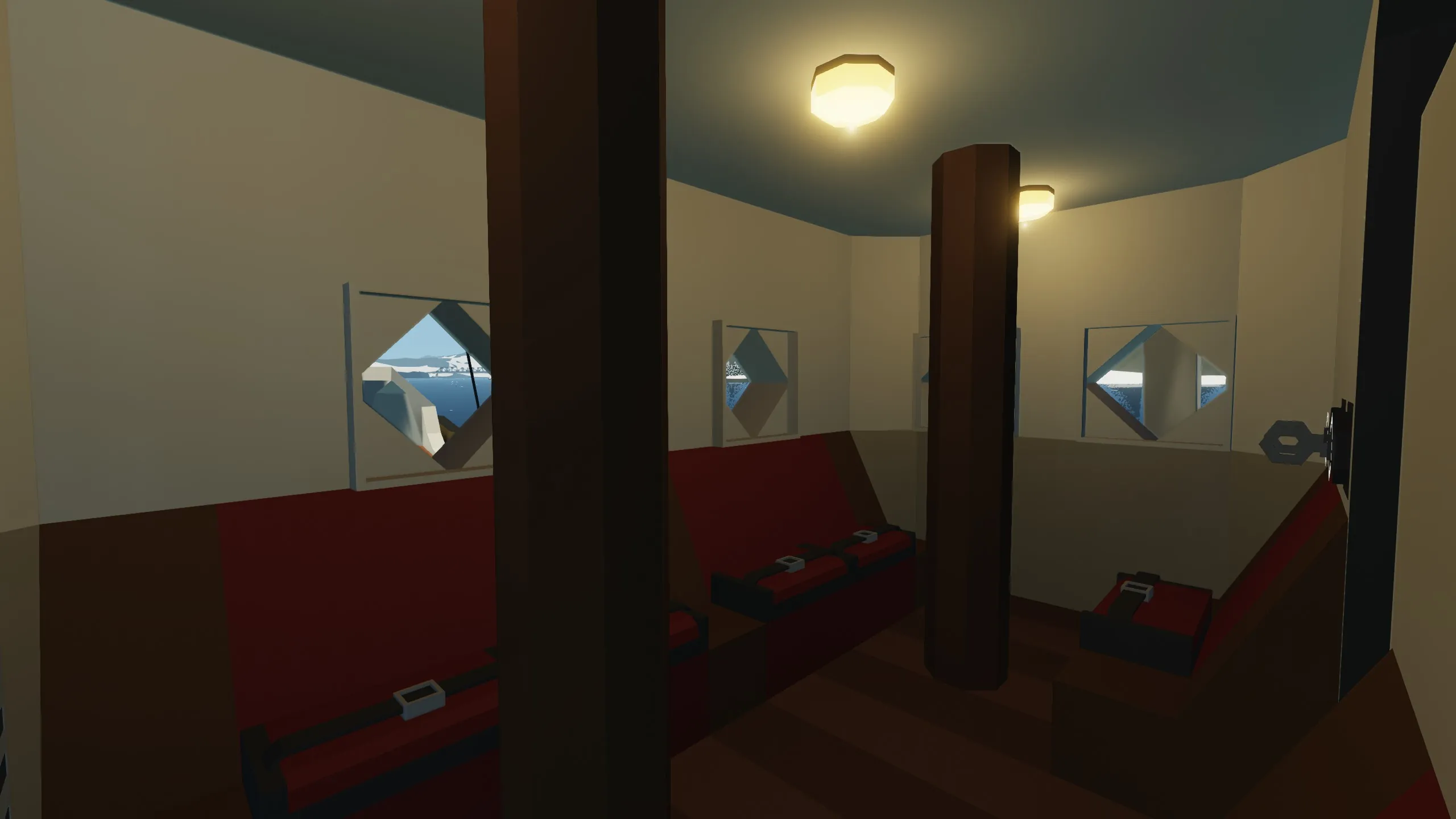
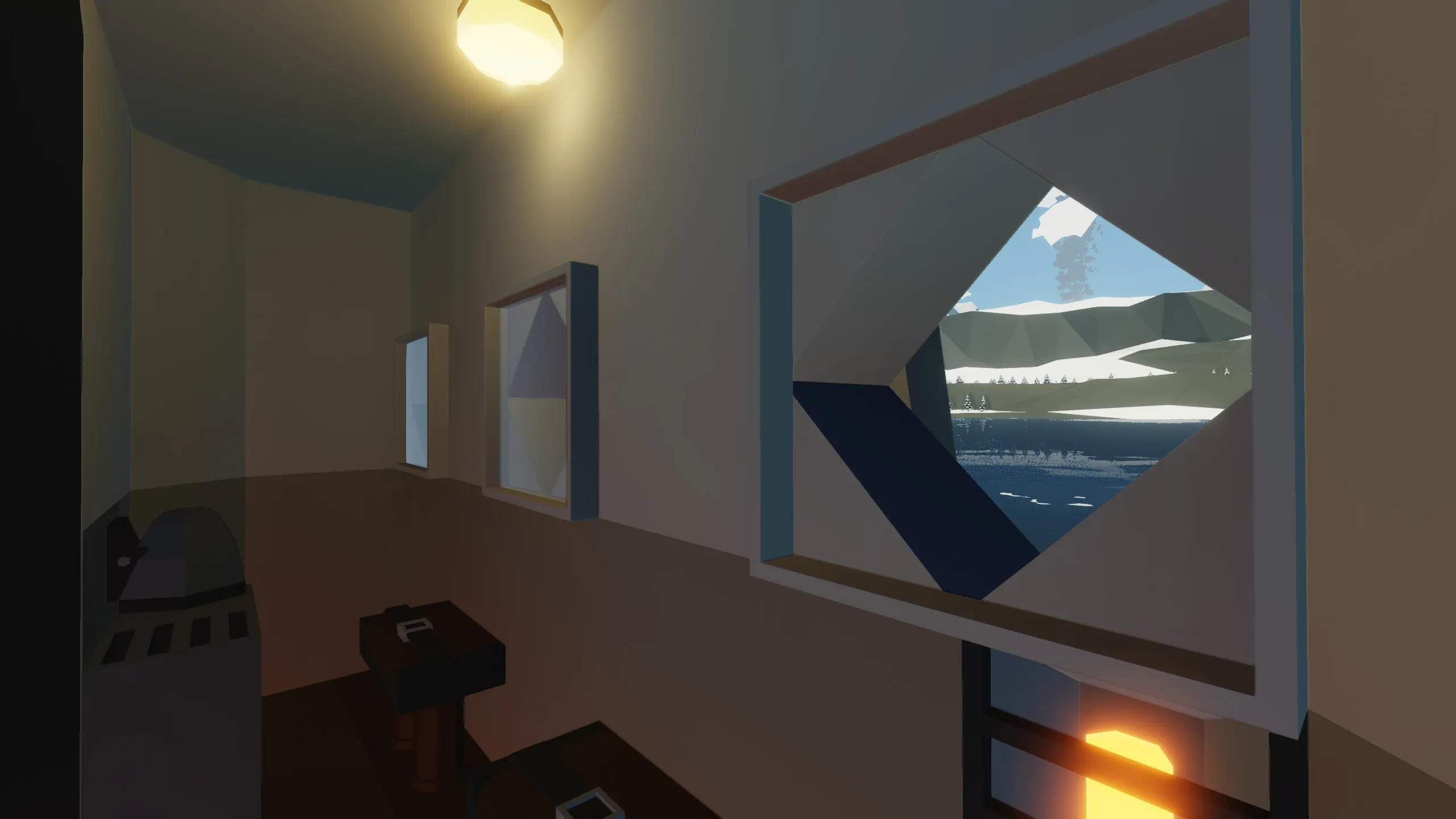
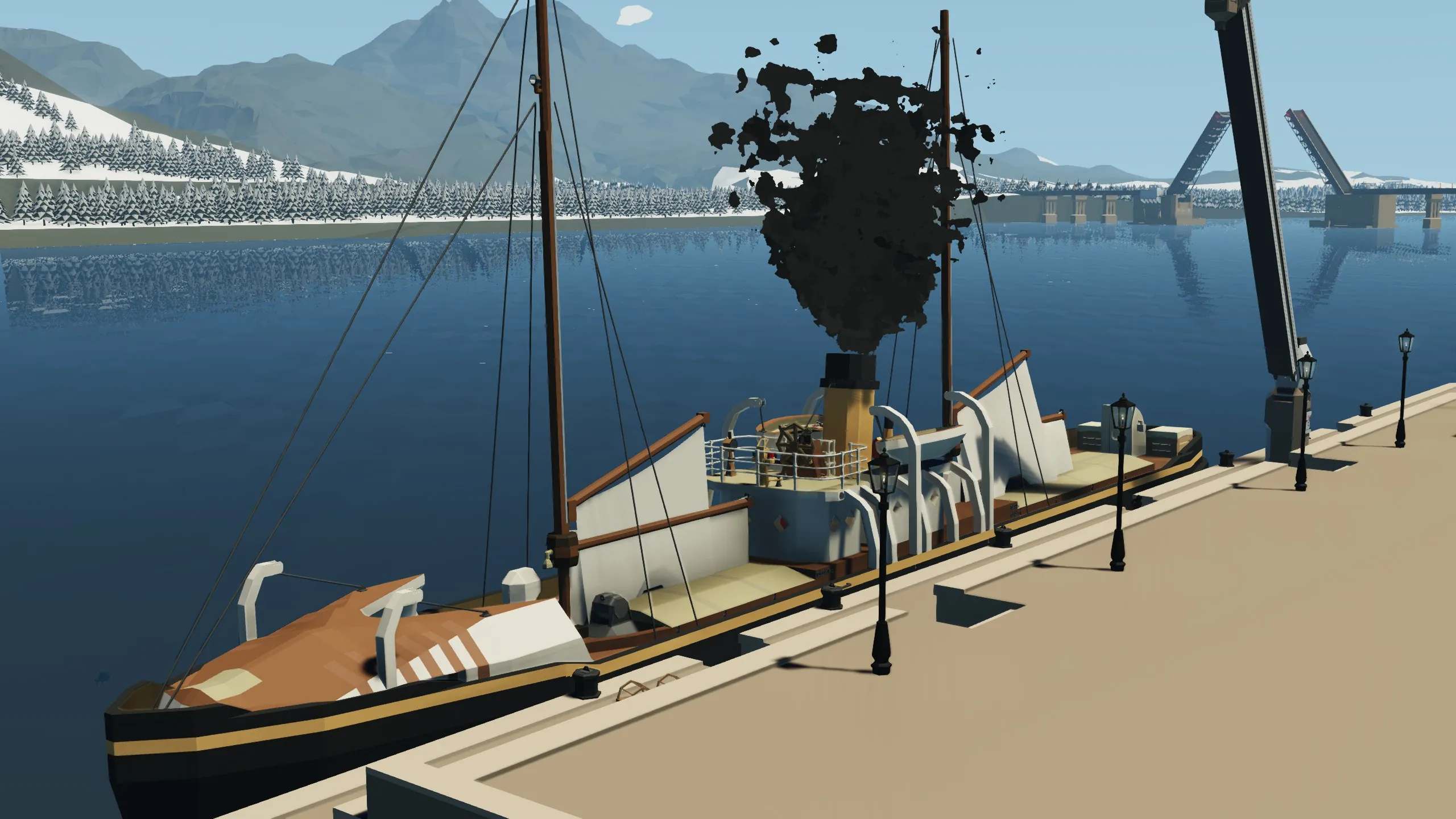
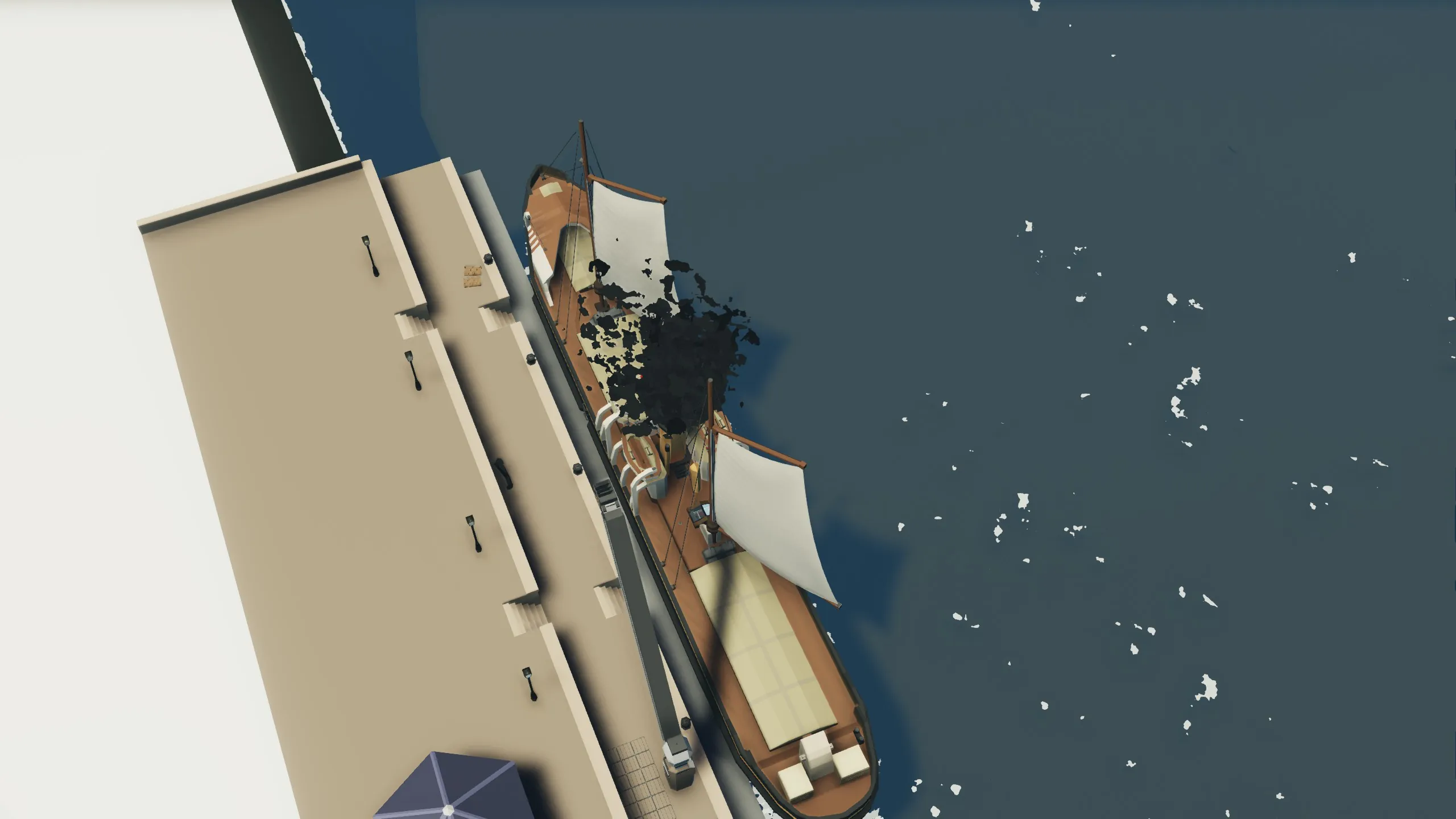
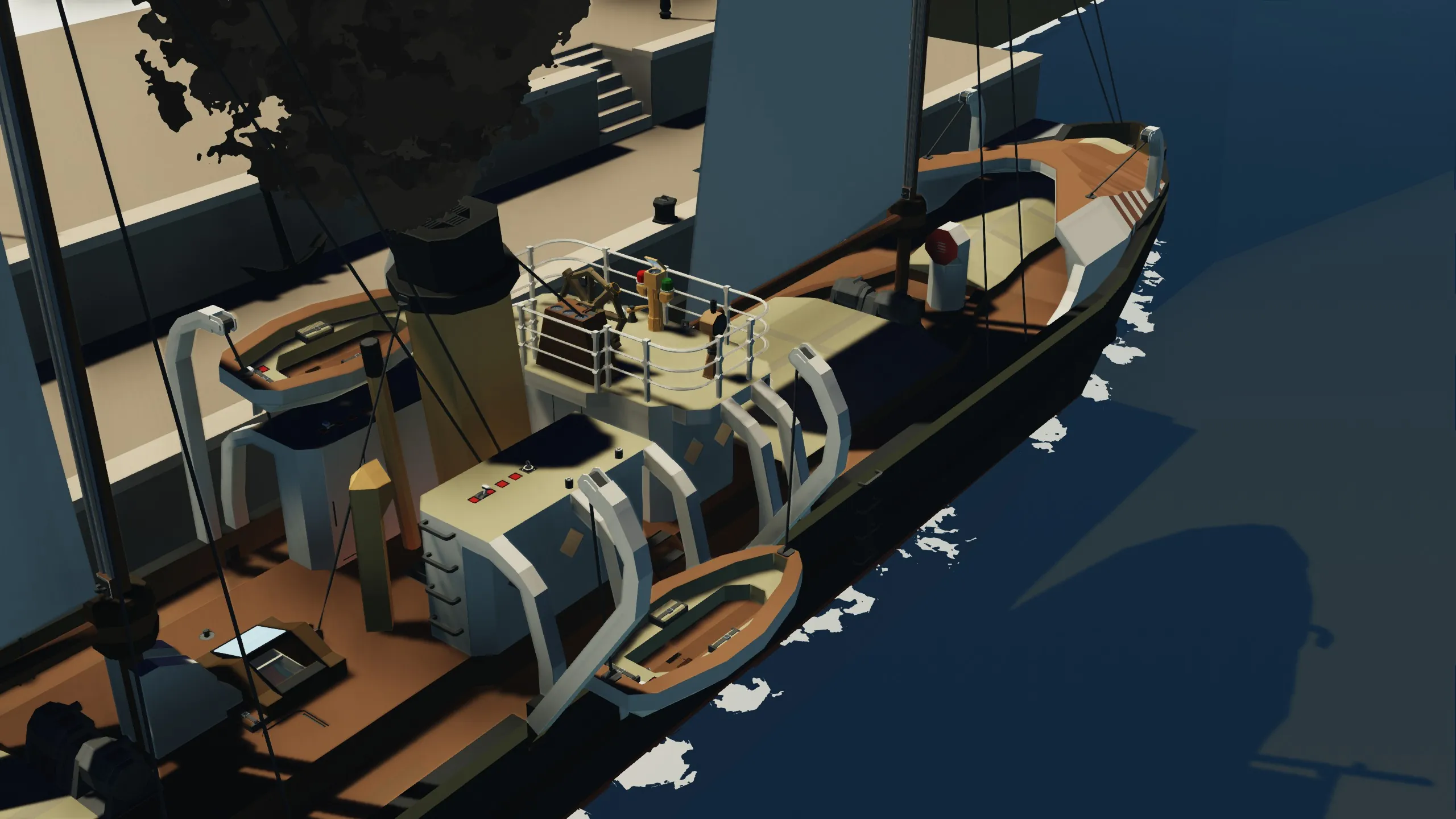
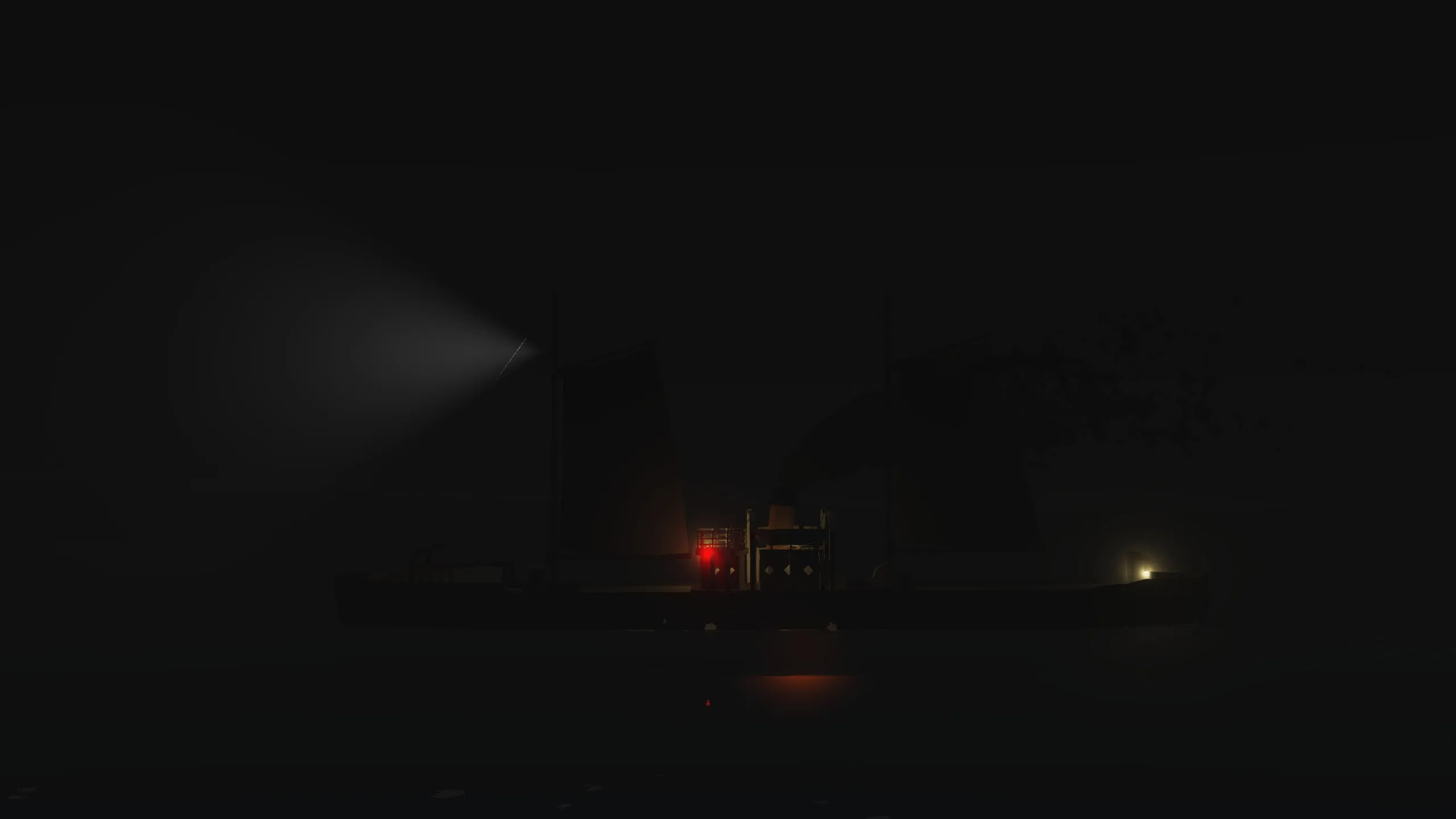
The SS Camel was a small iron steamer built in 1870 by Harland & Wolff to transport heavy engine parts and iron to the Belfast shipyard. After she became obsolete, she was sold in 1883 and spent decades in commercial service under British, Italian, and French owners. Renamed Elena and later Cannebière, she worked until being broken up in 1924. Full details below!

Features
- Speed: 6,5-8 knots
- Cost: 147.814$
- Range: 22 km
- Spawnable at any dock
- Low lag – optimized for smooth sailing
- Steam-powered double-piston engine
- Historically accurate design
How To Use
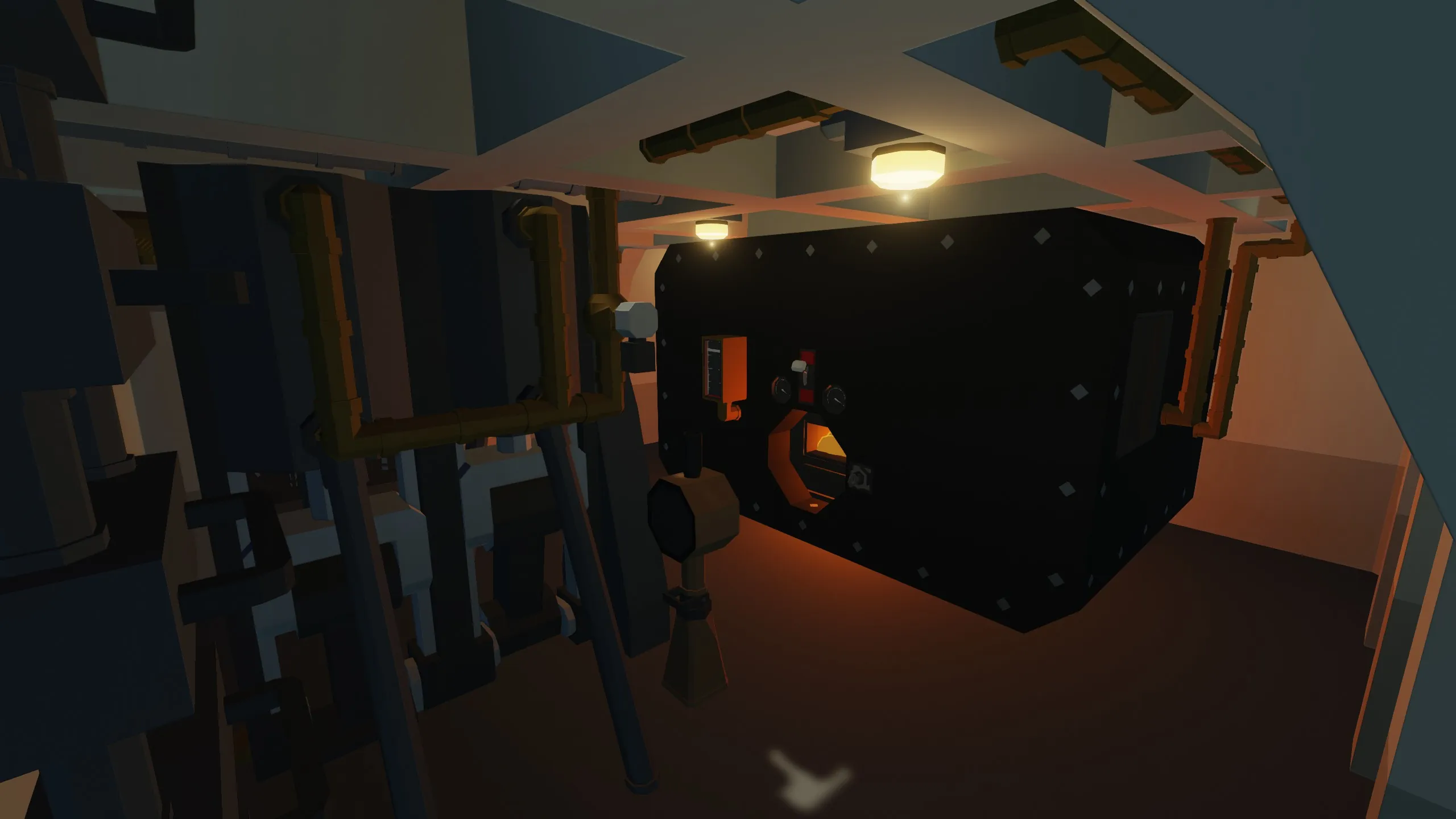
- 1) Press 3 on th helm to ignite the firebox
- 2) Wait until the boiler reaches 100*
- 3)Set the steam valve to max.
- 4) If you want to use the sails aswell, try to use them while the engine is running or it will be very slow (Look at the mini tutorial on how to sail in the end of the photo collection)
History
The SS Camel was a small iron screw steamer built in 1870 by Harland & Wolff in Belfast for use within their own shipyard operations. Rather than serving passengers or liners, Camel worked as a sturdy industrial transport vessel, purpose‑built to move heavy engine components and iron between suppliers, workshops, and the yard itself. At only 269 gross tons, she was modest in scale but played a crucial behind‑the‑scenes role, likely carrying machinery used in early White Star Line ships such as Britannic (1874) and Gaelic (1873).
For more than a decade, Camel shuttled loads too large or awkward for Belfast’s roads, acting as a floating supply chain during a period of rapid shipbuilding expansion. When improved land transport eventually made her duties unnecessary, she was sold in 1883 and entered commercial service. Over the next forty years she passed through several owners, worked under British, Italian, and French flags, and sailed under new names—Elena from 1915 and later Cannebière. Her career took her far beyond the industrial waters she was built for, proving her adaptability and resilience.
Despite her humble origins, Camel enjoyed an unusually long working life. After more than half a century of steady service across European waters, she was finally broken up in 1924, closing the story of a small but remarkably durable vessel whose quiet labor supported some of the era’s most ambitious shipbuilding projects.
Credits - Alex1889
- If you find any other please tell me!
Please do not steal my creation or any parts of it and use it for your benefit.
I hope you have fun sailing! :)