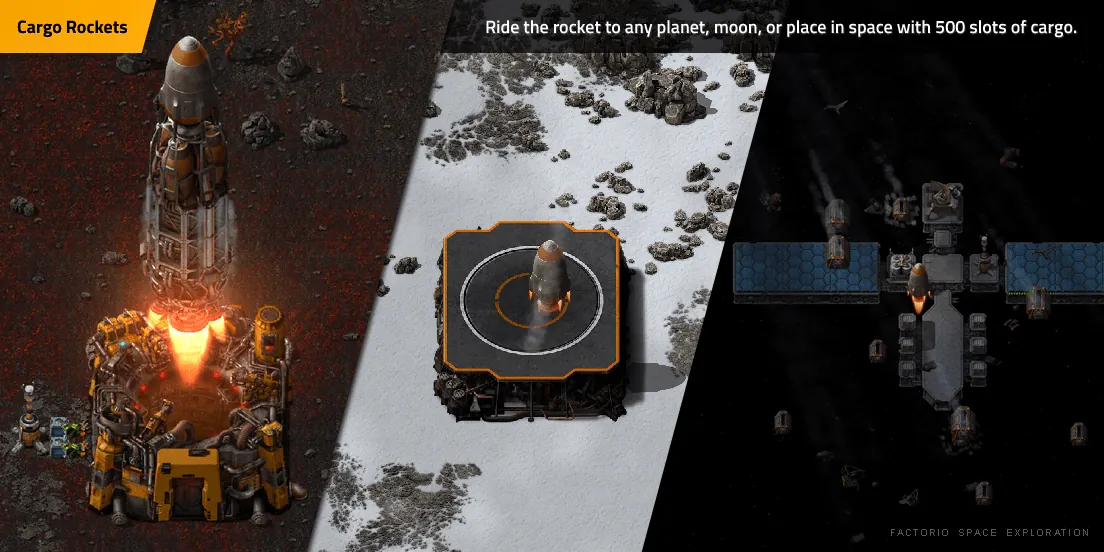
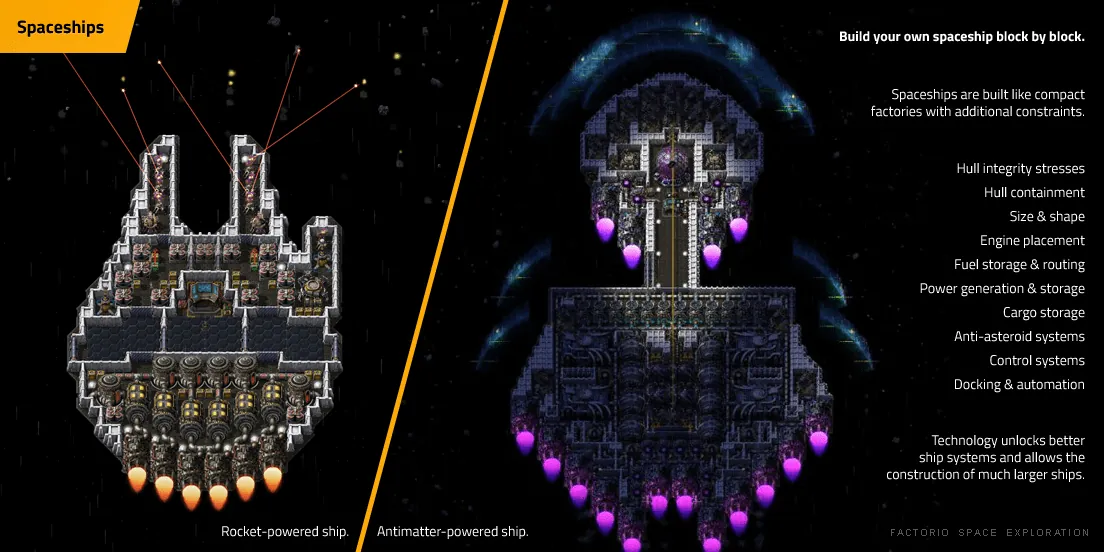
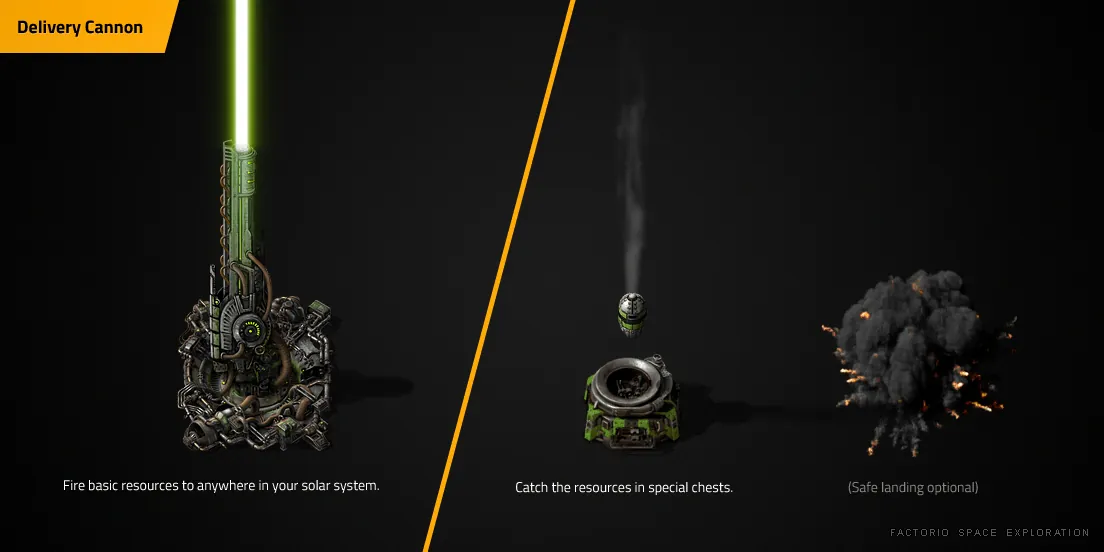
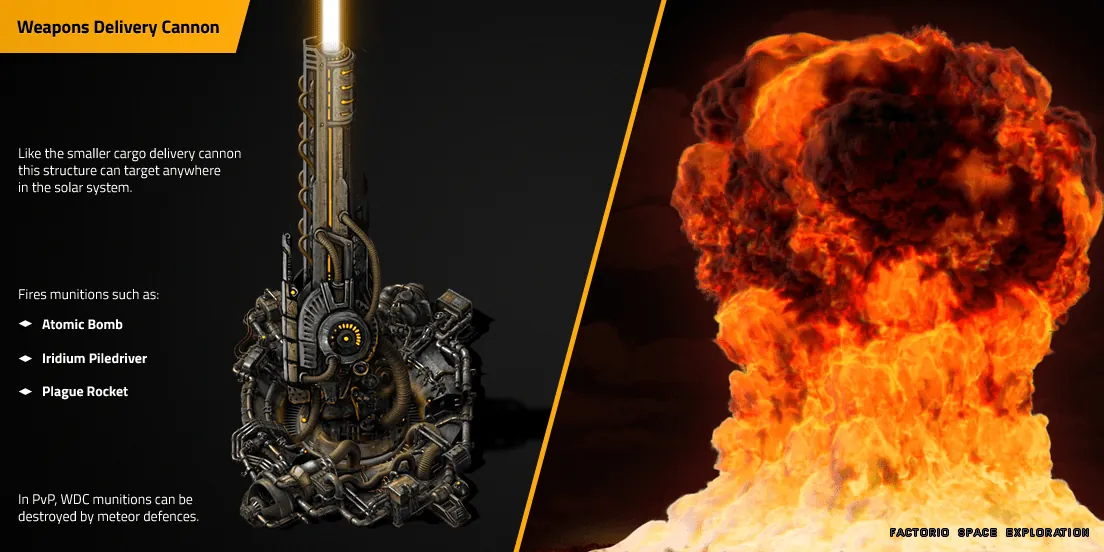
Status: Experimental / Alpha.
Wiki: https://spaceexploration.miraheze.org
Discord: https://discord.gg/GDvxHgXjkk
Patreon: https://www.patreon.com/earendel
Welcome to Space Exploration.
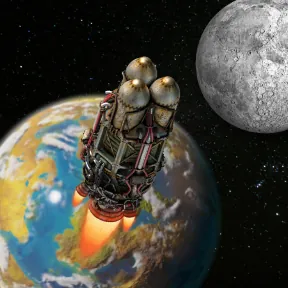
Space Exploration is an overhaul mod about unique experiences and challenges. After you launch a rocket you start discovering new planets, moons, asteroid belts, and other stars. You build an expansive space station as your main research facility, explore new planets and moons, outpost for special resources, and gradually progress into the darkness of deep space as you expand your interstellar empire.
Please note before you decide on starting a playthrough!
- Space Exploration is a challenging and very long overhaul mod. There are 29 science packs, and completion times average 500 hours.
- Space Exploration modifies the game even before space, it does not just add content after the vanilla endgame. It will probably take you 50+ hours to reach space.
- Space Exploration is mostly a complexity and logistics challenge, and not a scale challenge. You will not need to build big, but you will need to build reliably and solve complicated problems.
- Some circuitry knowledge is required to complete the mod.
- There's a lot in the mod already, but it is still in heavy development and things are changing. For this reason the mod is considered to be in Experimental Status (see below). There may be occasional bugs, but they get resolved quickly.
- Compatibility with other mods is currently low. Although there are some compatible overhauls, Space Exploration standalone is the intended experience.
Space Exploration is for you if:
- You want to explore new worlds.
- You want a refined, balanced, cohesive experience from a minimal mod list.
- You want some genuinely new and unique game mechanics and challenges.
- You want gradual progression and new mechanics introduced over a 500+ hour game.
- You like uncovering secrets and puzzles.
Version comparisons
Version <= 0.6.x is for Factorio versions below Factorio 2.0. If you want to load a 0.6 or earlier save in 0.7+ then you should update to the last 0.6.x version in Factorio 1.1, re-save the game, and then update to Factorio 2.0 and the latest 0.7.x version.
Version 0.7.x is for Factorio 2.0. The 0.7 versions are intended to be as close to the 0.6 version as possible, while using the 2.0 version of the Factorio game engine. A lot of things had to change because of how the game engine changed, for example, the way you launch your first satellite rockets is slightly different.
Version 0.8+ will have large gameplay changes in comparison to the 0.7 version, but that is still some months away. Version 0.8 will have more specific planet types with their own challenges, like flooding, lightning, freezing, etc. The version update from 0.7 to 0.8 is intended to take the mod from about 60% complete in 0.7, to 85% complete in 0.8.
On mod compatibility
The mod focuses on experience and challenge over modular content, this means that Space Exploration does not work well with many other mods. One of the main themes is interplanetary logistics, and that is driven by different resource and energy balances in different locations. It is easy for other mods to disrupt this balance, especially if the mod has ways to generate power that don’t rely on solar or scarce resources. If you are starting your first Space Exploration game, we recommend you stick to only the recommended mods + quality of life mods you can’t do without, otherwise you won’t have the background knowledge to see what gameplay is broken by other mods. The current mod compatibility situation will improve in the future, especially in regard to other overhaul mods. (See Experimental Status below).
Recommended mods:
The Space Exploration wiki has a list of recommendations, both official and from the community: https://spaceexploration.miraheze.org/wiki/Recommended_Mods
If you wish to download all of the most important recommended mods from that list, you may do so conveniently by installing the Space Exploration Official Modpack.
Game Progression
A Space Exploration game is long. Early game is characterised with basic sciences on your homeworld and launching a satellite rocket into space.
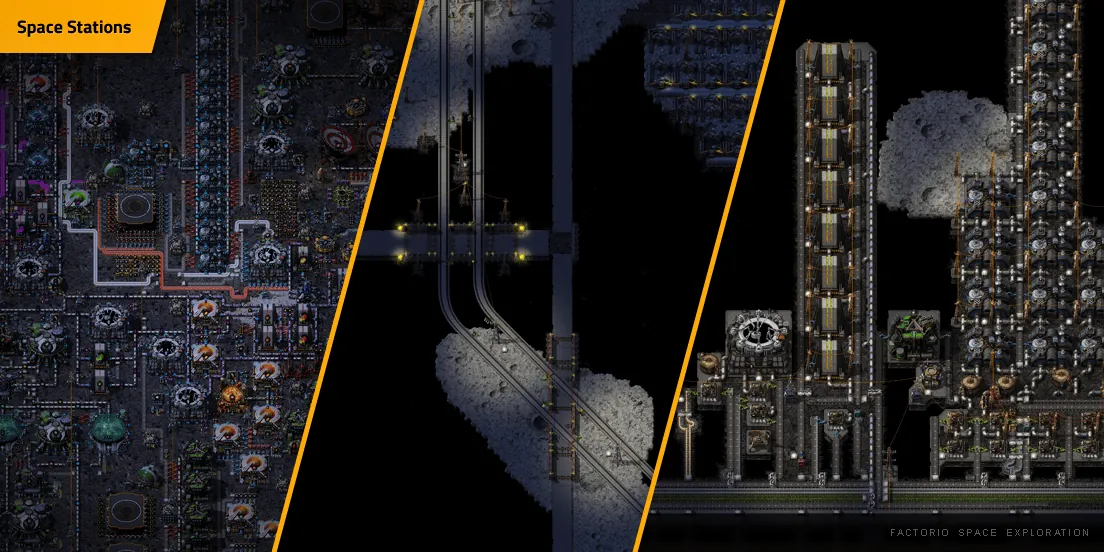
Mid game has you building a research space station, exploring new planets looking for strategic resources, and getting started on the 4 specialist science packs. You have 4 types of specialist science to choose from, your decision can be based solely on the techs you want, but may also be influenced by the strategic resources you have discovered so far.
Late game leads you to deep space, expanding an interstellar empire, and working on the complexities of deep space science. Finally you gain the ability to escape the stellar cluster and win the game.
Explore new worlds
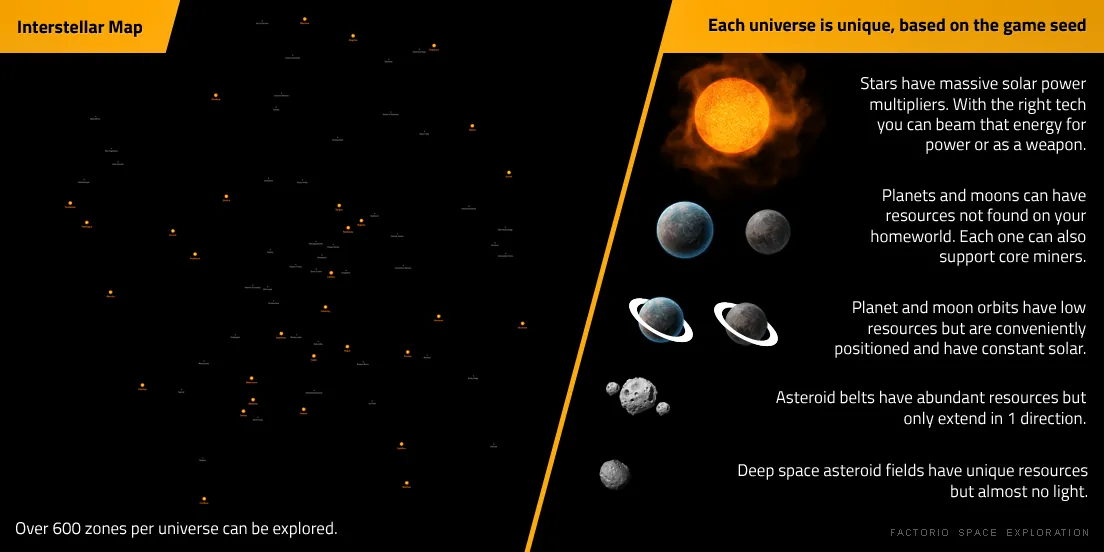
Over 600 new places to visit - planets, moons, stars, asteroids fields and more. Each location has its own resource bias and challenges.

The planet you start on, Nauvis, is huge but ultimately limited. You are unlikely to run out of the resources it has, but your homeworld won’t have all the resource types you need to complete the game.
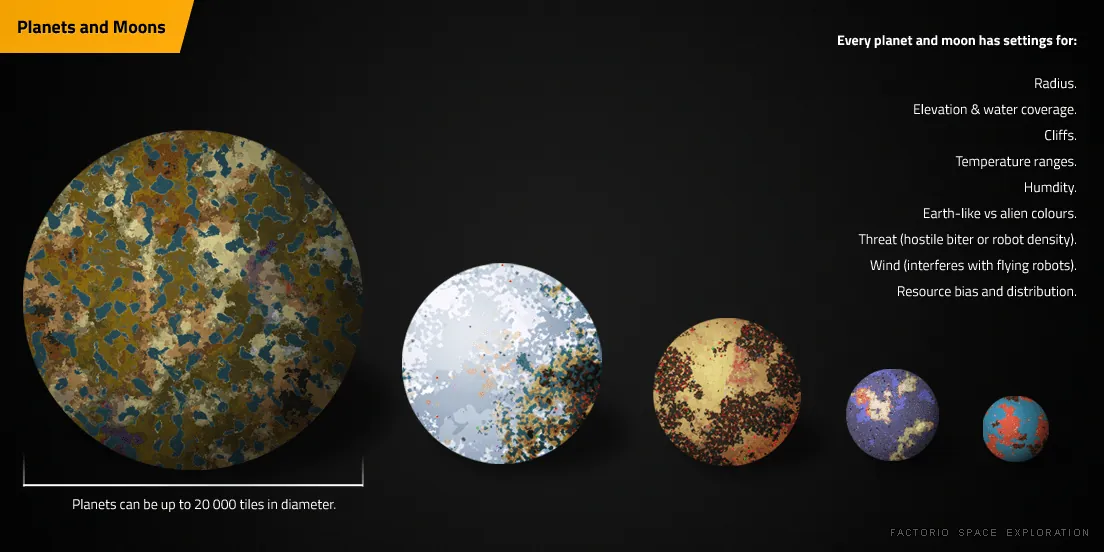
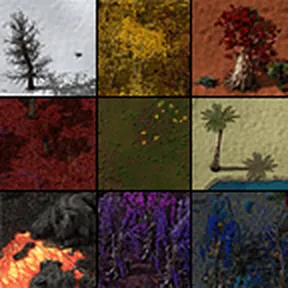
Other planets and moons have different sizes, resources and climates. Tight integration with the Alien Biomes mod means each planet and moon has some visual character. Different planets have different challenges, some may be waterless, some have low solar, some may be windy (bad for robots) and some may have excessively hostile natives. There will be more environmental challenges added in the future.

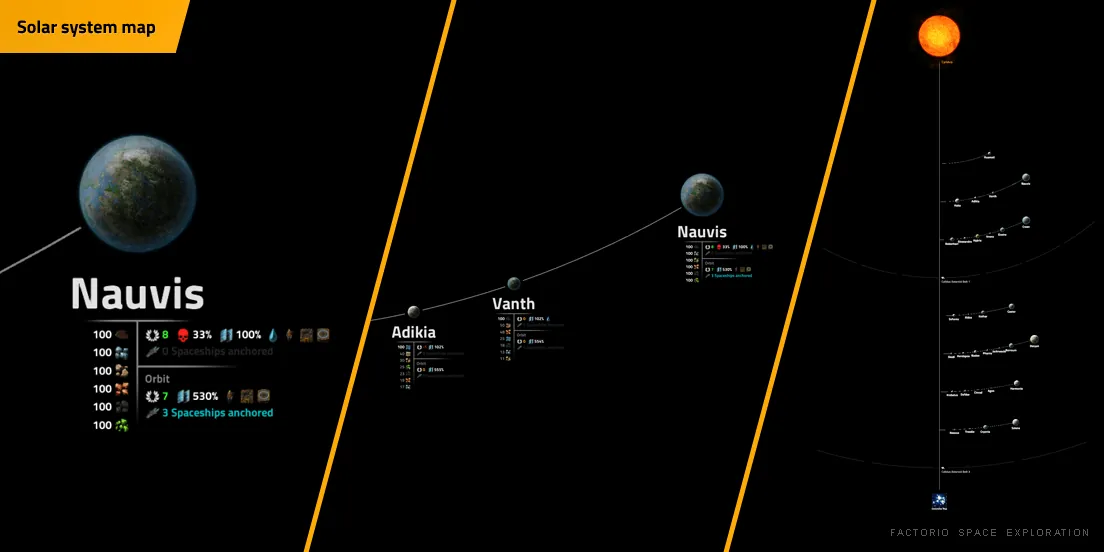
Places in your solar system can be discovered by launching more navigation satellites.

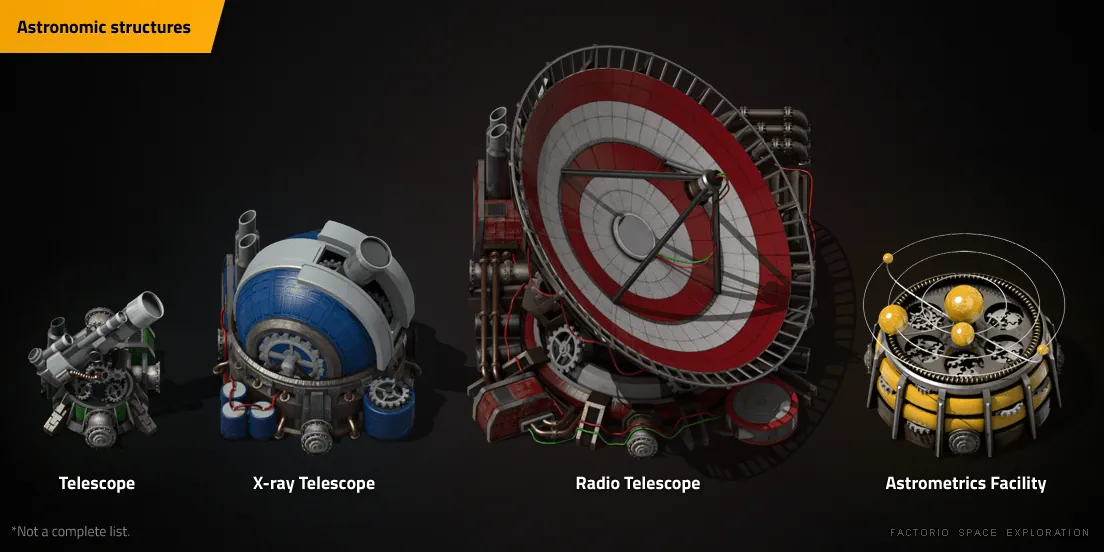
Later you can use telescopes to look for places outside of your solar system via zone discovery research.
Satellite mode
Launching a navigation satellite unlocks the Navigation Satellite Uplink. This allows you to look around from the satellite’s point of view, detached from your character. You can look at any planet you have discovered and scout the surface. You can even make data-changes while in this mode, changing combinator, requester, or inserter settings. You can also use blueprint library blueprints, the deconstruction planner, copy and paste, etc. Press N to start/end an uplink.
Resources

Space exploration adds a number of new resources.
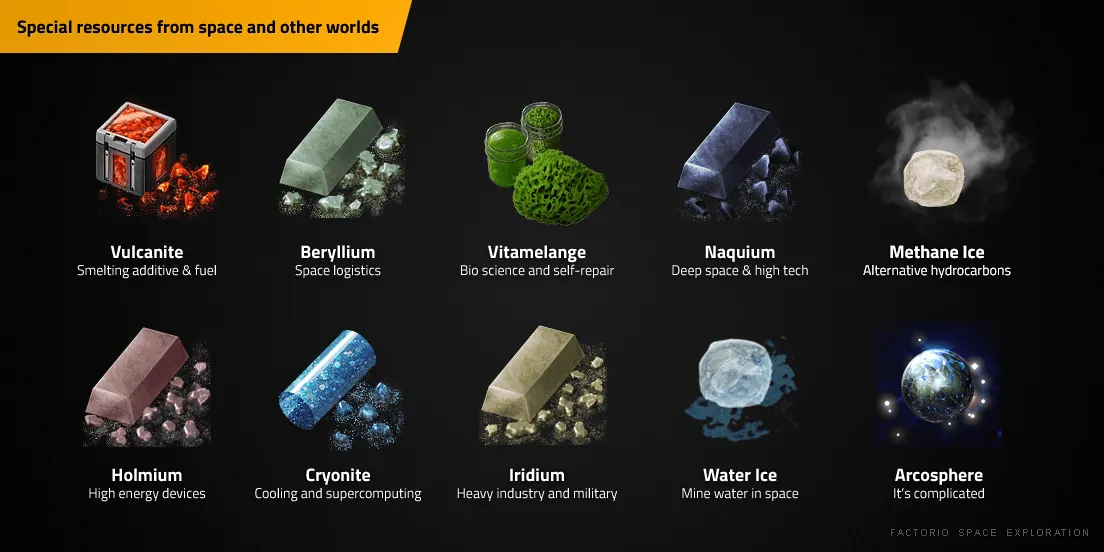
Water ice, and methane ice can be found in space and make life up there a little easier. Ice is a convenient way to transport water, and methane can be converted to other hydrocarbons, giving you a 2nd route to oil products.
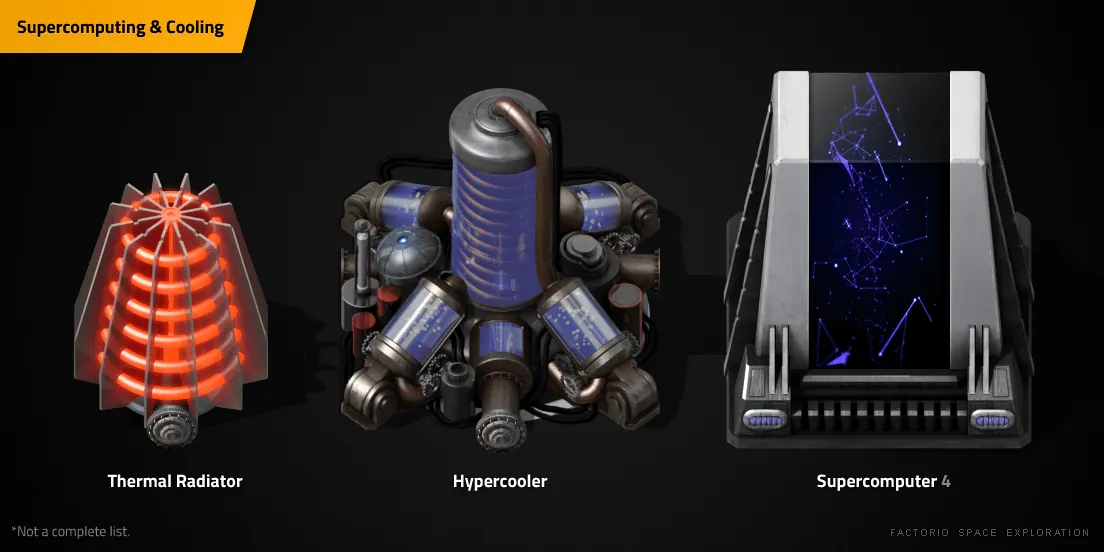
Cryonite has applications in cooling, supercomputing, and some refinement of other materials.
Vulcanite has a number of uses as a smelting additive, fuel, and is needed for rocket science.
Beryllium is used for lightweight construction and logistics, spaceships, and astronomic science.
Holmium is used for energy systems, shields, and energy science.
Iridium is used for heavy industry and military purposes, and material science.
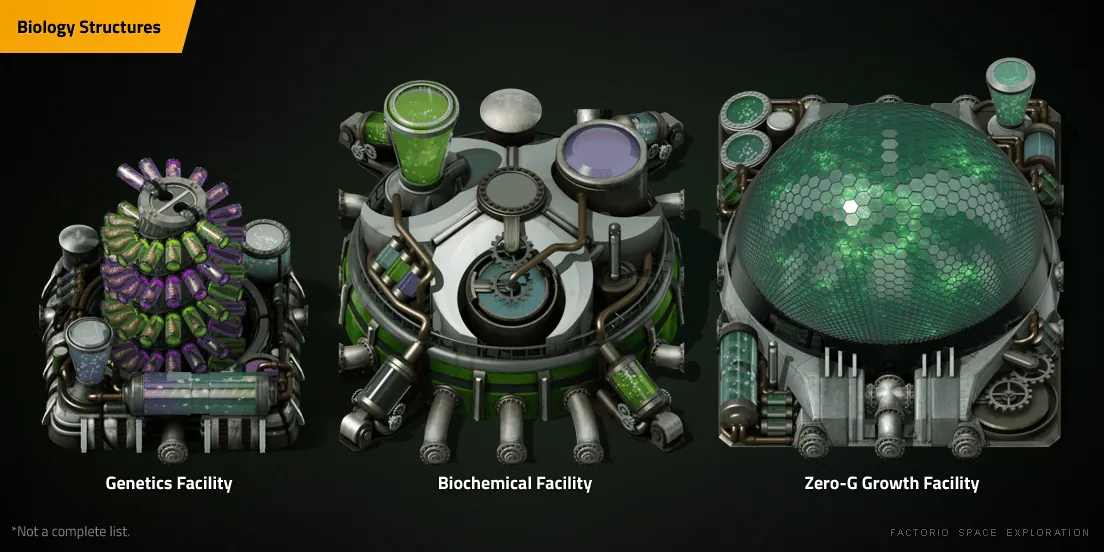
Vitamelange is an organic substance used in bio-science.
Naquium is a strange material with no chemical properties only found in interstellar asteroid fields. It is used for deep space science and end-game structures.
Arcospheres are unlike other resources. They are not mined, but gained from launching collection probes from interstellar asteroid fields. The numbers found diminishes with repeated launches from the same site so it is difficult to gather large numbers of them. The ones you do get however, are never lost. They are needed in certain recipes and are always returned, though not in their original state.
Core mining

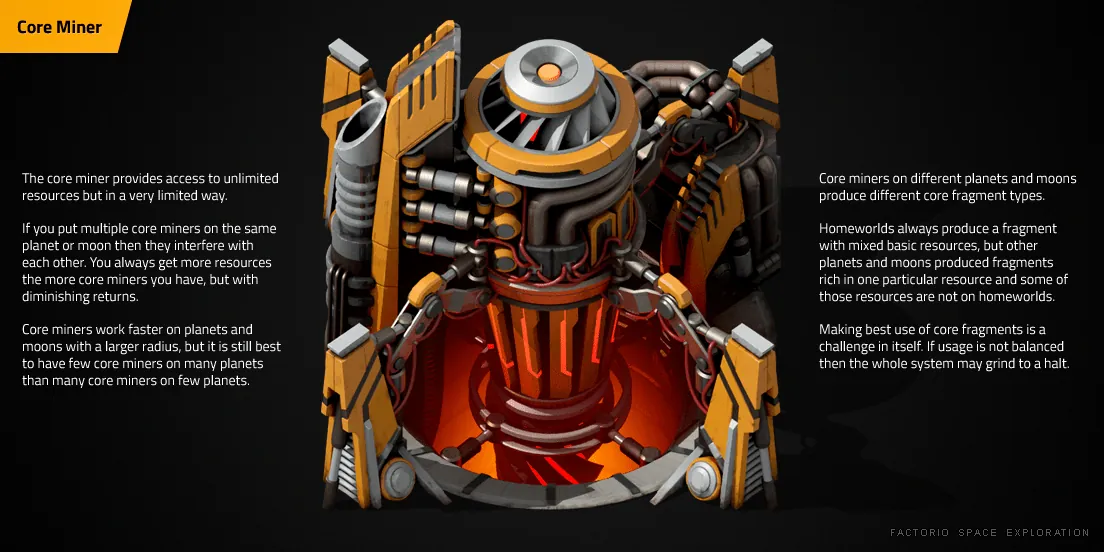
One of the big advantages to claiming a new planet is the use of a core miner. A core miner gives you access to unlimited resources, but you can only use one at full efficiency on a planet. Multiple core miners on the same planet or moon have diminishing returns. Each planet or moon has its own core fragment type that yields different resources.
Homeworlds always return a mixed fragment type with some basic resources. Core fragments from other planets and moons will return a fragment type that matches their primary resource.
Space sciences

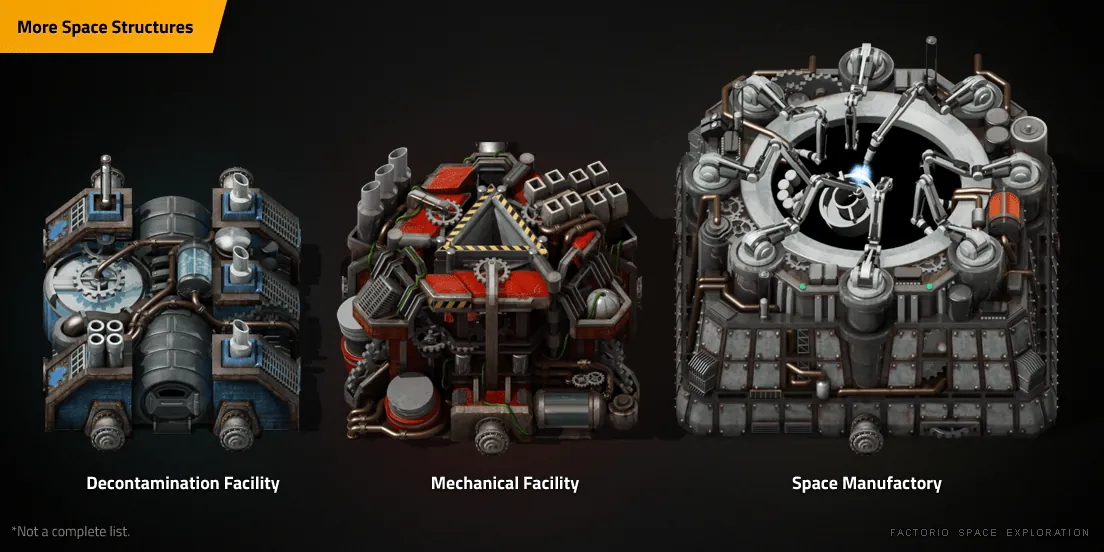
Space exploration science packs need to be made and used in space so you are required to build your own space-based research station.
The rocket science pack acts as an introduction to space platform construction and that basic infrastructure needed for later science packs.
Most of scientific progress in Space Exploration is split between 4 parallel specialist science packs. Each one needs specialised equipment and specific resources. These new sciences are data-driven and more difficult to set up.
Material science is focused on testing existing and new experimental materials. It unlocks some improved industrial and military systems.

Astronomic science is focused on observation data from telescopes and astrophysics. It unlocks improvements to cargo rockets and spaceships, and other space logistic improvements.

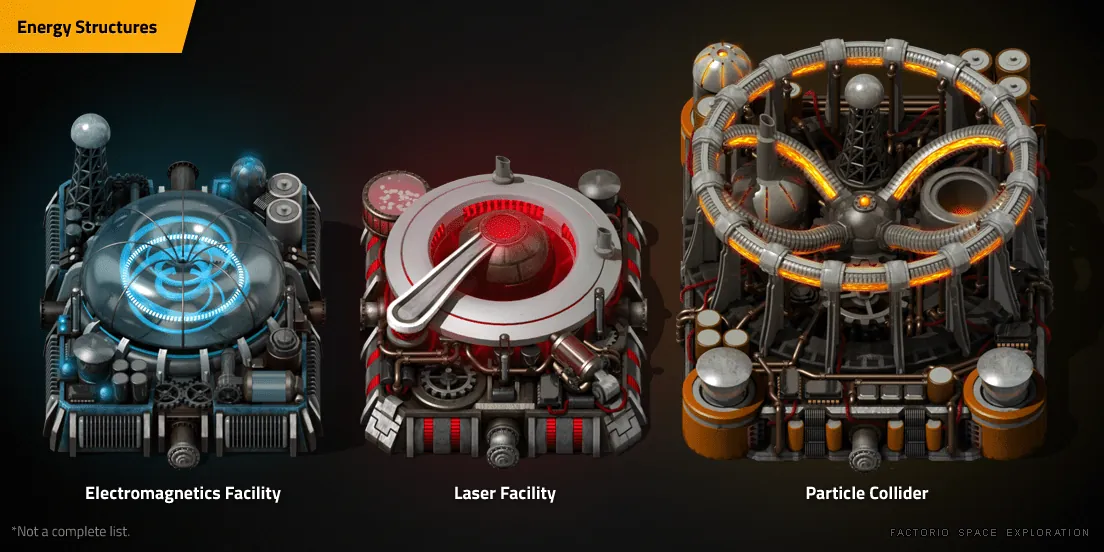
Energy science is focused on particle physics and energy fields.