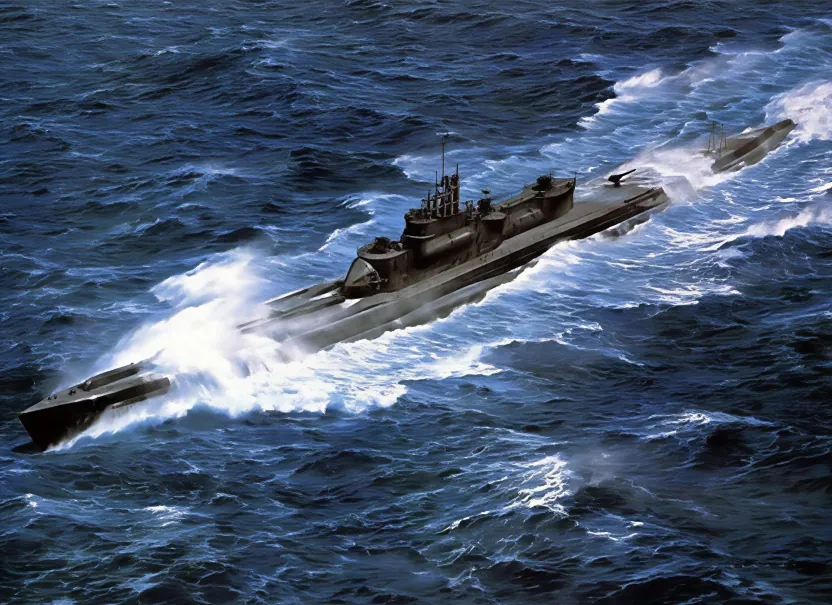
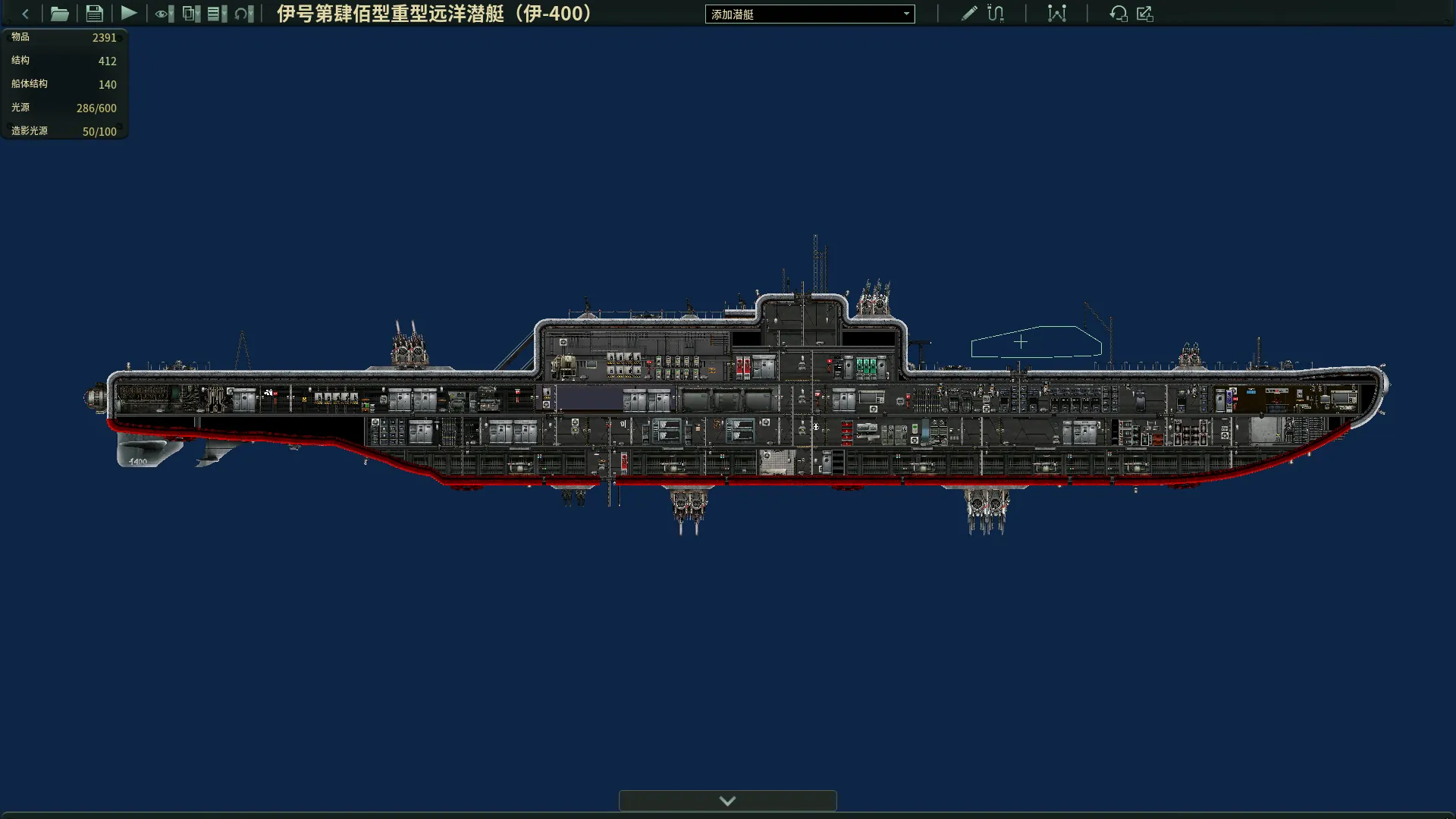
The I-400 submarine was a large submarine constructed by the Imperial Japanese Navy (IJN) during World War II, developed to fulfill the ambitions of Admiral Isoroku Yamamoto. As a heavy ocean-going submarine, the I-400 boasted unparalleled firepower and immense internal space. It was equipped with a cylindrical hangar that could accommodate two folded "Seiran" floatplane bombers along with replacement parts.
As an improved variant of the Special Submarine Type, this vessel was outfitted with six gun turrets and two reserved gun positions. It also featured four depth charge launchers and eight torpedo tubes, with one Seiran submarine-borne aircraft mounted on the forecastle. The I-400’s conning tower boasted formidable anti-aircraft capabilities; however, the ballast tank section had weak firepower, a deficiency remedied by the installation of depth charge launchers.
There was only one airlock on the entire submarine, situated between the ballast tanks. The armor plating on the submarine’s lower hull was reinforced, yet the airlock hatch constituted a vulnerable point in the lower hull structure.
The rear of the submarine is equipped with a single-person diving bell for mining.
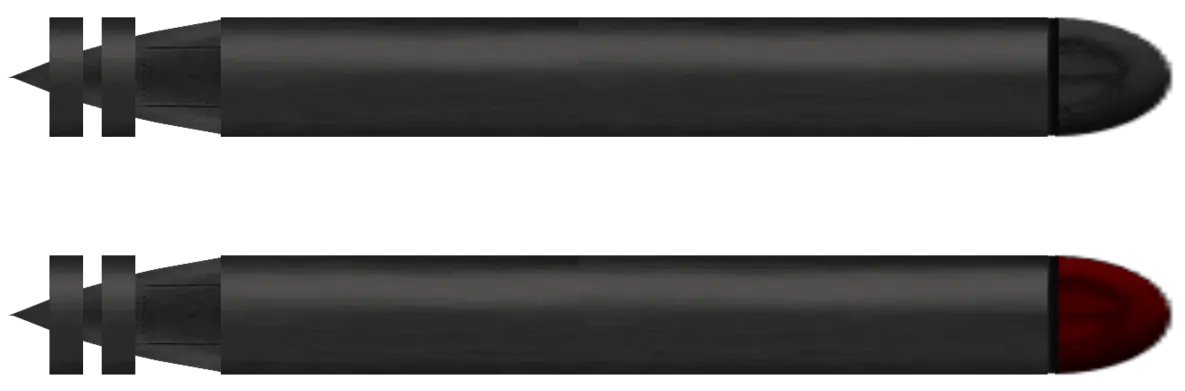
On the aft deck, an IJN Kikusui special attack type remotely controlled drone is deployed. Double-click the mouse to switch between movement and firing modes. The firepower is configured with a triple-pulse laser, and the capacitor automatically recharges after returning to position.
P.S.: There are no waypoints at the carrier-based aircraft interface. Non-player characters (NPCs) will not be able to climb into it, which may affect gameplay experience. The interface is manually operated—please remember to close the door after use.
Emergency pumps were fitted to the water pumps in two critical compartments: the electrical compartment and the engine compartment. These emergency pumps require no electrical power but have a relatively low flow rate. They are intended to prevent scenarios where pump failure due to large-scale water leakage makes it impossible to drain water and repair electrical circuits.
Two small oxygen supply units are installed in the submarine’s diving equipment compartment and the captain’s cabin, facilitating the refilling of a small number of oxygen tanks. These oxygen supply units have low energy consumption, though their oxygen replenishment rate is relatively slow.
Electromagnetic coils have been added to the brig and the main interface to prevent prisoners from attempting escapes and enemies from infiltrating the submarine. The controllers for the coils in both the brig and the main interface are linked to the monitoring system. In the captain’s cabin, you can activate the coil discharge function by operating the monitor and pressing the left mouse button. An additional coil activation switch is located outside the brig door. The electromagnetic coils will not harm personnel outside the respective rooms, but crew members must be prevented from being in the same room as the coils when they are discharging. The brig door consists of two small doors that require users to crouch to pass through; the door switch is unidirectional and can only be operated from the outside. It is recommended to check the interior via the monitor or the glass panel above the small doors before opening the door. VIPs and civilians will spawn in the dormitories, while only prisoners will spawn in the brig.
The confinement chamber has added a body throwing hatch and the addition of a hull on the outside to prevent seawater from overflowing.
The cabin has a gas chamber, which uses cabin monitoring after locking the door in the captain's cabin, and releases the gas with the left mouse button. After the gas was completely dissipated, the captain was required to replenish acid grenades to the detonators at the four valves in the cabin. The cabin lockers are pre-prepared for replacement grenades.
The submarine’s outer hull and layout are derived from the HI-400 mod available on the Workshop. However, its internal structure and electrical circuits have been completely redesigned and rebuilt (the original submarine was completely inoperable and also had severe flaws in its internal design).